
Understanding Vanadium from Vanadinite — The Rainbow-Blooded Metal Named for a Goddess
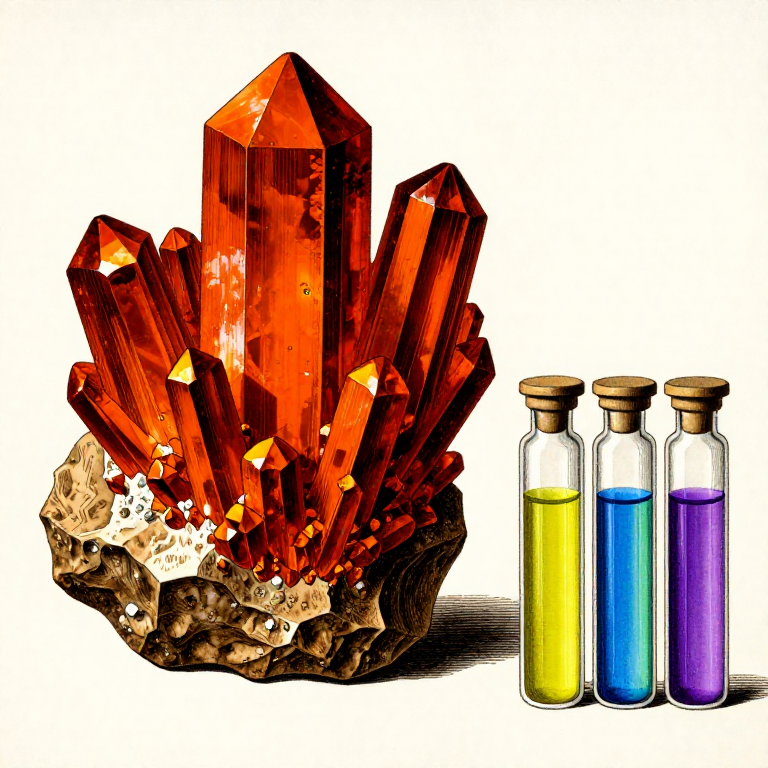
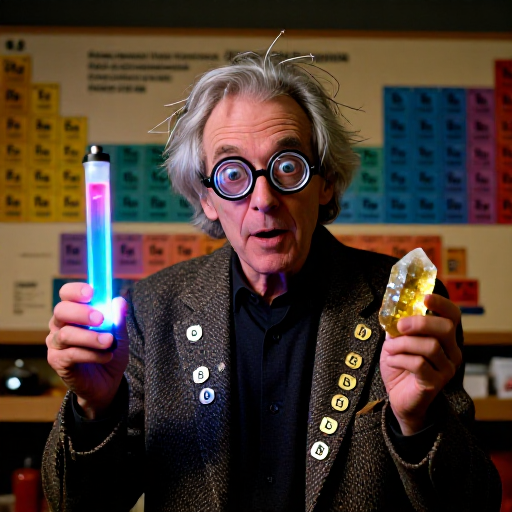
Vanadium (V, element 23) is named after Vanadís, a byname of the Norse goddess Freyja — an unusually poetic origin for a chemical element. The name was chosen by Swedish chemist Nils Gabriel Sefström, who rediscovered the element in 1831, because vanadium compounds display an extraordinary range of vivid colors: yellow (V₂O₅), blue (VO²⁺), green (V³⁺), and violet (V²⁺). This chromatic wealth was deemed worthy of the goddess of beauty and fertility.
Vanadium was actually first discovered by Andrés Manuel del Río in Mexico City in 1801, who found it in a lead ore (vanadinite, Pb₅(VO₄)₃Cl) from Zimapán. He initially named it 'erythronium' (from Greek for 'red') but retracted his claim after a French chemist incorrectly told him it was just chromium. Sefström's independent rediscovery 30 years later confirmed del Río's original finding — one of the saddest priority disputes in chemistry.
Vanadinite (Pb₅(VO₄)₃Cl) is a lead vanadate chloride containing approximately 10.8% vanadium and 73.2% lead. It is one of the most strikingly beautiful minerals — brilliant orange, red, or yellow hexagonal crystals that are prized by mineral collectors. Vanadium is primarily produced from magnetite ores that contain vanadium as a minor component, not from vanadinite.
HAZARD: Vanadium pentoxide (V₂O₅) dust is toxic — it irritates the respiratory tract and causes bronchitis, pneumonia, and pulmonary edema with significant exposure. Vanadinite is a LEAD mineral — all lead compounds are toxic. Handle vanadinite with gloves and wash hands afterward. Do not grind or crush vanadinite without respiratory protection.
안내
Understand vanadium chemistry and its oxidation state rainbow
Understand vanadium chemistry and its oxidation state rainbow
Vanadium (V, element 23) is a hard, silvery-grey transition metal with a density of 6.11 g/cm³ and a melting point of 1910 °C. It is in Group 5 alongside niobium and tantalum. Vanadium's most distinctive chemical property is its ability to exist in four common oxidation states, each with a different vivid color in aqueous solution: V²⁺ (violet), V³⁺ (green), VO²⁺ (blue), and VO₂⁺ (yellow). Few elements display such a clear, dramatic color progression across their oxidation states.
This multi-oxidation-state chemistry makes vanadium important in redox flow batteries (VRFBs) — a promising technology for grid-scale energy storage. In a VRFB, all four vanadium oxidation states exist in sulfuric acid solution, separated by a membrane. Charging shifts V³⁺/V²⁺ on one side and VO²⁺/VO₂⁺ on the other; discharging reverses the process. Because both sides use the same element in the same solvent, cross-contamination does not degrade the battery — a unique advantage over other flow battery chemistries.
Vanadium's primary metallurgical use is in high-strength, low-alloy (HSLA) steels. Adding just 0.1–0.5% vanadium to steel dramatically increases strength and toughness through vanadium carbide and nitride precipitation. The Model T Ford's crankshaft used vanadium steel, and modern automotive and structural steels rely heavily on vanadium microalloying. Approximately 85% of vanadium production goes into steel.
Identify vanadinite and other vanadium minerals
Identify vanadinite and other vanadium minerals
Vanadinite (Pb₅(VO₄)₃Cl) is one of the most visually spectacular minerals in existence. It forms brilliant hexagonal prismatic crystals in colors ranging from bright red through orange to yellow-brown, with an adamantine (diamond-like) to resinous luster. Key identification features: Mohs hardness 2.5–3, specific gravity 6.88 (very heavy — characteristic of lead minerals), and an orange-yellow streak.
Vanadinite crystals are typically small (5–15 mm) but perfectly formed, often occurring in druses (crystal-lined cavities) in oxidized lead ore deposits. Some specimens show barrel-shaped or hopper crystals that are highly distinctive. The mineral's beauty has made it one of the most popular collector minerals worldwide, with premium specimens from Morocco (Mibladen, Touissit), Arizona (Apache Mine), New Mexico (Hillsboro), and Namibia.
Other vanadium minerals include carnotite (K₂(UO₂)₂(VO₄)₂·3H₂O — a uranium-vanadium mineral, bright canary yellow, found on the Colorado Plateau), roscoelite (a vanadium-bearing mica, greenish), and patronite (VS₄, found in Minas Ragra, Peru). However, most commercial vanadium comes not from vanadium minerals but from titaniferous magnetite ores — iron ore that contains 0.3–1.5% V₂O₅ as a substitute in the magnetite crystal structure.
이 단계의 재료:
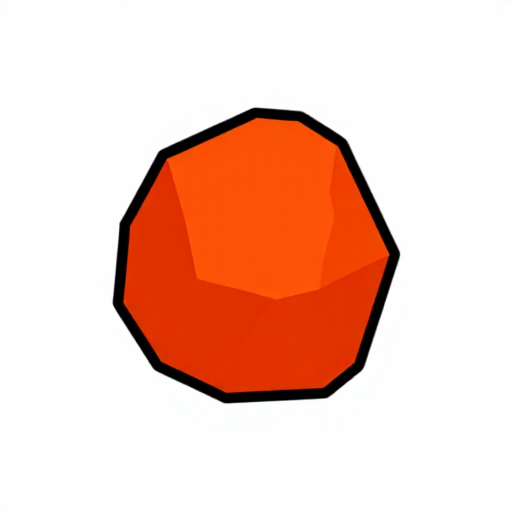 바나디나이트 표본
필요한 도구:
 지질 망치
지질 망치 휴대용 확대경 10배
 조흔판(무유 자기)휴대용 확대경 10배조흔판(무유 자기)
 모스 경도 시험침
Understand vanadium extraction from magnetite
Understand vanadium extraction from magnetite
Unlike most elements in this series, vanadium is not extracted from its own ore minerals but as a byproduct of iron and steel production. Titaniferous magnetite ores from deposits like Bushveld (South Africa), Panzhihua (China), and Otanmäki (Finland) are smelted in blast furnaces to produce pig iron. The vanadium concentrates in the iron.
When this vanadium-bearing pig iron is converted to steel in a basic oxygen furnace (BOF), the vanadium preferentially oxidizes during the blow and enters the slag as vanadium oxide (V₂O₅). This vanadium-rich slag (typically 10–25% V₂O₅) is the primary feedstock for vanadium production. The slag is roasted with sodium carbonate or sodium chloride to produce soluble sodium vanadate (NaVO₃), which is leached with water, precipitated, and fused to produce vanadium pentoxide (V₂O₅, a bright orange-yellow powder).
Metallic vanadium is produced by aluminothermic reduction: V₂O₅ + 5Ca → 2V + 5CaO (calcium reduction in a sealed reactor), or by carbon reduction in a vacuum at very high temperature. Most vanadium, however, is used as ferrovanadium (an iron-vanadium alloy, typically 50–80% V) added directly to steel — pure metallic vanadium is rarely needed.
Demonstrate the vanadium oxidation state rainbow
Demonstrate the vanadium oxidation state rainbow
The four oxidation states of vanadium in aqueous solution create one of chemistry's most famous color demonstrations — often called the 'vanadium rainbow.' Starting from yellow V(V) (as ammonium vanadate, NH₄VO₃, dissolved in dilute sulfuric acid), successive reductions produce blue V(IV), green V(III), and violet V(II).
The reduction can be performed with zinc metal: add granulated zinc to the acidified vanadate solution. The zinc slowly reduces the vanadium through all four states. The solution changes progressively: yellow → green (as blue V(IV) mixes with residual yellow V(V)) → blue (pure V(IV)) → green (V(III)) → violet (V(II)). The entire sequence, observed over 15–30 minutes, is one of the most vivid demonstrations of oxidation state chemistry.
This demonstration requires ammonium vanadate (NH₄VO₃), which is a laboratory chemical — not something readily produced from vanadinite at small scale. If available, dissolve 1 gram in 100 ml of 1M sulfuric acid and add 5 grams of zinc granules. Watch the color changes carefully — they represent four distinct electronic configurations of the same element, each absorbing different wavelengths of visible light.
필요한 도구:
 유리 시료병
 니트릴 장갑
 밀폐형 보안경
Understand del Río's lost priority and scientific discovery
Understand del Río's lost priority and scientific discovery
Andrés Manuel del Río's story is one of the most poignant in chemistry. In 1801, working at the Royal School of Mines in Mexico City, he analyzed a brown lead ore from Zimapán (now known to be vanadinite) and identified a new element. He noted that its salts turned red when heated (hence 'erythronium') and displayed multiple colors — the same oxidation-state color changes that Sefström would observe 30 years later.
Del Río sent samples to Alexander von Humboldt, who forwarded them to the French chemist Hippolyte-Victor Collet-Descotils in Paris. Collet-Descotils analyzed the samples and declared the new element was merely impure chromium. Del Río, deferring to the French chemist's authority, retracted his claim. When Sefström independently discovered vanadium in 1831, Friedrich Wöhler confirmed that del Río's erythronium and Sefström's vanadium were identical — but priority had been lost.
Del Río's story illustrates the sociology of scientific discovery: a correct finding by a scientist working in a colonial periphery (Mexico) was dismissed by a scientist at the center (Paris), and the discoverer himself accepted the dismissal. The element was not renamed to honor del Río, though his priority is now universally acknowledged. He lived until 1849, long enough to see vanadium's rediscovery and to know that he had been right all along.
Clean up and document results
Clean up and document results
Vanadinite specimens should be handled with gloves due to their lead content. After handling, wash hands with soap and water. Store vanadinite in a sealed container or display case to prevent accidental ingestion (especially important in households with children — the bright orange crystals are visually attractive). Vanadinite is not acutely hazardous through skin contact but is toxic if ingested due to the lead.
Any vanadium compound solutions (from the oxidation state demonstration) should be neutralized and disposed of through proper chemical waste channels. Vanadium compounds are moderately toxic and should not enter water systems.
Document your observations: vanadinite crystal form (hexagonal prism), color (red, orange, yellow), luster (adamantine), density (very heavy for its size), streak color. If the oxidation state demonstration was performed, record each color change and the time required. This element connects Mexican colonial mining (del Río, 1801) through Swedish mineralogy (Sefström, 1831) to modern energy storage technology (vanadium redox flow batteries) — one of the most wide-ranging narratives in the periodic table.
Ore grade: how much vanadinite per kilogram
Ore grade: how much vanadinite per kilogram
CC0 퍼블릭 도메인
이 블루프린트는 CC0로 공개되었습니다. 어떤 목적으로든 자유롭게 복사, 수정, 배포 및 사용할 수 있습니다.
제품 구매를 통해 메이커를 지원하세요. 판매자가 설정한 메이커 커미션 을 받거나, 이 블루프린트의 새로운 반복을 만들어 연결로 포함시킬 수 있습니다.