

Venturi Meter
안내
Build the constriction
Build the constriction
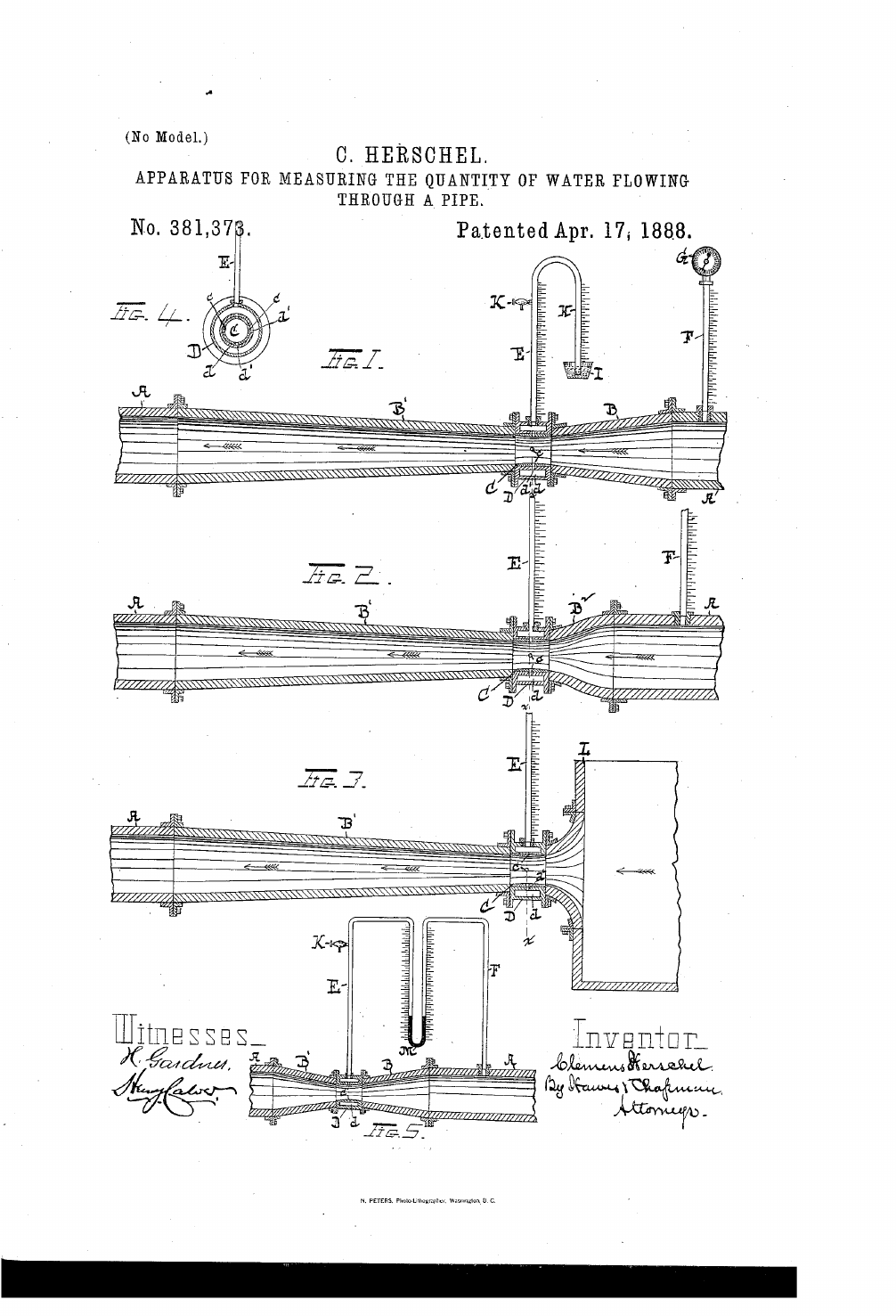
A wide section, a smoothly narrowing cone, a short throat, then a gentle widening.
- Use pipe of one diameter with a reducer to a smaller throat.
- Make the entry cone short and the exit cone long and gradual.
- Keep the inside smooth — burrs cause turbulence and spoil the reading.
이 단계의 재료:
 PVC 파이프1 length
Fit the pressure tappings
Fit the pressure tappings
Two vertical clear tubes turn pressure into a height you can read with a ruler.
- Drill one small tapping in the wide section and one at the throat.
- Fit clear vertical tubes into both, sealed so they do not leak.
- Mount a ruler behind them.
이 단계의 재료:
 고무관1 length
 자1 개
자1 개Run water and read the difference
Run water and read the difference
Start the flow and let the levels settle.
- Run water through at a steady rate.
- Read the height in each tube.
- Record the difference, Δh, in metres.
Calculate the flow
Calculate the flow
Geometry plus one measured height gives the flow rate.
- Measure the two internal diameters and compute areas A₁ and A₂.
- Apply: Q = A₂ × √( 2gΔh / (1 − (A₂/A₁)²) )
- g = 9.81 m/s². Q comes out in m³/s.
Check it against a bucket
Check it against a bucket
A calculation you have not checked is a guess. Catch the water and time it.
- Divert the outflow into a container for a measured number of seconds.
- Measure the volume collected.
- Q_actual = volume / time, and compare with the calculated Q.
이 단계의 재료:
 스톱워치1 개
 붕규산 비커1 개
History and context
History and context
Clemens Herschel was an American hydraulic engineer working on water supply at Holyoke, Massachusetts, where mills bought water by the quantity and needed it measured fairly. Existing meters obstructed the pipe, wore out, or lost too much pressure. His patent, US 381,373 of 17 April 1888, describes an apparatus for measuring the quantity of water flowing through a pipe using the sucking action at the narrow section of a tapered tube.
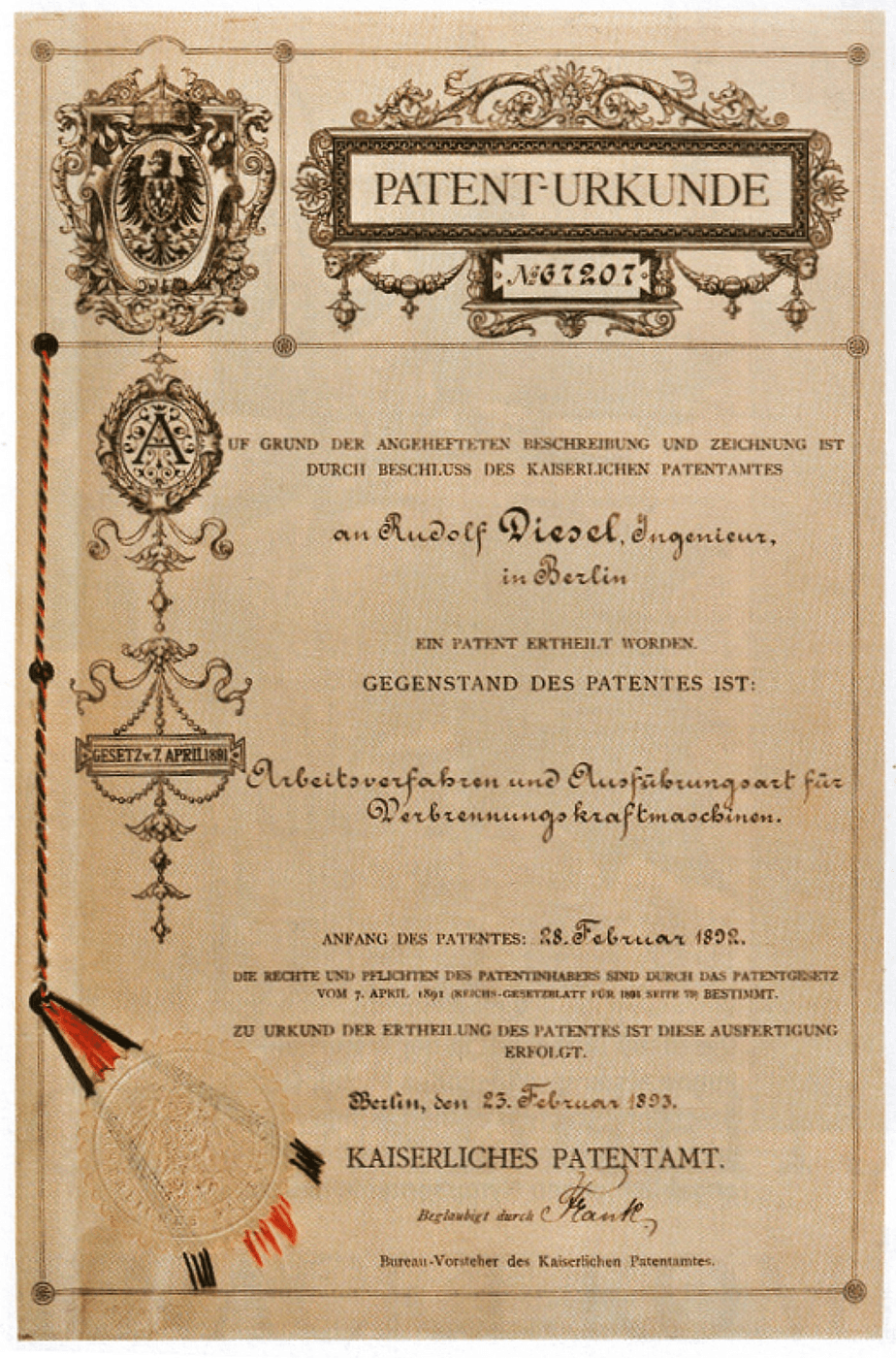
He named it after someone else. Giovanni Battista Venturi, an Italian physicist, had investigated flow through tapered tubes in 1797 and described the pressure effect, but he built no meter and proposed no measurement method. Herschel turned the observation into an instrument and gave the instrument Venturi's name — an unusually generous piece of attribution in patent history.
Where it went: waterworks, sewage plants and process industries adopted it for large flows where a permanent pressure loss would be expensive. The same physics appears in the carburettor, where the pressure drop at a throat draws fuel into the air stream, and in the filter pump on a laboratory bench.
Its weakness: the pressure difference goes as the SQUARE of the flow, so at low flow rates Δh becomes very small and hard to read accurately. A Venturi sized for full flow is a poor meter at a trickle, which is why plants size them for the range they actually expect.

CC0 퍼블릭 도메인
이 블루프린트는 CC0로 공개되었습니다. 어떤 목적으로든 자유롭게 복사, 수정, 배포 및 사용할 수 있습니다.
제품 구매를 통해 메이커를 지원하세요. 판매자가 설정한 메이커 커미션 을 받거나, 이 블루프린트의 새로운 반복을 만들어 연결로 포함시킬 수 있습니다.