예술
뷰티 및 웰니스
공예
문화 및 역사
엔터테인먼트
환경
음식 및 음료
역공학
과학
스포츠
기술
웨어러블



Wash and Rub Fastness: Testing the Colour Before You Trust It
A freshly dyed skein always looks good. The question is what it looks like after a winter of wear and half a dozen washes, and that is answered by testing rather than by hoping.
Three different things are meant by "fastness" and a dye can be good at one and bad at another. **Wash fastness** is whether the colour stays in the fibre in hot soapy water. **Rub fastness**, or crocking, is whether it comes off on a hand or another garment. **Light fastness** is whether it survives daylight, and has its own blueprint.
All three can be tested at home in a way that is honest, and the tests take minutes.
중급
3 hours
안내
1
1
The wash test, and the white witness beside it
The wash test, and the white witness beside it
Cut two small pieces of the dyed fibre. Keep one as the control, somewhere dark.
Take the other and pin a piece of undyed white cotton or wool against it. Wash both together in water at 40 C with a little neutral detergent, worked gently for half an hour, then rinse and dry them flat.
Then read two things:
**The sample against the control.** How much paler has it gone? A little is normal; a lot means dye that was never bonded.
**The white witness.** How much colour has moved onto it? This is the number that matters for a garment, because it is what will happen to everything else in the wash.
The witness is the part beginners leave out, and it is the half that predicts the disaster. A skein can hold its own depth perfectly and still ruin a load of washing.
이 단계의 재료:
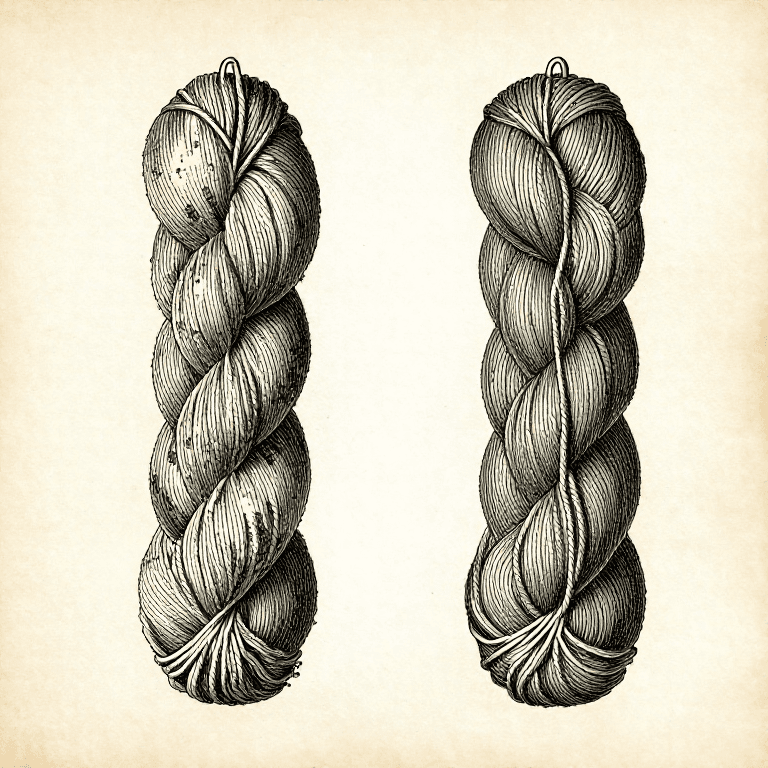
 물들이지 않은 모사1 타래
 면천(얇은)1 m
 순한 세제1 개
필요한 도구:
 뚜껑 있는 유리병
 가위
가위 색인 카드
색인 카드 건조대
건조대2
2
The rub test takes ten seconds
The rub test takes ten seconds
Rub a piece of dry white cotton firmly against the dyed fibre, ten strokes, always in the same direction. Then wet a second piece and do the same again.
Look at both white pieces. Any colour on them is colour that will come off on skin, on a shirt collar, on a chair.
The wet test is nearly always worse than the dry one, which is why it is worth doing both.
**Indigo is the famous case.** Indigo is held mechanically in the fibre rather than bonded to it, so even a well-made indigo crocks — and that is exactly what produces the worn highlights on old denim. It is a property of the dye, not a fault in the work, and it can be reduced but not removed by thorough rinsing and by not building the depth too fast.
**Heavy shades crock more than pale ones**, in every dye, because there is more surface dye sitting on top of what actually bonded.
이 단계의 재료:
면천(얇은)1 m물들이지 않은 모사1 타래필요한 도구:
가위색인 카드3
3
Scoring it so the answer means something next year
Scoring it so the answer means something next year
A note saying "faded a bit" is worth nothing six months later. Use a scale and keep the samples.
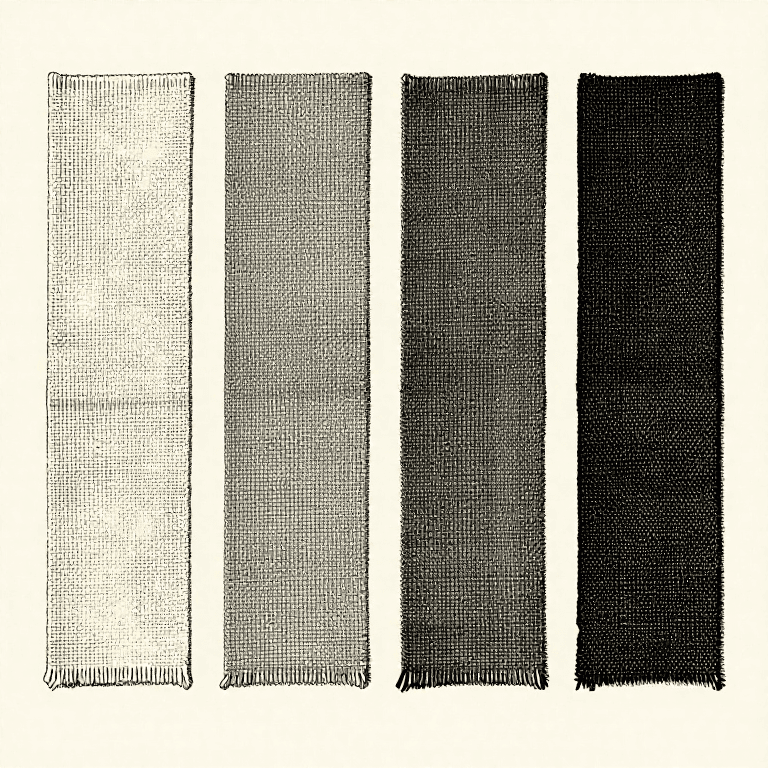
The textile industry uses a five-point grey scale where 5 is no change and 1 is severe change. A home dyer can use the same five points honestly by keeping the control alongside:
**5** — no difference visible against the control.
**4** — a difference only visible when they are held touching.
**3** — clearly different, still obviously the same colour.
**2** — strongly changed.
**1** — a different colour.
Score the sample and the white witness separately; they are different numbers.
Staple both pieces and the control to the record card. The stapled scrap is the measurement — anything written down is a description of it.
이 단계의 재료:
물들이지 않은 모사1 타래필요한 도구:
색인 카드가위4
4
What to do about a poor result
What to do about a poor result
Poor fastness has a small number of causes and most of them are fixable next time.
**Overloaded bath.** More dye was used than the fibre could bond, so the excess sits on the surface. Symptom: rinse water that never runs clear, heavy crocking, big loss in the first wash. Use less dye, or ladder a second skein through it.
**Under-mordanted.** Especially cellulose without a tannin step. Symptom: pale result and most of it washes out.
**Struck too fast.** Hot entry, so the dye grabbed the surface instead of penetrating. Symptom: uneven as well as unfast.
**Not rinsed properly.** Symptom: colour in the first wash and then nothing much afterwards. This is the cheapest one to fix, and a proper rinse — until the water runs clear, at bath temperature — is part of the dyeing, not the tidying up.
For an existing skein that crocks, more rinsing genuinely helps. A wash in warm water with a little detergent removes surface dye and the skein ends slightly paler and much better behaved. Do that before it is knitted, not after.
이 단계의 재료:
물들이지 않은 모사2 타래순한 세제1 개필요한 도구:
 큰 솥
큰 솥 온도계건조대색인 카드
관련 블루프린트
이 블루프린트들은 지식을 공유합니다 — 기술, 재료 또는 원리

CC0 퍼블릭 도메인
이 블루프린트는 CC0로 공개되었습니다. 어떤 목적으로든 자유롭게 복사, 수정, 배포 및 사용할 수 있습니다.
제품 구매를 통해 메이커를 지원하세요. 판매자가 설정한 메이커 커미션 을 받거나, 이 블루프린트의 새로운 반복을 만들어 연결로 포함시킬 수 있습니다.