예술
뷰티 및 웰니스
공예
문화 및 역사
엔터테인먼트
환경
음식 및 음료
역공학
과학
스포츠
기술
웨어러블



Wet Forming: Leather Is the Only Material That Remembers a Shape
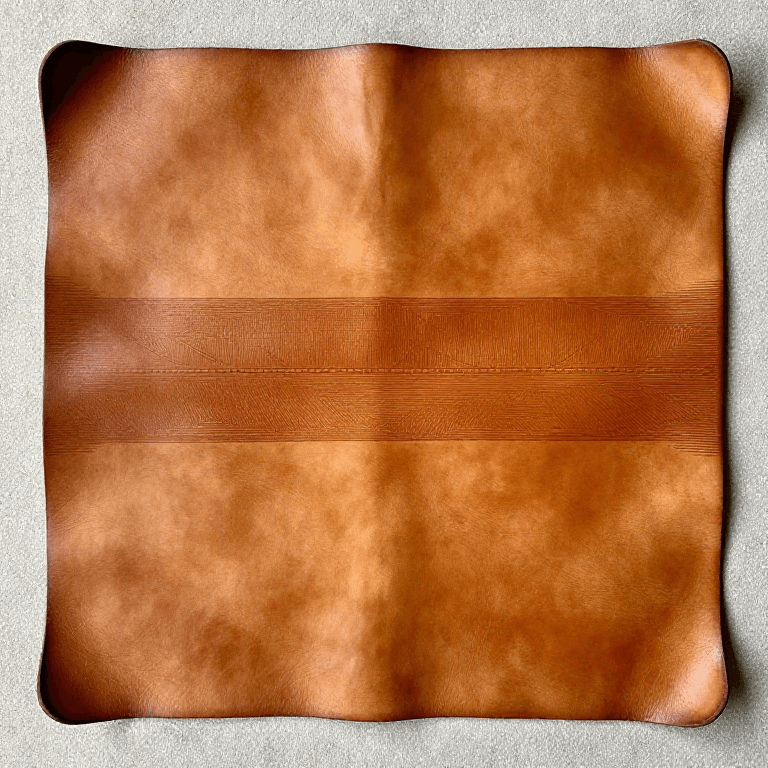
Wet vegetable-tanned leather can be stretched, pushed and moulded like thick felt, and when it dries it holds the new shape permanently and becomes noticeably harder than it was.
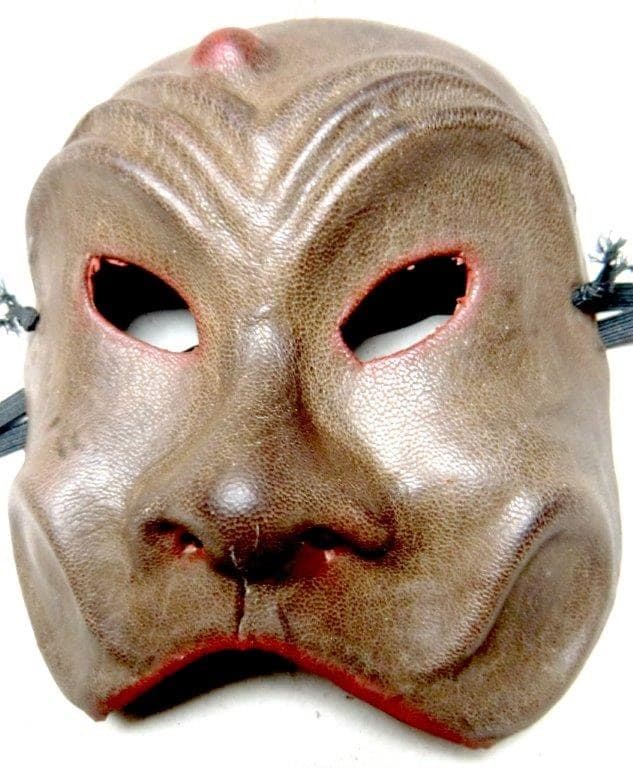
That is what a commedia mask, a moulded sheath, a holster, a bottle case and a piece of leather armour all depend on, and no other common material does it — a plastic must be heated, a metal must be beaten, and cloth does not hold a shape at all.
This rung is how to case leather properly, how to form it over something, and the separate and much more aggressive business of hardening it in hot water.
중급
5 hours
안내
1
1
Casing: damp all the way through, not wet
Casing: damp all the way through, not wet
**Casing** is bringing leather to the right moisture content for working, and it is not the same as wetting it.
**Dip, do not soak.** Submerge the piece in cool water only until the bubbles stop — a few seconds for thin leather, up to a minute for heavy. Then take it out.
**Let it equalise.** Lay it flat, wrapped or in a bag, for anything from twenty minutes to overnight. The surface water moves inward, and the piece becomes evenly damp rather than wet outside and dry inside. This waiting is the step beginners skip and it is what makes the difference.
**The test.** Properly cased leather has returned almost to its original colour on the surface but feels cool. It takes a stamp cleanly, moulds without resisting, and does not squeeze water out under pressure.
**Too wet** and the leather is floppy, stamps blur, and the grain can burst. **Too dry** and it will not take a shape at all and cracks at a fold.
**Warm water opens the fibres more** and speeds everything up, but it starts to shrink and harden the leather — which is a separate operation, covered below, and not what is wanted here. Use cool water for forming.
이 단계의 재료:
 식물 탄닌 가죽2 개
2
2
Forming it over something
Forming it over something
**Make a form.** Wood, carved to the shape wanted — a block for a sheath, a positive of a face for a mask, the object itself for a case. It must be slightly undersized, because the leather will shrink a little as it dries and will grip.
**Stretch the cased leather over it grain side out** and work it down with fingers, a bone folder and a modelling tool, from the middle outwards. Push the leather into every hollow. It will take far more stretching than expected.
**Hold it while it dries.** Clamps, a matching negative form pressed down, string wrapped around, tacks into a board outside the finished line — whatever holds every part in contact with the form.
**Dry slowly, at room temperature.** A day or two. Forced heat shrinks and hardens the piece unevenly and can make it brittle, and a piece dried on a radiator will curl away from its form.
**Only vegetable tan does this.** Chrome tan will get wet and dry again with no memory of the shape at all. This is the single most useful practical consequence of the tannage difference.
Expect about 5% shrinkage as it dries, and rather more if the water was warm. For anything that must fit — a sheath, a case — form it around the actual object wrapped in one layer of cling film.
이 단계의 재료:
식물 탄닌 가죽2 개필요한 도구:
 나무 망치
나무 망치 마노 광내기 도구
 자
자3
3
Hardening: cuir bouilli, and what it actually is
Hardening: cuir bouilli, and what it actually is
**Cuir bouilli** — boiled leather — is the medieval method of turning vegetable tanned leather into something closer to a hard plastic, used for armour, bottles, cases and scabbards.
What happens is **collagen shrinkage**. Above roughly **70 to 80 C**, the collagen fibres in vegetable tanned leather contract sharply and irreversibly. The piece shrinks, thickens, darkens, and on drying becomes hard and rigid.
**It is a one-way change, and it is easy to overdo.** Too long or too hot and the leather goes from hard to brittle to a shrivelled, curled, useless lump, and nothing recovers it. Seconds matter: dip for a few seconds at a time and watch, rather than boiling for minutes.
**Form it first, harden it second**, or form it during the few moments it is still pliable after the dip. It sets fast.
**The wax method is more controllable.** Melted beeswax at around 70 C, or a wax and oil mixture, penetrates the leather and stiffens it as it cools, without the violence of hot water. This is how most reproduction armour is made, and the piece is waterproof afterwards.
**Hot water and hot wax both burn.** Work with tongs and gloves, keep the vessel stable, and never heat wax over a direct flame — it flashes.
이 단계의 재료:
식물 탄닌 가죽2 개 밀랍2 개
밀랍2 개필요한 도구:
나무 망치4
4
Tooling and stamping, which is the same wetness
Tooling and stamping, which is the same wetness
Stamping and carving use the same cased state as forming, which is why they belong in this rung.
**Stamping** drives a shaped punch into the damp surface with a mallet. The fibres compress and stay compressed. One firm blow, square to the surface — several taps blur the impression as the stamp shifts.
**Carving** cuts a shallow line with a swivel knife, then opens and shapes the surface either side of it with bevellers and modelling tools. The cut is not through the leather; it is a line about half the thickness deep that gives the tools an edge to work against.
**Work on a hard surface** — stone, glass, a marble slab. A soft surface absorbs the blow and the impression is shallow and uneven.
**Keep the casing even.** As the leather dries under the work it stops taking impressions. Re-damp lightly rather than pressing harder, and work in sections on a large piece.
**Only vegetable tan takes tooling**, for the same reason it burnishes and wet forms: the fibres can be compressed and will stay where they are put.
이 단계의 재료:
식물 탄닌 가죽2 개필요한 도구:
 가죽 타출 도장 세트나무 망치
 고무망치
고무망치 자가 복원 커팅 매트
관련 블루프린트
이 블루프린트들은 지식을 공유합니다 — 기술, 재료 또는 원리
CC0 퍼블릭 도메인
이 블루프린트는 CC0로 공개되었습니다. 어떤 목적으로든 자유롭게 복사, 수정, 배포 및 사용할 수 있습니다.
제품 구매를 통해 메이커를 지원하세요. 판매자가 설정한 메이커 커미션 을 받거나, 이 블루프린트의 새로운 반복을 만들어 연결로 포함시킬 수 있습니다.