예술
뷰티 및 웰니스
공예
문화 및 역사
엔터테인먼트
환경
음식 및 음료
역공학
과학
스포츠
기술
웨어러블
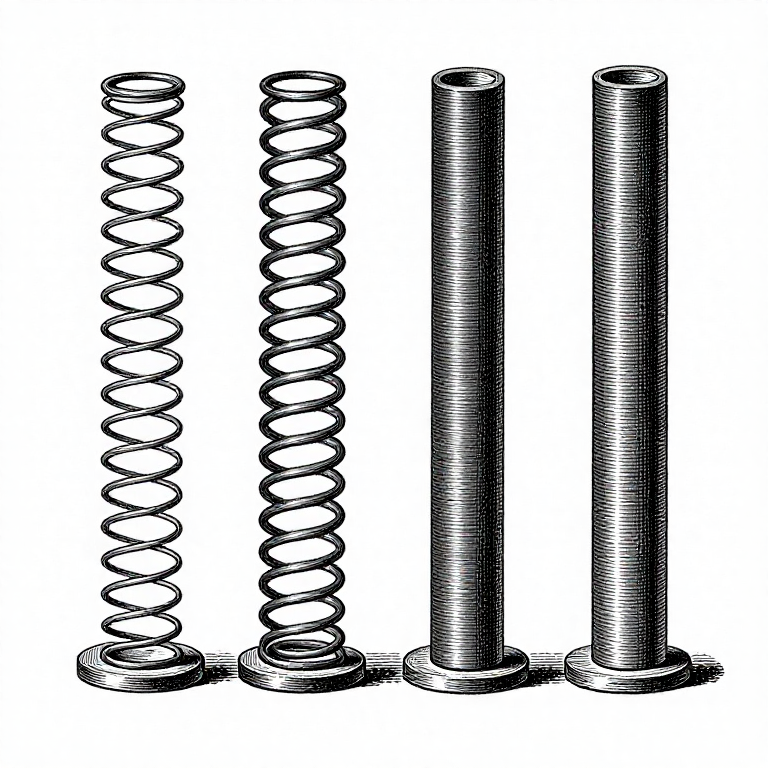


Spring Rate: The One Number a Spring Is
Every spring in a machine is doing one of three jobs: holding a force, storing energy, or absorbing a shock. All three are described by a single number — the **rate**, the force it takes to move the spring one millimetre.
For a helical spring that number is not looked up, it is built in: it comes from the wire diameter, the coil diameter and the number of active coils. The wire diameter enters to the **fourth power**, which is why a spring wound from wire a tenth of a millimetre too thick is not slightly too stiff, and why the first thing to measure on a spring you mean to replace is the wire.
This rung is the rate, what each variable is worth, the energy a spring holds at a given deflection, and what happens when two springs are put end to end or side by side.
초급
3 hours
안내
1
1
The three jobs, and the one number
The three jobs, and the one number
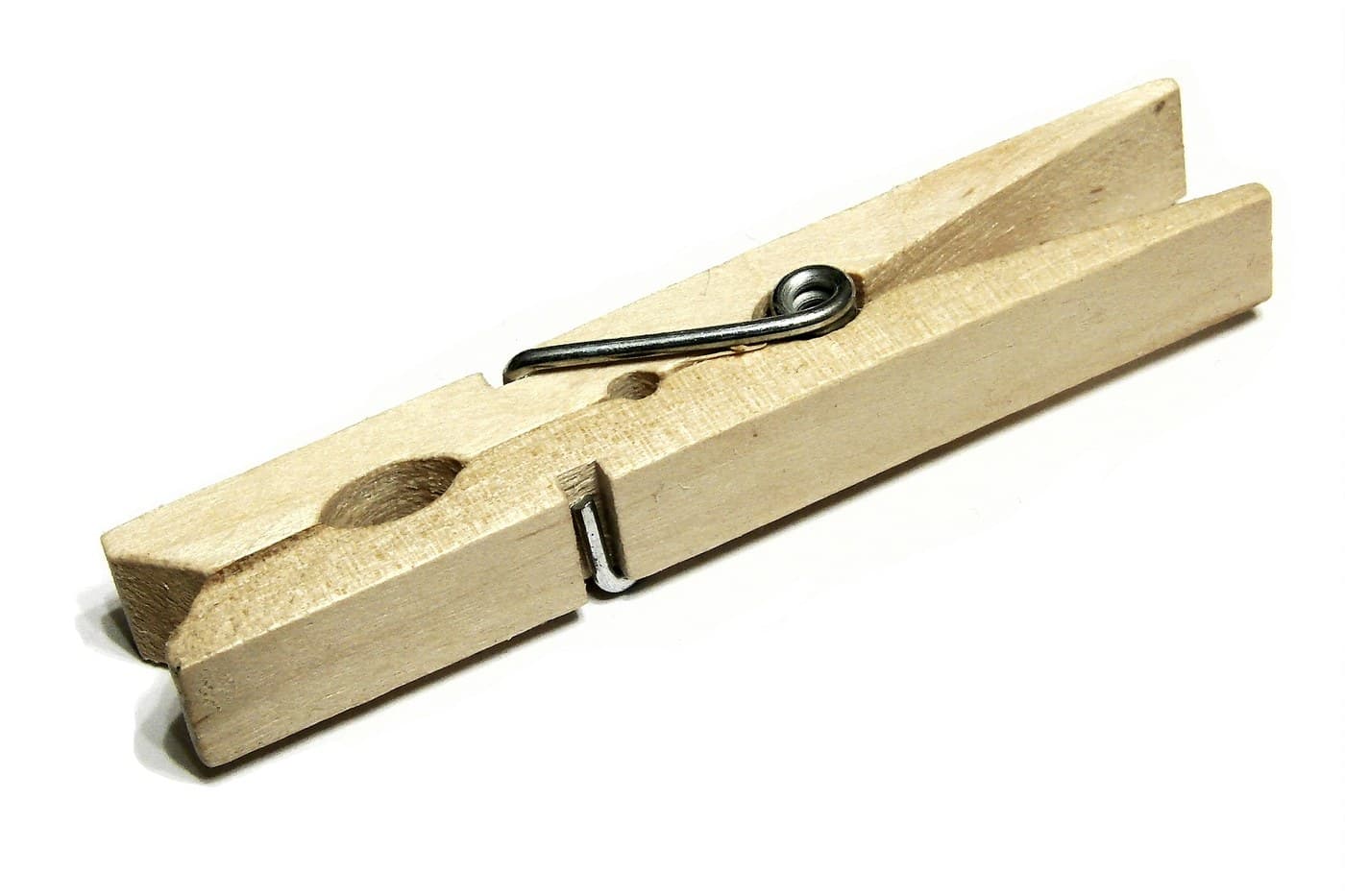
**Holding a force.** A valve spring, a detent, a brush spring, a clothespin. What matters is the force at the working position, and the fact that it barely changes as things wear. A soft spring with plenty of preload does this better than a stiff one, because the force falls away slowly.
**Storing energy.** A mainspring, a catapult, a spring-driven toy. What matters is the total energy, which is the area under the force-deflection line, so a long travel is worth more than a high force.
**Absorbing a shock.** A suspension spring, a buffer, a door stop. What matters is how far it can move while the force stays acceptable — and the enemy is bottoming out, where the force goes vertical.
**The rate ties all three together.** It is measured in newtons per millimetre (or pounds per inch), and a helical spring holds it constant over almost all its travel. That linearity is not a law of nature, it is a property of the geometry: it stops being true when coils start touching each other.
**Two things the rate does NOT tell you.** How much force the spring is under when at rest — that is the **preload**, set by the assembly, not by the spring. And how far it can go before something breaks, which is a stress question and the subject of the next rungs.
이 단계의 재료:
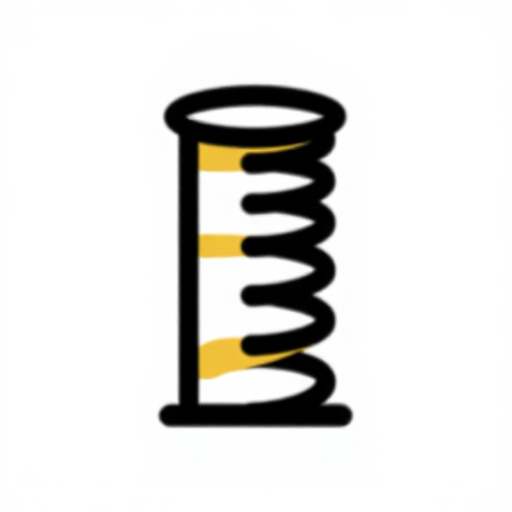 압축 스프링 세트1 개
필요한 도구:
 힘 측정기(스프링 저울)
 자
자2
2
Rate from geometry, energy, and springs together
Rate from geometry, energy, and springs together
Jupyter 노트북 불러오는 중…
필요한 도구:
 데스크톱 컴퓨터
3
3
Measuring the rate of a spring you have
Measuring the rate of a spring you have
**Do not measure one point.** A single force and a single length tell you nothing, because you do not know the free length the force was measured from, and you cannot see whether the spring is linear.
**Measure the free length first**, with the spring lying on the bench and nothing touching it. Write it down. For an extension spring measure between the inside faces of the hooks, and say so in the note, because there are three conventions and they differ by a coil.
**Then take at least five points** across the working range. Hang known weights from an extension spring, or press a compression spring in a vice against a force meter. Record load and length, not load and deflection — deflection is computed, and recording it hides a mistake in the free length.
**Plot it and look at the line.** A straight line means the rate is the slope. A line that bends UP at the end means the coils are starting to touch, or an extension spring has run out of hook. A line that does not pass through the free length means the spring has initial tension — normal on an extension spring, and a fault on a compression spring.
**Fit the slope over the straight part only.** Taking the rate from the first and last points is the commonest error, because the last point is usually the one that has left the straight part.
**Count the active coils** while you are there: total coils minus the dead ones at each end. On a squared and ground compression spring that is roughly two. If the rate you compute from the geometry and the rate you measured disagree by more than about 10%, you have miscounted the active coils or mismeasured the wire.
이 단계의 재료:
압축 스프링 세트1 개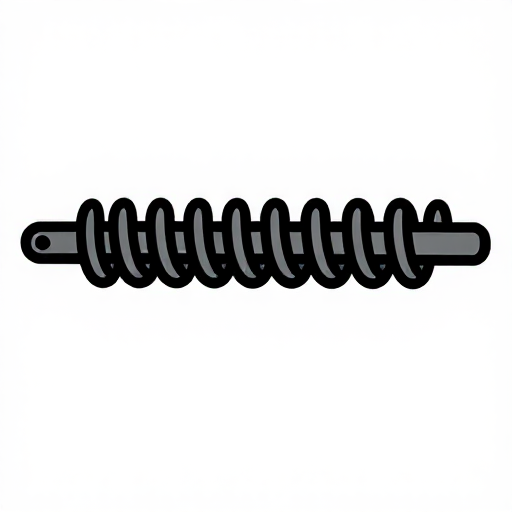 인장 스프링1 개
필요한 도구:
힘 측정기(스프링 저울) 교정용 분동 세트
 버니어 캘리퍼스자
4
4
Where a spring stops being a spring
Where a spring stops being a spring
**Coil bind.** Push a compression spring far enough and every coil touches its neighbour. At that point it is a steel tube: the rate goes effectively infinite and whatever is pushing it is now loading a solid column. Nothing is designed to reach it, and a great many things do.
**Running out of hook.** An extension spring pulled hard enough straightens its end loops before the coils do anything interesting. The force-deflection line goes soft and then the hook opens out, permanently.
**Taking a set.** Loaded beyond the yield of the wire, a spring does not break — it comes back shorter than it started. The rate is unchanged, but every force is now lower because the free length is lower. This is the quiet failure, and it is why a spring that 'has gone weak' almost always measures short rather than soft.
**Buckling.** A long thin compression spring does not compress straight, it flicks sideways. It is not a strength failure at all and has its own rung.
**Surge.** Cycled fast enough, a spring's own coils resonate and a wave travels along it. The spring then carries stresses far above what the working deflection suggests. It is the reason valve springs have a natural frequency specified.
**The common thread:** every one of these is a limit on the DEFLECTION, not on the rate. A spring is linear and well behaved right up to the point where it is not, and knowing where that point is matters more than the rate does.
이 단계의 재료:
압축 스프링 세트1 개인장 스프링1 개필요한 도구:
자 확대 루페
확대 루페관련 블루프린트
이 블루프린트들은 지식을 공유합니다 — 기술, 재료 또는 원리


CC0 퍼블릭 도메인
이 블루프린트는 CC0로 공개되었습니다. 어떤 목적으로든 자유롭게 복사, 수정, 배포 및 사용할 수 있습니다.
제품 구매를 통해 메이커를 지원하세요. 판매자가 설정한 메이커 커미션 을 받거나, 이 블루프린트의 새로운 반복을 만들어 연결로 포함시킬 수 있습니다.