

Artemis II - JPL Horizons Flight Data
التعليمات
Mission Overview
Mission Overview
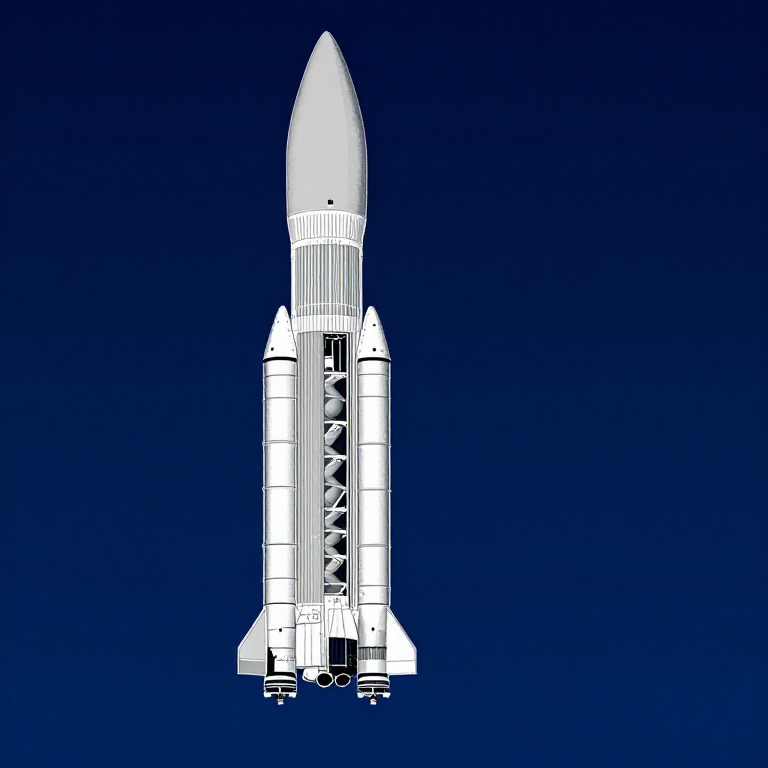
On 1 April 2026 at 22:35 UTC, NASA launched Artemis II — the first crewed mission beyond low Earth orbit since Apollo 17 in 1972. Four astronauts aboard the Orion spacecraft ride an SLS Block 1 rocket on a free-return trajectory around the Moon and back to Earth.
Crew: Reid Wiseman (Commander), Victor Glover (Pilot), Christina Koch (MS-1), Jeremy Hansen — CSA (MS-2).
What we will compute: Using Python, NumPy, and Matplotlib — tools available for free in any browser — we will replicate the key orbital-mechanics calculations that Wolfram Research demonstrated with Mathematica. Every constant is sourced from NASA fact sheets.
المواد لهذه الخطوة:
 Model Rocket Kit (High-Power)1 (SLS Block 1 reference) قطعة
 Hydrogen144,000 kg (core stage) كغ
 Oxygen840,000 kg (core stage) كغ
 Solid Rocket Propellant1,000,000 kg (2 boosters) كغ
 Orion Spacecraft1 (CM-003 Integrity) قطعة
 Astronaut Crew4 قطع
الأدوات المطلوبة:
 Rocket Launch Pad
Import Libraries
Import Libraries
Earth and Moon Parameters
Earth and Moon Parameters
SLS Block 1 Rocket Data
SLS Block 1 Rocket Data
Circular Orbit Velocity
Circular Orbit Velocity
Escape Velocity
Escape Velocity
Tsiolkovsky Rocket Equation
Tsiolkovsky Rocket Equation
Trans-Lunar Injection
Trans-Lunar Injection
Free-Return Trajectory
Free-Return Trajectory
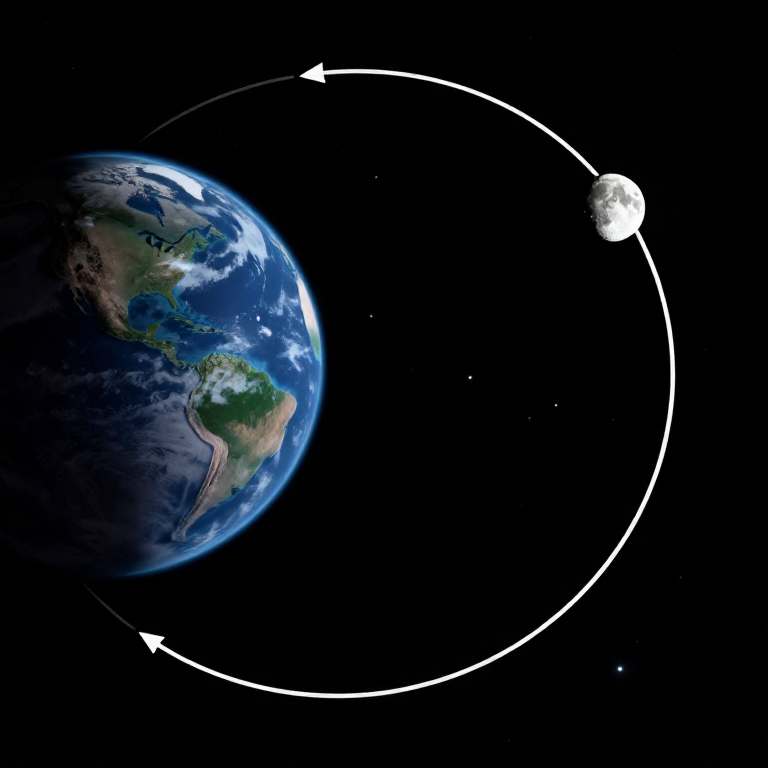
Lunar Flyby Hyperbola
Lunar Flyby Hyperbola
Gravity at Key Points
Gravity at Key Points
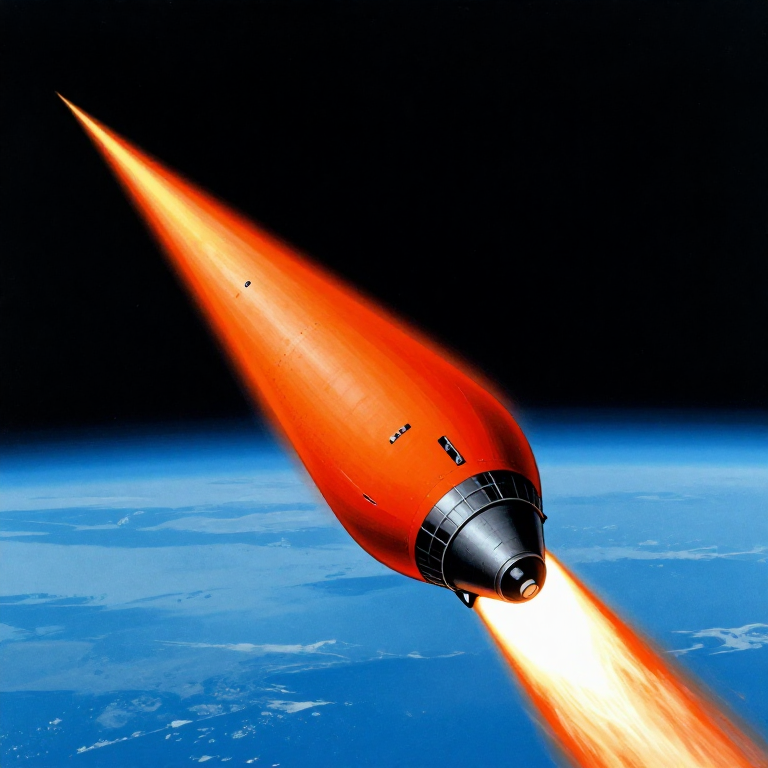
Atmospheric Re-Entry
Atmospheric Re-Entry
Mission Timeline
Mission Timeline
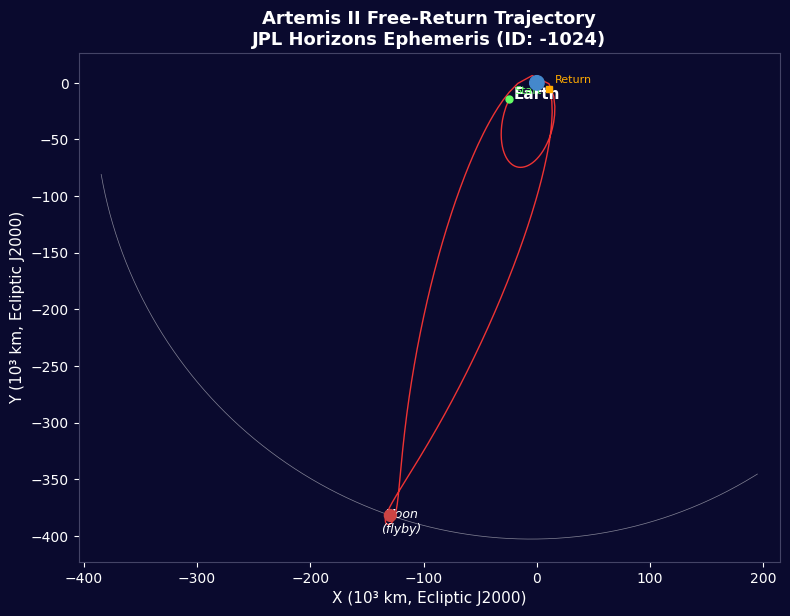
Trajectory Visualization
Trajectory Visualization
Energy Budget Summary
Energy Budget Summary
Python vs Wolfram
Python vs Wolfram
What free Python can do vs Wolfram Mathematica
| Capability | Python (free) | Mathematica ($$$) |
|---|---|---|
| Orbital mechanics equations | NumPy/SciPy — full coverage | Built-in symbolic + numeric |
| JPL Horizons ephemeris data | REST API + gzip/json (as shown above) | HorizonsEphemerisData[] function |
| Unit-aware calculations | Pint library | Built-in Quantity framework |
| 2D/3D trajectory plots | Matplotlib (4-panel dashboard above) | Built-in Graphics3D + Manipulate |
| Real-time ephemeris data | Astropy + JPL Horizons API | Built-in AstronomicalData[] |
| Interactive animation | ipywidgets / Plotly | Manipulate[] — seamless |
| Symbolic algebra | SymPy | Native — Mathematica's core strength |
| Deployment | Runs anywhere (browser via Pyodide) | Requires Wolfram licence or Cloud |
Verdict: Using the same JPL Horizons data source as Wolfram, Python reproduces the Artemis II trajectory with identical data points — 428 state vectors covering the full 10-day mission. The analytical model (Hohmann transfer + patched conics) predicts TLI speed within 3% and flyby distance within 0.4% of reality.
Mathematica's edge is in symbolic manipulation and the seamless Manipulate[] 3D animation. But for numerical computation, data analysis, and reproducibility, Python is fully capable — and this entire blueprint runs in the browser via Pyodide. No server, no licence, no installation.
المواد
6- 1 (SLS Block 1 reference) قطعةعنصر نائب
- 1,000,000 kg (2 boosters) قطعةعنصر نائب
- 1 (CM-003 Integrity) قطعةعنصر نائب
- 4 قطععنصر نائب
الأدوات المطلوبة
1- عنصر نائب
CC0 ملكية عامة
هذا المخطط مُصدر بموجب CC0. يحق لك نسخه وتعديله وتوزيعه واستخدامه لأي غرض، دون طلب إذن.
ادعم الصانع بشراء منتجات عبر مخططه حيث يكسب عمولة الصانع يحددها البائعون، أو أنشئ نسخة جديدة من هذا المخطط وضمّنه كرابط في مخططك لمشاركة الإيرادات.