සහයෝගීතාව
කලාව
රූපලාවණ්ය සහ සුවතාව
ශිල්පය
සංස්කෘතිය සහ ඉතිහාසය
විනෝදාස්වාදය
පරිසරය
ආහාර සහ පාන
ප්රතිලෝම ඉංජිනේරු
විද්යාවන්
ක්රීඩා
තාක්ෂණය
පැළඳිය හැකි
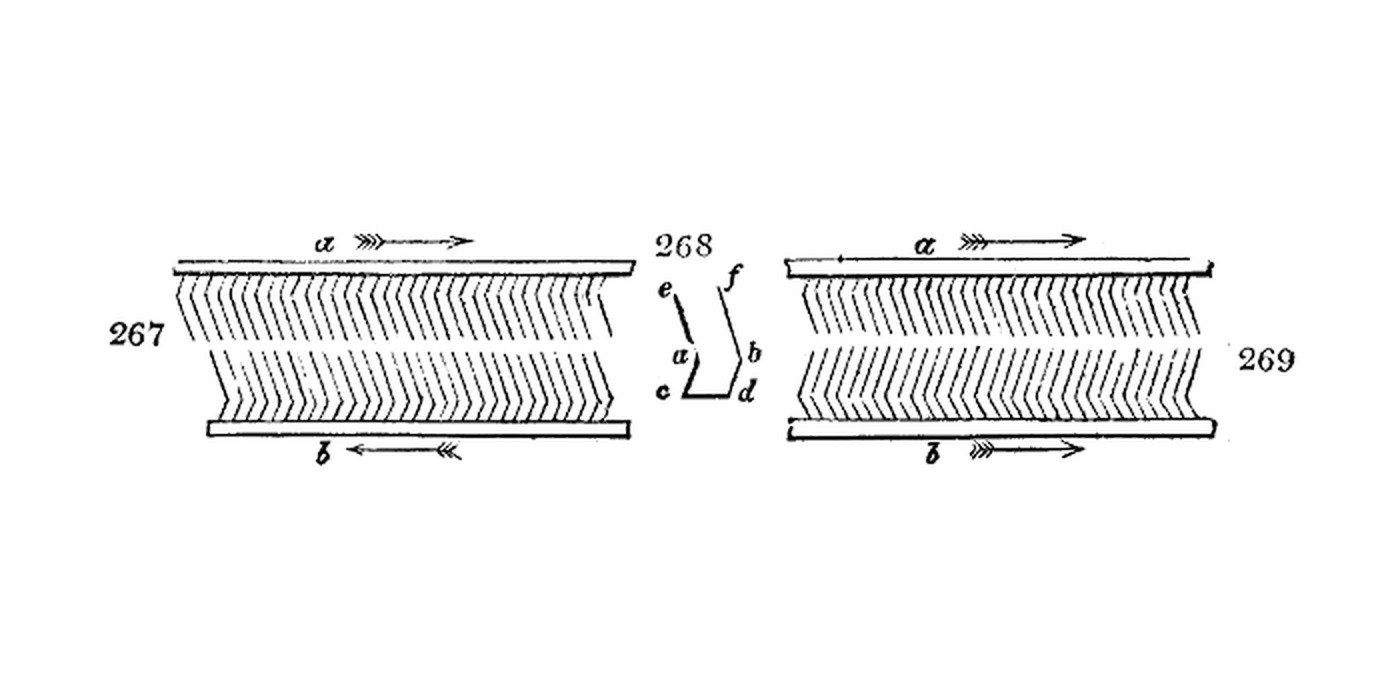


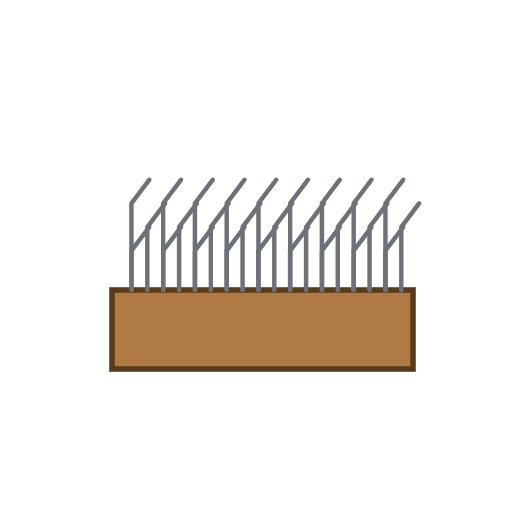
Card Clothing: Twin-Toothed Wire Staples Set in Shaved Leather (Ure, 1839)
Card clothing is the toothed face of a card: leather set with rows of bent wire staples. Andrew Ure's Dictionary of Arts (1839) explains why it is hard to make well. Every staple gives two teeth, and both teeth must be bent to exactly the same angle; the twin holes for each staple must slope at the same angle through the leather; and the leather must be the same thickness everywhere, or the teeth stand at different lengths and the card works unevenly. Factories shaved the leather to an even thickness, losing about half its weight, and gave the wire and leather out to be put together by hand.
Ure gives no wire metal, gauge, tooth length, angle or hole spacing; those are unknown here.
Source: Andrew Ure, A Dictionary of Arts, Manufactures and Mines (1839), CARDS. Picture: his figs. 267-269, card teeth and one staple.
මධ්යම
A day for a small sheet
උපදෙස්
1
1
Read Ure
Read Ure
"Cards are formed of a sheet or fillet of leather pierced with a multitude of small holes, in which are implanted small staples of wire with bent projecting ends called teeth. Thus every piece of wire is double toothed."
2
2
Shave the leather even
Shave the leather even
Shave the leather to the same thickness over its whole surface; in the factory about half its weight is lost in shaving and trimming. If the thickness varies, teeth of the same length stand at different heights. The thickness is not given (unknown).
මෙම පියවර සඳහා ද්රව්ය:
 ශාක මගින් පදම් කළ සම1 පත්රය
අවශ්ය මෙවලම්:
 සම් තුනී කරන පිහිය
 නොදන්නා මිනුම්
3
3
Bend the staples
Bend the staples
Cut the wire into equal lengths. Bend each length at right angles at two points (c and d in fig. 268) to make a staple, then bend each leg again at the same obtuse angle (a and b), so the two teeth lean the same way. Every staple must be bent alike. The metal and gauge of the wire, the tooth length and the angle are not given (unknown).
මෙම පියවර සඳහා ද්රව්ය:
 නොදන්නා ලෝහය1 wire
අවශ්ය මෙවලම්:
 විකර්ණ කම්බි කපන අඬුව
 පැතලි කට සන්නසනොදන්නා මිනුම්
4
4
Prick the twin holes
Prick the twin holes
Prick the leather with pairs of holes the width of a staple apart (c to d), in regular rows, every hole sloping at the same angle through the leather. The spacing is not given (unknown).
අවශ්ය මෙවලම්:
 සිදුරු අඬුවනොදන්නා මිනුම්
5
5
Set the staples
Set the staples
Push each staple through its two holes from the back, so the cross piece (c d) lies against the back of the leather and holds it, and the teeth stand out on the face all leaning one way.
අවශ්ය මෙවලම්:
පැතලි කට සන්නස6
6
History and honest limits
History and honest limits
By 1839 machines at Halifax, Leeds, Glasgow and Lille shaved the leather, pierced it, cut and bent the wire and set the staples; Ure describes a machine that does all four in turn. Card clothing was then nailed to the flat or cylindrical wooden or metal surfaces of hand cards and carding engines.
The wire metal and gauge, tooth length, knee angle, hole spacing and leather thickness are not given; vegetable-tanned leather stands for the card leather.
ද්රව්ය
2- 1 පත්රයස්ථානගත
- 1 wireස්ථානගත
අවශ්ය මෙවලම්
5- ස්ථානගත
- ස්ථානගත
- ස්ථානගත
- ස්ථානගත
- ස්ථානගත
මෙම සැලසුම සාදන්නේ
CC0 පොදු වසම
මෙම බ්ලූප්රින්ට් CC0 යටතේ නිකුත් කර ඇත. ඔබට අවසර නොමැතිව පිටපත් කිරීම, වෙනස් කිරීම, බෙදා හැරීම සහ භාවිතා කිරීම කළ හැක.
බ්ලූප්රින්ට් හරහා නිෂ්පාදන මිලදී ගැනීමෙන් නිර්මාතෘට සහාය වන්න නිර්මාතෘ කොමිසම විකුණුම්කරුවන් විසින් නියම කළ, හෝ මෙම බ්ලූප්රින්ට්හි නව අනුවාදයක් සාදා ආදායම බෙදා ගැනීමට ඔබේ බ්ලූප්රින්ට්හි සම්බන්ධතාවයක් ලෙස ඇතුළත් කරන්න.