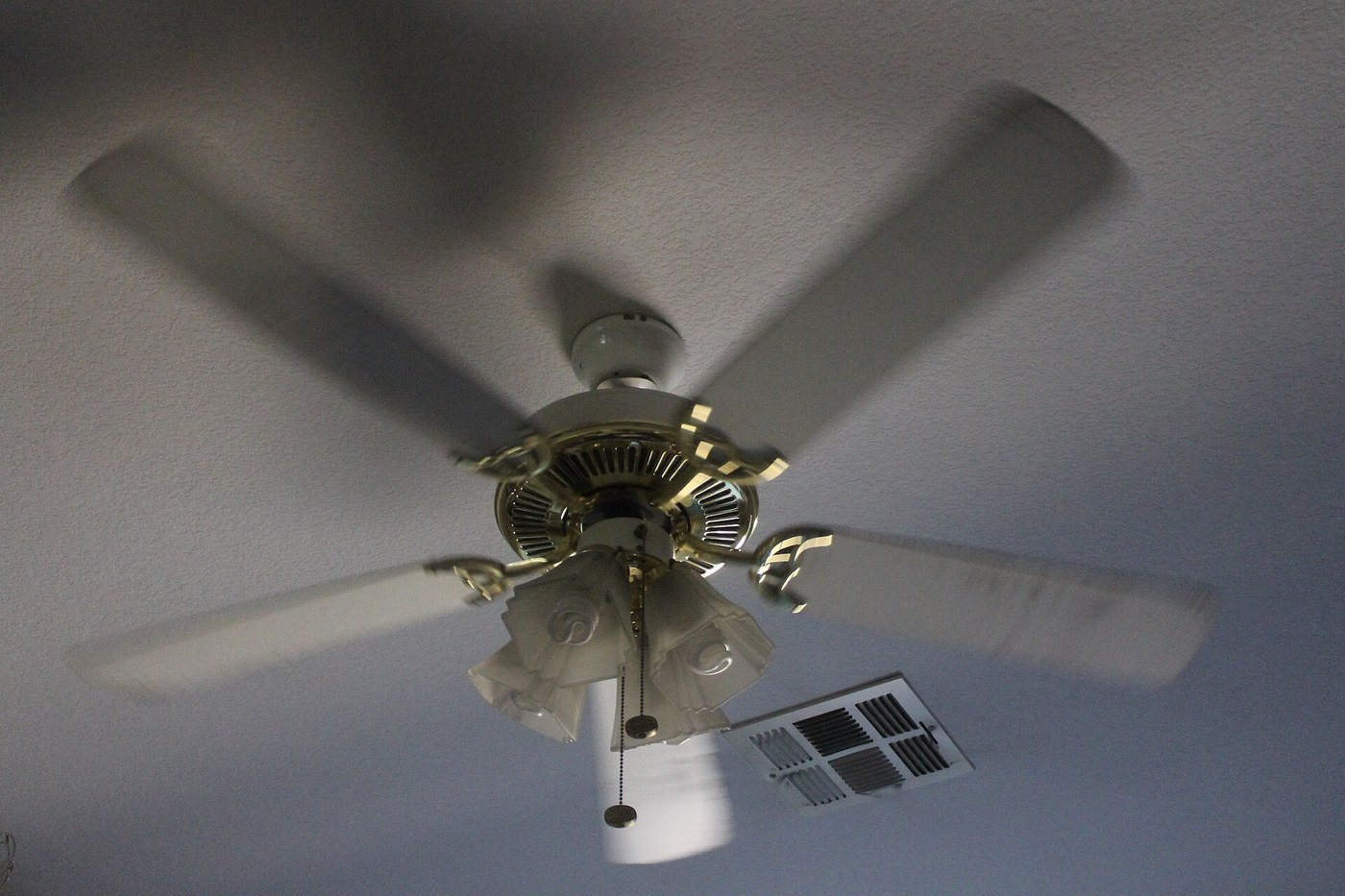


The Ceiling Fan and the Punkah
A fan does not cool a room. Run one in an empty sealed room and the temperature rises, because the motor's energy ends up as heat in the air.
What a fan cools is a person, and it does it by two mechanisms that have nothing to do with air temperature.
It strips the boundary layer. A still body sits inside a thin film of air it has already warmed and moistened. Moving air replaces that film continuously, so heat leaves the skin faster even though the air is no cooler.
It drives evaporation. Sweat only cools when it evaporates, and evaporation stalls once the air touching the skin is saturated. Moving air carries that saturated layer away, and this effect is much the larger of the two.
The result is that moving air feels several degrees cooler than it is — a genuine sensation, not an illusion, because the body really is losing heat faster. But a thermometer on the wall does not move, which is why the room reading is unchanged.
The punkah — a cloth panel swung from the ceiling by a rope — and the electric ceiling fan are the same device with different power sources, and both obey the same rule: turn it off when you leave the room, because it was never cooling the room.
උපදෙස්
Prove the room gets warmer
Prove the room gets warmer
Put a thermometer in a small closed room, record the temperature, run a fan for an hour with the door shut, and record again. Keep the thermometer out of the airstream.
Expect the reading to be the same or very slightly HIGHER.
Now hold your hand in the stream and note that it feels markedly cooler.
Both observations are correct. Write them down together, because the whole blueprint lives in the gap between them — and so does the single most useful piece of household energy advice there is.
අවශ්ය මෙවලම්:
 Thermometer (0-100°C)
Separate the two ways moving air helps
Separate the two ways moving air helps
Put a dry thermometer bulb and a wet-wrapped one side by side, first in still air and then in the fan's stream.
Expect the dry bulb to barely change and the wet bulb to drop sharply.
That difference is the evaporative share, and it is the big one.
Then run the fan on a dry day and a humid day and compare the wet-bulb drop.
Expect it to be much smaller in humid air.
A fan's usefulness is set by the humidity, which is why fans work brilliantly in a dry heat and disappoint in a muggy one.
Find how little air speed you need
Find how little air speed you need
Sit at increasing distances from a fan and rate the cooling sensation, estimating air speed with a light streamer or a tissue.
Expect a large benefit from a gentle draught and rapidly diminishing returns above it — roughly, the first half metre per second buys most of the effect.
Then note the discomfort at high speed: draughts on the eyes, papers blowing, noise.
The design target is a broad slow movement over a whole room, not a jet at one chair — which is exactly what a large slow ceiling fan produces and a small fast desk fan does not.
Build a punkah and measure what a person can deliver
Build a punkah and measure what a person can deliver
Hang a stiff cloth panel from a horizontal bar and swing it with a cord. Measure the air movement it produces at seated head height, and time how long you can keep it going.
Expect a useful, broad, slow air movement from very little power.
Then compute what a fan motor uses for the same effect — tens of watts.
The punkah's problem was never physics; it was that the power source was a human being, pulling for hours in the heat. This is the clearest case in the corpus of a technology whose replacement was a moral improvement as much as a technical one.
Reverse it and use it in winter
Reverse it and use it in winter
Measure air temperature near the ceiling and near the floor of a heated room.
Expect a large difference — warm air collects at the top and is wasted there.
Now run a ceiling fan slowly in reverse, so it draws air up the middle and pushes it gently down the walls, and measure again.
Expect the two readings to converge, without a noticeable draught.
The same machine that cools you in summer recovers stratified heat in winter. The key is speed: fast enough to mix, slow enough that nobody feels a breeze — because in winter the wind-chill effect of step 2 is exactly what you do not want.
History & Context
History & Context
The punkah is old and its later form is colonial. Hand-waved fans are ancient and universal; the ceiling-hung swinging panel worked by a cord became standard in British India, operated by a servant — the punkah-wallah — often pulling through the night from outside the room. It is worth stating plainly that this was a machine whose motor was a poorly paid person, and that its replacement by an electric fan was a straightforward good.
The electric ceiling fan arrived in the 1880s. Philip Diehl mounted a sewing-machine motor on ceiling blades in the United States, and Hunter and others developed the belt- and motor-driven fans that spread through hot regions worldwide. It was one of the first electrical appliances people wanted badly enough to justify wiring a house.
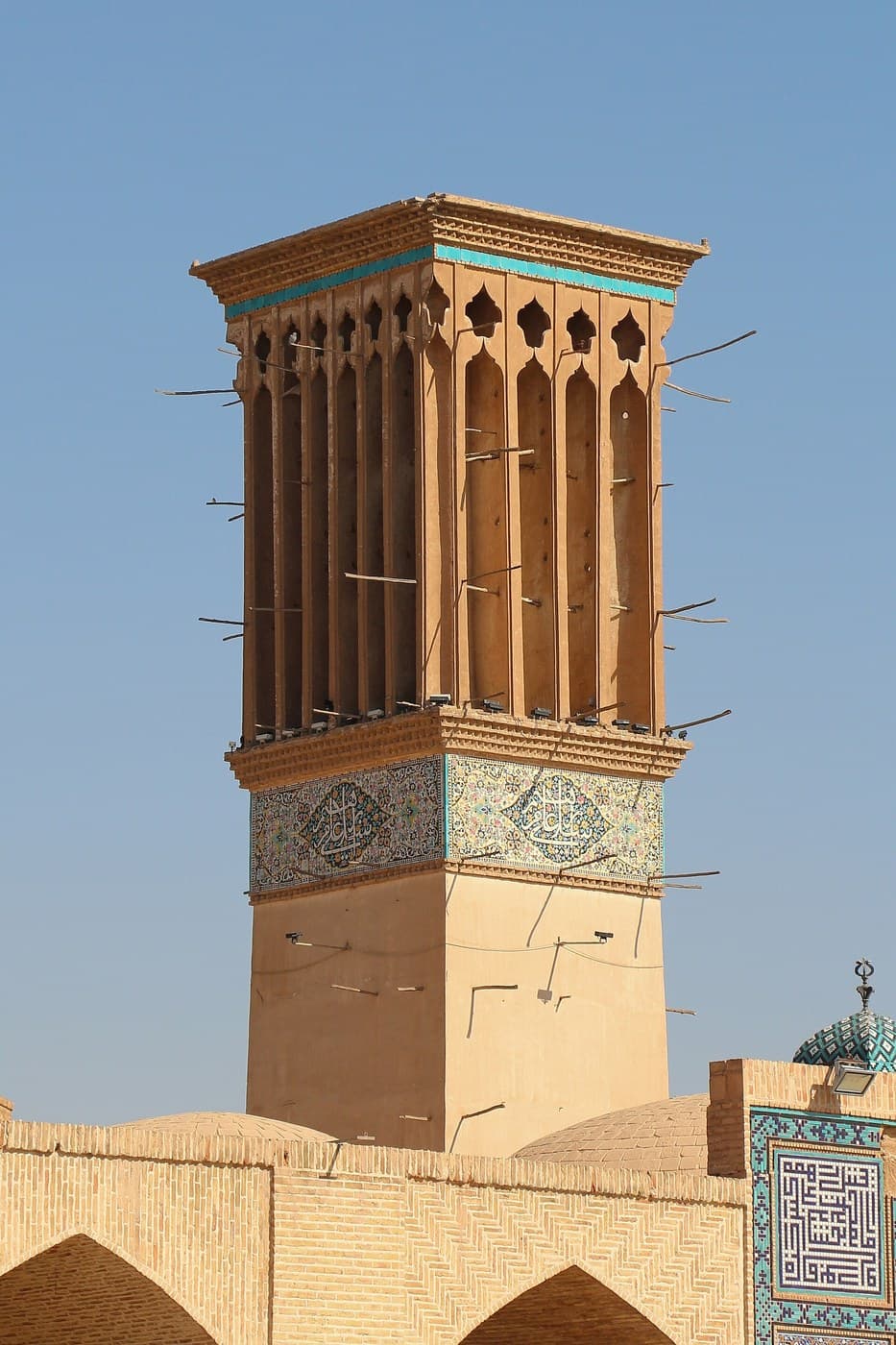
It never became obsolete, which is unusual in this batch. Air conditioning replaced the ice house and the windcatcher, but the ceiling fan sits happily alongside it, because a fan lets a room be kept several degrees warmer at equal comfort for a fraction of the energy — roughly tens of watts against hundreds or thousands. A complementary technology survives where a competing one dies.
The comfort principle generalises. What people experience is not air temperature but the total rate at which their body loses heat — air temperature, radiant temperature of the surrounding surfaces, humidity, air speed, clothing and activity together. A fan changes one term, a cold wall changes another, a dehumidifier a third. Design for the person's heat balance, not for the thermostat's number, and a great deal of energy stops being necessary.
Honest limits. It cools people, not rooms, and adds a little heat overall — so running one in an empty room is pure waste. Its benefit shrinks as humidity rises, and it fails entirely once air temperature exceeds skin temperature and the moving air begins heating you instead. It cannot dehumidify. And it must be mounted securely at a safe height, with blades far enough below the ceiling to draw air at all.
ද්රව්ය
4- 1 කැබැල්ලස්ථානගත
- 1 කැබැල්ලස්ථානගත
- 5 මීටර්ස්ථානගත
- 1 රෝලස්ථානගත
අවශ්ය මෙවලම්
3- ස්ථානගත
- ස්ථානගත
- ස්ථානගත
සම්බන්ධිත සැලසුම්වල ද්රව්ය

සම්බන්ධ බ්ලූප්රින්ට්
මෙම බ්ලූප්රින්ට් දැනුම බෙදා ගනී — ශිල්ප ක්රම, ද්රව්ය හෝ මූලධර්ම


CC0 පොදු වසම
මෙම බ්ලූප්රින්ට් CC0 යටතේ නිකුත් කර ඇත. ඔබට අවසර නොමැතිව පිටපත් කිරීම, වෙනස් කිරීම, බෙදා හැරීම සහ භාවිතා කිරීම කළ හැක.
බ්ලූප්රින්ට් හරහා නිෂ්පාදන මිලදී ගැනීමෙන් නිර්මාතෘට සහාය වන්න නිර්මාතෘ කොමිසම විකුණුම්කරුවන් විසින් නියම කළ, හෝ මෙම බ්ලූප්රින්ට්හි නව අනුවාදයක් සාදා ආදායම බෙදා ගැනීමට ඔබේ බ්ලූප්රින්ට්හි සම්බන්ධතාවයක් ලෙස ඇතුළත් කරන්න.