කලාව
රූපලාවණ්ය සහ සුවතාව
ශිල්පය
සංස්කෘතිය සහ ඉතිහාසය
විනෝදාස්වාදය
පරිසරය
ආහාර සහ පාන
ප්රතිලෝම ඉංජිනේරු
විද්යාවන්
ක්රීඩා
තාක්ෂණය
පැළඳිය හැකි
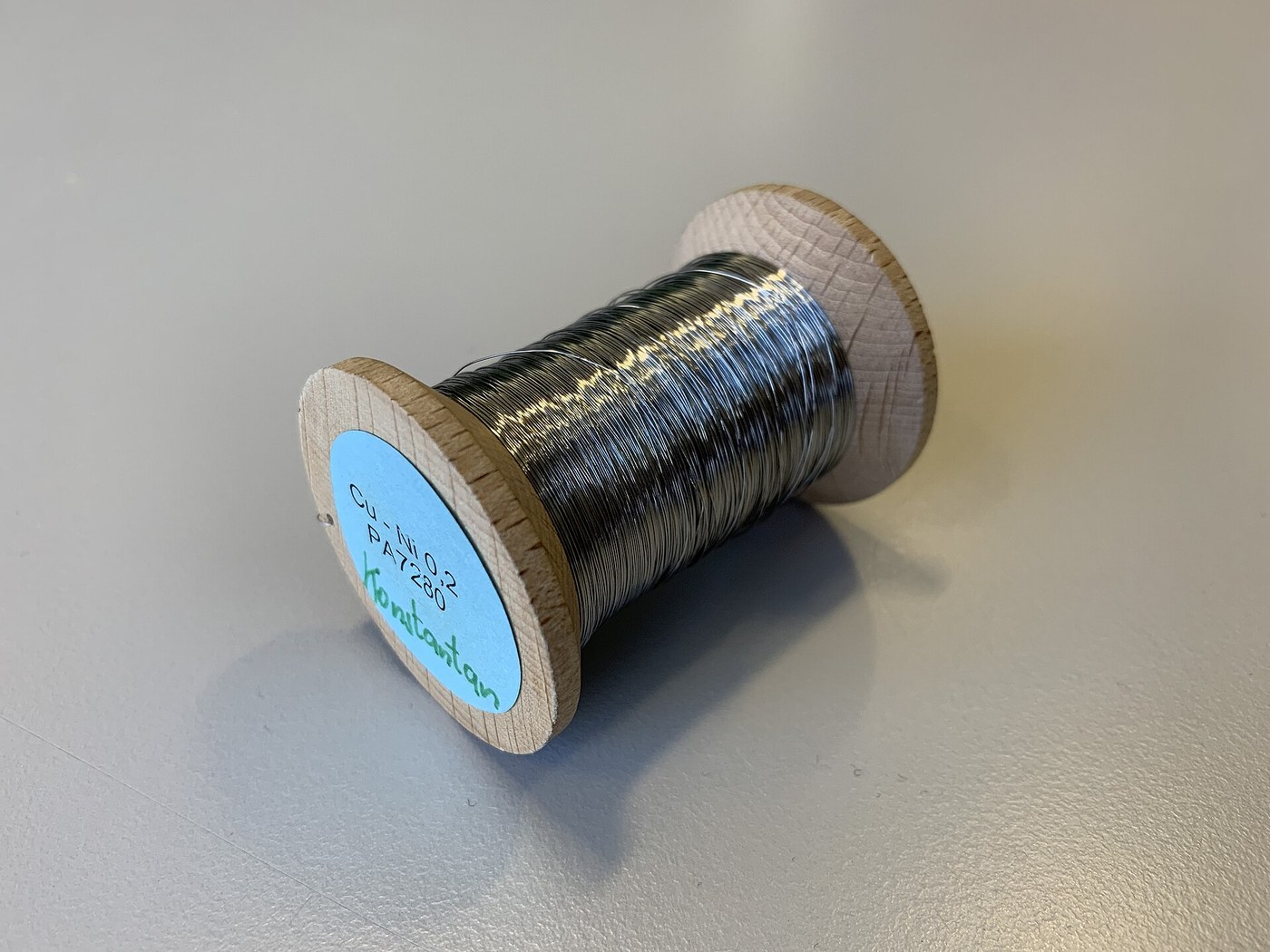


Constantan Resistance Wire from Copper and Nickel
Constantan is a copper-nickel alloy, usually 55 % copper and 45 % nickel, whose electrical resistance stays nearly the same as it warms; that is why strain gauges, thermocouples and resistance coils are wound with it. Copper and nickel melt together in any proportion, so the alloy is made by fusing the two, casting small sticks and drawing them into wire.
The melt follows C. Morfit's copper-nickel alloy as Brannt gives it in *The Metallic Alloys* (1889): nickel and an equal weight of copper fused with borax in a graphite crucible, the rest of the copper stirred in. Hiorns (1912) adds that the nickel must be as pure as possible, which is what the Mond process gives.
උසස්
Foundry day, then drawing
උපදෙස්
1
1
Weigh the charge
Weigh the charge
For 1 kg of 55/45 constantan weigh 450 g nickel and 550 g copper, and set aside 100 g of the copper for the second addition. Use nickel as pure as you can get: Hiorns warns that silicon, carbon, iron and sulphur in it greatly reduce how well the alloy works.
මෙම පියවර සඳහා ද්රව්ය:
 තඹ වාත්තු කැටය550 ග්රෑ
 කාබොනිල් ක්රියාවලියේ නිකල්450 ග්රෑ
අවශ්ය මෙවලම්:
 තුලාව
තුලාව2
2
Fuse nickel with an equal weight of copper
Fuse nickel with an equal weight of copper
Put the nickel and an equal weight of copper (450 g of each) into a graphite crucible with some borax, and fuse them in the furnace. This is Morfit's first stage: nickel melts far hotter than copper, and melting it among copper brings it down sooner. Constantan itself melts at about 1,220–1,300 °C.
මෙම පියවර සඳහා ද්රව්ය:
 බෝරැක්ස් කුඩු1 as required
අවශ්ය මෙවලම්:
 ග්රැෆයිට්-මැටි මුට්ටිය
 අඟුරු උදුන
 කෝප්ප අඬුව
 තාපයට ඔරොත්තු දෙන අත්වැසුම්
 සම් ඇප්රොනය
3
3
Stir in the rest of the copper
Stir in the rest of the copper
Add the remaining 100 g of copper to the melted mass, stirring constantly with an iron rod until it has gone in and the metal is one even liquid.
අවශ්ය මෙවලම්:
 යකඩ කලවම් කූරඅඟුරු උදුනකෝප්ප අඬුවතාපයට ඔරොත්තු දෙන අත්වැසුම්
4
4
Cast small sticks
Cast small sticks
Pour the alloy into a warmed ingot mould as small sticks, as Morfit did. Pour in one run; the alloy chills quickly.
අවශ්ය මෙවලම්:
 කැටි වාත්තු අච්චුවකෝප්ප අඬුවතාපයට ඔරොත්තු දෙන අත්වැසුම්සම් ඇප්රොනය
5
5
Anneal the sticks
Anneal the sticks
Anneal the cast sticks before working them: cast copper-nickel is crystalline, and Hiorns gives careful annealing at a moderate temperature as the cure.
අවශ්ය මෙවලම්:
 ලෝහ මෘදු කිරීමේ උඳුනකෝප්ප අඬුවතාපයට ඔරොත්තු දෙන අත්වැසුම්
6
6
Draw it like copper wire
Draw it like copper wire
Forge a stick into a round rod, file a taper and draw it through the drawplate hole by hole, as copper wire is drawn. Never take the size down too fast: Hiorns warns that metal drawn without annealing breaks unless it rests five to ten minutes between passes. Anneal it as the copper wire is annealed. Simmons's strain gauges used No. 40 gauge, about 0.08 mm.
7
7
Measure the resistance
Measure the resistance
Measure the diameter in several places, cut a measured length and find its resistance on a Wheatstone bridge. Compare the result with the ohms per metre in the next step. A wire that reads much higher than expected has a thin place or a crack in it.
අවශ්ය මෙවලම්:
 මයික්රොමීටරය
 වීට්ස්ටෝන් සේතුව
8
8
Charge and resistance figures
Charge and resistance figures
Jupyter සටහන් පොත පූරණය වෙමින්…
9
9
Troubleshooting
Troubleshooting
Constantan wire troubleshooting.
Flow
Loading...
10
10
History and honest limits
History and honest limits
In 1887 Edward Weston found an alloy whose resistance falls as it warms, a property, he wrote, of no other metallic conductor he knew. Wikipedia says his "Alloy No. 2" was produced in Germany and renamed Konstantan. By 1912 Hiorns listed Constantan, Eureka and Heckenham metal among the copper-nickel alloys used for resistances.
Morfit's alloy was 33 nickel to 67 copper; we keep his two-stage method and scale it to 55/45, the usual constantan and Simmons's wire. That scaling is ours. The 55/45 figure and the resistivity are from Wikipedia's Constantan article. Very fine wire like No. 40 gauge needs drawplate holes that fine.
ද්රව්ය
3- 550 ග්රෑස්ථානගත
- 450 ග්රෑස්ථානගත
- 1 as requiredස්ථානගත
අවශ්ය මෙවලම්
11- ස්ථානගත
- ස්ථානගත
- ස්ථානගත
- ස්ථානගත
- ස්ථානගත
- ස්ථානගත
- ස්ථානගත
- ස්ථානගත
- ස්ථානගත
- ස්ථානගත
- ස්ථානගත
මෙම සැලසුම සාදන්නේ

සම්බන්ධ බ්ලූප්රින්ට්
මෙම බ්ලූප්රින්ට් දැනුම බෙදා ගනී — ශිල්ප ක්රම, ද්රව්ය හෝ මූලධර්ම

CC0 පොදු වසම
මෙම බ්ලූප්රින්ට් CC0 යටතේ නිකුත් කර ඇත. ඔබට අවසර නොමැතිව පිටපත් කිරීම, වෙනස් කිරීම, බෙදා හැරීම සහ භාවිතා කිරීම කළ හැක.
බ්ලූප්රින්ට් හරහා නිෂ්පාදන මිලදී ගැනීමෙන් නිර්මාතෘට සහාය වන්න නිර්මාතෘ කොමිසම විකුණුම්කරුවන් විසින් නියම කළ, හෝ මෙම බ්ලූප්රින්ට්හි නව අනුවාදයක් සාදා ආදායම බෙදා ගැනීමට ඔබේ බ්ලූප්රින්ට්හි සම්බන්ධතාවයක් ලෙස ඇතුළත් කරන්න.