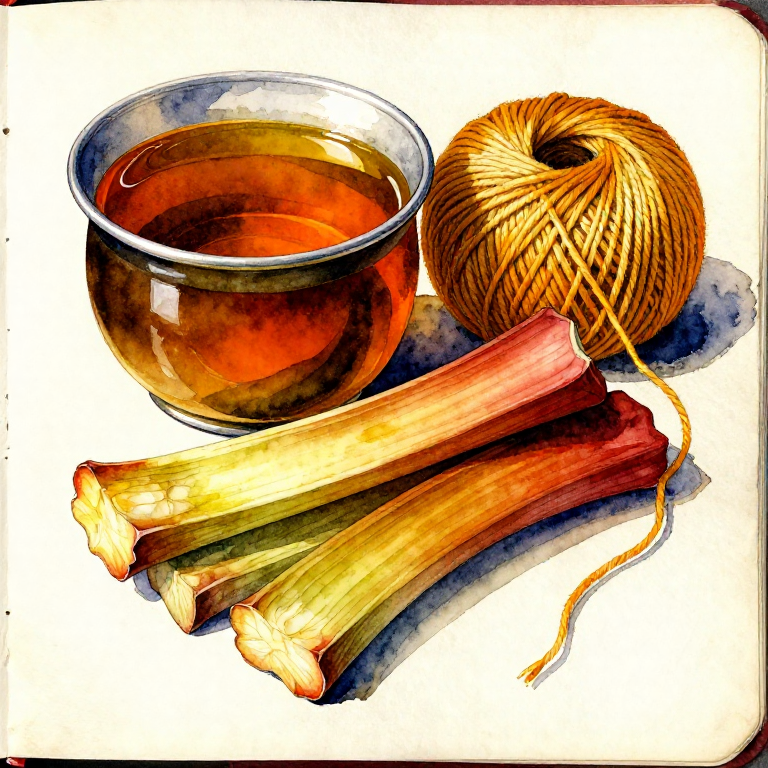


Dyeing Yellow-Orange with Rhubarb Root — The Anthraquinone Dye of Central Asia
Rhubarb root (Rheum species, primarily Rheum palmatum and Rheum officinale) has been used as a dye source in Central Asia, China, and later Europe for at least two thousand years. The thick, fleshy roots contain anthraquinone pigments — the same chemical family found in madder — along with flavonoids and tannins. On alum-mordanted wool, rhubarb root produces a range of warm yellow to deep orange, depending on the species and concentration. The anthraquinone content gives rhubarb root significantly better lightfastness than most yellow plant dyes.
Wild rhubarb species native to the mountains of Central Asia and western China were the original dye sources. These medicinal rhubarbs (Rheum palmatum, R. officinale) have much higher anthraquinone content than garden rhubarb (Rheum rhabarbarum) — the common edible rhubarb sold in supermarkets has weaker dye potential. For best results, use roots from medicinal or ornamental rhubarb species, available dried from herbalists and dye suppliers.
Rhubarb root arrived in Europe via the Silk Road, initially valued as a medicine rather than a dye. By the medieval period, European dyers had discovered its excellent properties as a textile dye. The combination of warm yellow-orange colour, good lightfastness, and the fact that rhubarb root also functions as a mild mordant (due to its oxalic acid content) made it a versatile addition to the dyer's toolkit.
උපදෙස්
Weigh and chop the dried rhubarb root
Weigh and chop the dried rhubarb root
Use 100% WOF of dried rhubarb root. For 100 g of wool, weigh out 100 g of dried root. Dried rhubarb root is sold as sliced or chopped pieces — yellow-brown on the outside, deep yellow to orange inside. Chop any large pieces into 1-2 cm fragments to increase surface area. If starting from whole dried root, it can be very hard — soak briefly in warm water to soften before chopping. The root should have a bitter, astringent smell.
මෙම පියවර සඳහා ද්රව්ය:
 රබාබ් මුල් (වියළි)100 ග්රෑ
අවශ්ය මෙවලම්:
 ඩිජිටල් මුළුතැන්ගෙයි තරාදිය
Soak the root overnight in warm water
Soak the root overnight in warm water
Place the chopped root in a dye pot with 4 litres of warm water and soak overnight (8-12 hours). The water will turn a deep golden-yellow to orange as the anthraquinones and flavonoids dissolve. Rhubarb root is dense and releases dye slowly — the overnight soak is important for thorough extraction. By morning, the liquid should be a rich amber-orange.
අවශ්ය මෙවලම්:
 සුප් උයන විශාල භාජනය
Simmer the root at 80°C for 60 minutes
Simmer the root at 80°C for 60 minutes
Bring the pot to a gentle simmer (80°C) and hold for 60 minutes. Stir occasionally. The liquid will deepen to an intense golden-orange. Do not boil — moderate temperatures preserve the clarity of the anthraquinone yellows. The root pieces will soften and pale as their pigment transfers to the water. A second extraction in fresh water will yield a lighter, more yellow bath.
අවශ්ය මෙවලම්:
 ඉවුම් උෂ්ණත්වමානය
 දැව හැඳි
Strain out the root material
Strain out the root material
Strain the dye liquor through a fine mesh strainer into a clean pot. Press the root pieces to extract all remaining orange-gold liquid. The strained liquor should be a deep, clear golden-orange — noticeably more orange than most flower-based yellow dyes.
අවශ්ය මෙවලම්:
 සියුම් පෙනේරය
Dye alum-mordanted wool at 80°C for 45-60 minutes
Dye alum-mordanted wool at 80°C for 45-60 minutes
Pre-wet the alum-mordanted wool in lukewarm water for 15 minutes, squeeze gently, and lower it into the rhubarb root dye bath at room temperature. Slowly raise to 80°C over 20 minutes, then hold for 45-60 minutes. Turn gently every 10 minutes. The wool will develop a warm yellow to golden-orange. The alum mordant enhances the yellow tones. Rhubarb root also contains oxalic acid which acts as a mild mordant itself, meaning the colour bonds well even to lightly mordanted wool.
මෙම පියවර සඳහා ද්රව්ය:
 ලොම් නූල් කරාබුව100 ග්රෑ
 පටිකාරම් (පොටෑසියම් ඇලම්)10 ග්රෑ
Cool overnight, rinse, and dry
Cool overnight, rinse, and dry
Turn off the heat and let the wool cool in the dye bath overnight. Remove, squeeze gently, and rinse in lukewarm water until the runoff is clear. The final colour is a warm yellow-orange — deeper and more orange than most plant yellows due to the anthraquinone content. Lightfastness is good — better than turmeric or onion skin, approaching madder. This is because anthraquinones form more stable bonds with the alum-fibre complex than flavonoids do. Dry in shade.
ද්රව්ය
3- 100 ග්රෑස්ථානගත
- 100 ග්රෑස්ථානගත
- 10 ග්රෑස්ථානගත
අවශ්ය මෙවලම්
5- ස්ථානගත
- ස්ථානගත
- ස්ථානගත
- ස්ථානගත
- ස්ථානගත
සම්බන්ධිත සැලසුම්වල ද්රව්ය
සම්බන්ධ බ්ලූප්රින්ට්
මෙම බ්ලූප්රින්ට් දැනුම බෙදා ගනී — ශිල්ප ක්රම, ද්රව්ය හෝ මූලධර්ම
CC0 පොදු වසම
මෙම බ්ලූප්රින්ට් CC0 යටතේ නිකුත් කර ඇත. ඔබට අවසර නොමැතිව පිටපත් කිරීම, වෙනස් කිරීම, බෙදා හැරීම සහ භාවිතා කිරීම කළ හැක.
බ්ලූප්රින්ට් හරහා නිෂ්පාදන මිලදී ගැනීමෙන් නිර්මාතෘට සහාය වන්න නිර්මාතෘ කොමිසම විකුණුම්කරුවන් විසින් නියම කළ, හෝ මෙම බ්ලූප්රින්ට්හි නව අනුවාදයක් සාදා ආදායම බෙදා ගැනීමට ඔබේ බ්ලූප්රින්ට්හි සම්බන්ධතාවයක් ලෙස ඇතුළත් කරන්න.