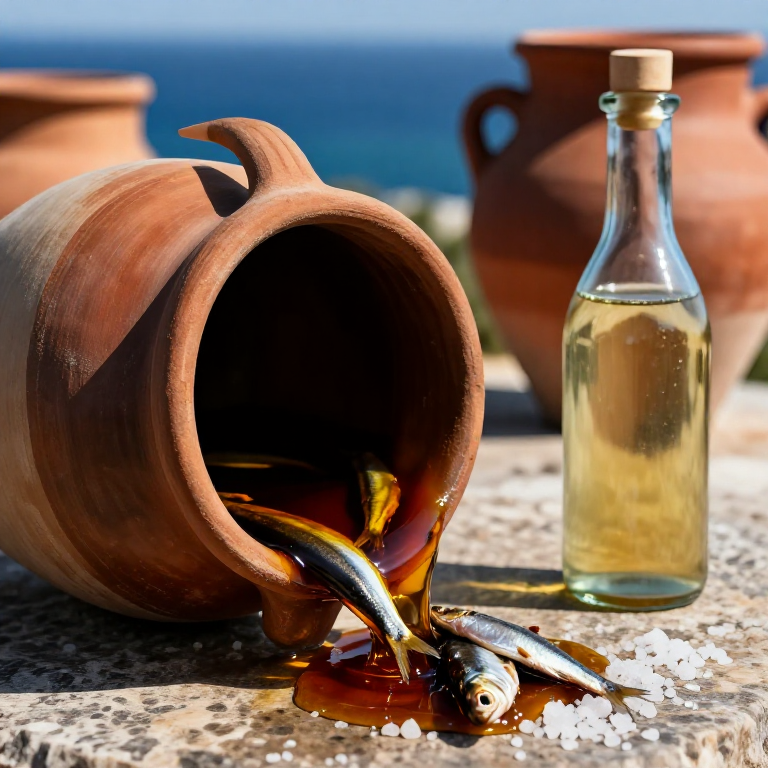


Fermenting Garum Fish Sauce — Rome's Universal Condiment
Garum was to Ancient Rome what soy sauce is to East Asia — a fermented, umami-rich liquid condiment used in virtually every dish. Pliny the Elder called it 'exquisite liquor' and reported that the finest garum from Cartagena and Pompeii commanded prices rivaling expensive perfumes. The excavation of Pompeii revealed garum factories with stone fermentation vats still containing residues of the sauce, frozen in time by the eruption of Vesuvius in 79 AD.
Garum is made by salting whole small fish (anchovies, sardines, mackerel) at a ratio of approximately 1:5 salt to fish and leaving them to ferment in the sun for 1-3 months. The fish's own digestive enzymes (particularly trypsin from the intestines) break down the proteins into amino acids — including glutamate, the compound responsible for umami flavor. The high salt concentration prevents putrefaction while allowing enzymatic proteolysis to proceed.
The technique predates Rome — similar fish sauces appear in ancient Greece (garos), Carthage, and independently in Southeast Asia (where they evolved into modern fish sauces: Vietnamese nuoc mam, Thai nam pla, and Filipino patis). The parallel invention of fermented fish sauce across distant cultures demonstrates that the underlying biochemistry — salt-preserved enzymatic protein breakdown — is a universal solution to the same problem: making preserved fish delicious.
උපදෙස්
Select and clean the fish
Select and clean the fish
Use small, oily fish — anchovies, sardines, or sprats are ideal because their high enzyme content accelerates fermentation. The fish must be absolutely fresh — caught within hours, not days. Roman garum producers established factories at coastal ports specifically to process fish before they deteriorated. You need approximately 2 kg of fresh whole fish for a small batch.
Do not gut or clean the fish. The entire point of garum fermentation is the action of the fish's own digestive enzymes — removing the intestines removes the primary source of trypsin and other proteolytic enzymes that break proteins into amino acids. Rinse the fish briefly in clean seawater or salt water to remove surface slime, then proceed immediately to salting.
Layer fish and salt
Layer fish and salt
In a wide ceramic crock or glass jar (never metal — the salt and acid will corrode it), build alternating layers of fish and coarse sea salt. The ratio is approximately 1 part salt to 5 parts fish by weight — for 2 kg of fish, use 400 grams of salt. Begin with a layer of salt on the bottom, then a layer of fish, then salt, and repeat. The top layer must be salt to form a protective crust.
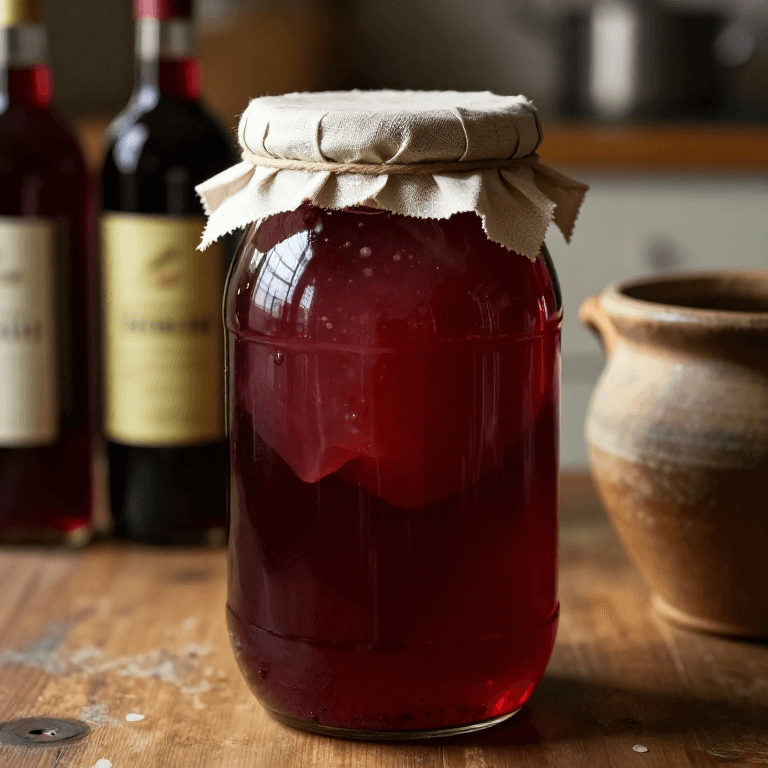
Roman recipes from Apicius and the Geoponica recommend adding dried oregano, coriander, or fennel between layers for additional flavor complexity. Some recipes include a splash of old wine or vinegar as a starter to lower the initial pH. The salt draws moisture from the fish through osmosis, creating a brine that submerges the fish within 24-48 hours.
Ferment in direct sunlight
Ferment in direct sunlight
Cover the vessel with a loosely fitted lid or cloth to keep insects out while allowing gas exchange. Place it in direct sunlight — Roman garum factories were open-air courtyards where rows of stone vats baked in the Mediterranean sun. The heat accelerates the enzymatic breakdown: at 30-40°C, the fish's trypsin enzymes work 3-4 times faster than at room temperature.
Stir the mixture thoroughly once or twice daily for the first 2-3 weeks. The stirring exposes new material to the enzymes and prevents anaerobic pockets from developing foul off-flavors. The smell during active fermentation is intense — Roman law required garum factories to be located outside city walls. After 2-3 weeks of daily stirring, reduce to weekly stirring and allow the fermentation to proceed for 1-3 months total.
Monitor the fermentation stages
Monitor the fermentation stages
The fermentation passes through visible stages. Week 1-2: the fish softens and begins to dissolve, the liquid becomes cloudy and reddish-brown. Week 3-4: the solid fish breaks down into a thick paste, the liquid clarifies slightly as particles settle. Month 2-3: the paste dissolves almost completely into a dark amber-brown liquid with a complex, intensely savory aroma (no longer just 'fishy' but deeply umami, similar to aged soy sauce or Worcestershire sauce).
The garum is ready when the solids have almost entirely dissolved and the liquid, when tasted (diluted — it is extremely salty and concentrated), has a rich, complex flavor without any putrid or off notes. If at any point the mixture turns grey-green, develops a truly putrid smell (as opposed to the strong but clean fermentation smell), or shows mold, the batch has failed — insufficient salt allowed putrefaction bacteria to dominate.
Strain and filter the garum
Strain and filter the garum
When fermentation is complete, strain the contents through a basket lined with closely woven cloth or multiple layers of cheesecloth. The clear liquid that passes through is garum — the prized condiment. It should be a translucent amber-brown color, similar to strong tea or soy sauce. The thick residue remaining in the strainer is 'allec' — a fish paste that Romans used as a cheaper spread or cooking ingredient (comparable to modern anchovy paste).
For the clearest garum, filter a second time through a finer cloth or let the strained liquid settle overnight and carefully decant the clear portion from any sediment. The finest Roman garum (garum sociorum — 'garum of the partners') was reportedly filtered multiple times and aged in sealed amphorae for additional months, developing an increasingly refined, complex flavor profile.
මෙම පියවර සඳහා ද්රව්ය:
 පැද්දෙන වැසුම් සහිත වීදුරු බෝතල්3 කැබලි
Bottle, age, and use
Bottle, age, and use
Pour the filtered garum into clean glass bottles and seal tightly. The high salt content (typically 15-20% by weight) makes garum self-preserving — properly made garum keeps for years without refrigeration, just as soy sauce does. Store in a cool, dark place. The flavor improves with aging for 3-6 months as residual enzymatic activity continues to develop complexity.
Use garum as the Romans did: a few drops added to dishes as a finishing condiment (like modern fish sauce), mixed with olive oil and herbs as a dipping sauce (garum with vinegar = oxygarum, similar to Vietnamese nuoc cham), diluted with water as a health tonic (garum with water = hydrogarum), or mixed into cooking sauces for depth of flavor. The glutamate in garum provides the same umami enhancement as MSG, Parmesan cheese, or soy sauce — a universal flavor amplifier that makes food taste more intensely of itself.
ද්රව්ය
1- ස්ථානගත
සම්බන්ධිත සැලසුම්වල ද්රව්ය
මෙම සැලසුම සාදන්නේ

සම්බන්ධ බ්ලූප්රින්ට්
මෙම බ්ලූප්රින්ට් දැනුම බෙදා ගනී — ශිල්ප ක්රම, ද්රව්ය හෝ මූලධර්ම
CC0 පොදු වසම
මෙම බ්ලූප්රින්ට් CC0 යටතේ නිකුත් කර ඇත. ඔබට අවසර නොමැතිව පිටපත් කිරීම, වෙනස් කිරීම, බෙදා හැරීම සහ භාවිතා කිරීම කළ හැක.
බ්ලූප්රින්ට් හරහා නිෂ්පාදන මිලදී ගැනීමෙන් නිර්මාතෘට සහාය වන්න නිර්මාතෘ කොමිසම විකුණුම්කරුවන් විසින් නියම කළ, හෝ මෙම බ්ලූප්රින්ට්හි නව අනුවාදයක් සාදා ආදායම බෙදා ගැනීමට ඔබේ බ්ලූප්රින්ට්හි සම්බන්ධතාවයක් ලෙස ඇතුළත් කරන්න.