සහයෝගීතාව
කලාව
රූපලාවණ්ය සහ සුවතාව
ශිල්පය
සංස්කෘතිය සහ ඉතිහාසය
විනෝදාස්වාදය
පරිසරය
ආහාර සහ පාන
ප්රතිලෝම ඉංජිනේරු
විද්යාවන්
ක්රීඩා
තාක්ෂණය
පැළඳිය හැකි
Youblob · CC0


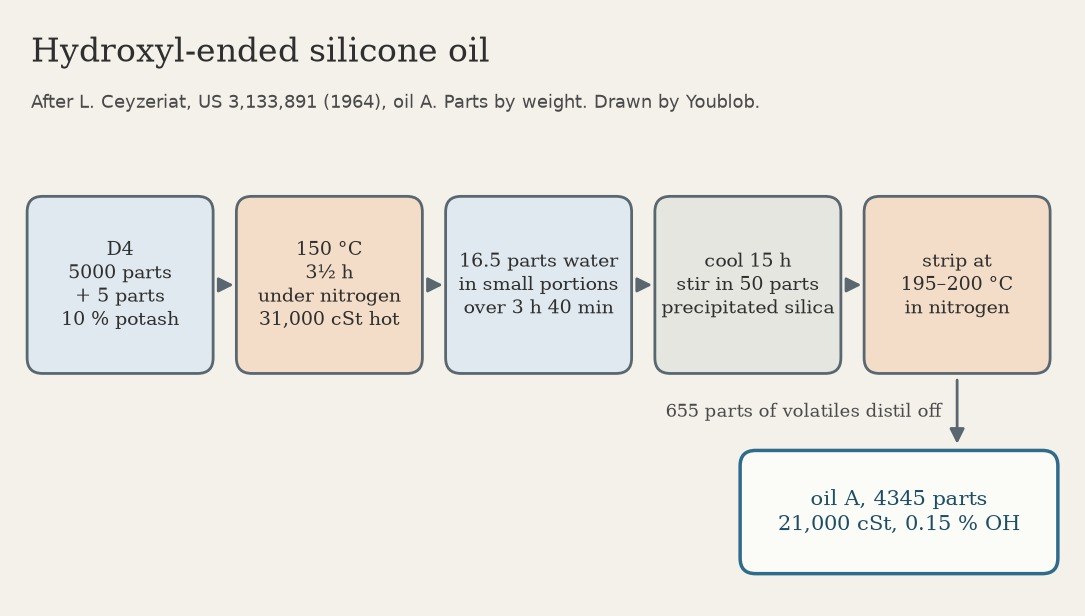
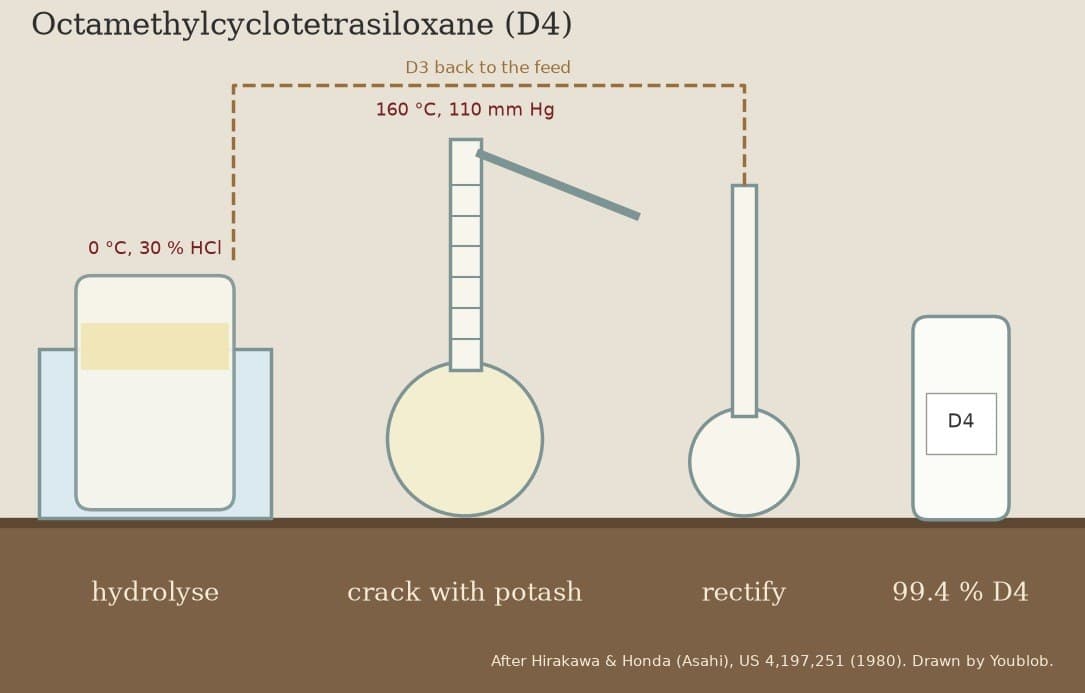
Hydroxyl-Ended Silicone Oil: D4 Opened with Potash, Then Water (Ceyzeriat 1964)
A trace of hot potash opens the ring of D4 and strings it into a long, thick chain. Water added a little at a time then cuts the chains back and leaves hydroxyl groups on their ends, which is what later lets the oil cure into rubber. This is Louis Ceyzeriat's oil A, the base of every sealant in his patent: 21,000 centistokes, 0.15 % hydroxyl.
Source: L. Ceyzeriat (Rhône-Poulenc), US 3,133,891 (1964), column 4. His neutraliser was the precipitated silica Hi-Sil X303; we use our precipitated silica in its place. The potash mix and the equipment are ours. Picture drawn by Youblob.
උසස්
2 days
උපදෙස්
1
1
Make the 10 % potash
Make the 10 % potash
Dissolve 0.5 part of potassium hydroxide in 4.5 parts of water (our arithmetic for 5 parts of a 10 % solution). All parts are by weight.
මෙම පියවර සඳහා ද්රව්ය:
 පොටෑසියම් හයිඩ්රොක්සයිඩ්0.5 parts
 ජලය4.5 parts
අවශ්ය මෙවලම්:
 වීදුරු භාජනය
 තුලාව
2
2
Heat D4 with the potash under nitrogen
Heat D4 with the potash under nitrogen
Heat 5000 parts of octamethylcyclotetrasiloxane (it melts at 17.5 °C) with the 5 parts of 10 % potash at 150 °C for 3½ hours under nitrogen. The oil thickens to 31,000 centistokes while hot.
මෙම පියවර සඳහා ද්රව්ය:
 ඔක්ටාමෙතිල්සයික්ලොටෙට්රාසිලොක්සේන් (D4)5000 parts
අවශ්ය මෙවලම්:
 වීදුරු ආසවන ෆ්ලාස්කය
 රත් කරන තහඩුව
 උෂ්ණත්වමානය
 කලතන උපකරණය
 නයිට්රජන් වායු සිලින්ඩරය
3
3
Add water a little at a time
Add water a little at a time
Still hot, add 16.5 parts of water in small portions over 3 hours 40 minutes. The hot oil thins to 1730 centistokes.
මෙම පියවර සඳහා ද්රව්ය:
ජලය16.5 partsඅවශ්ය මෙවලම්:
වීදුරු ආසවන ෆ්ලාස්කයරත් කරන තහඩුවඋෂ්ණත්වමානයකලතන උපකරණය4
4
Cool, then neutralise with silica
Cool, then neutralise with silica
Let it cool for 15 hours. Then stir in 50 parts of precipitated silica to neutralise the potash. The liquid now measures 13,400 centistokes at 25 °C.
මෙම පියවර සඳහා ද්රව්ය:
 අවක්ෂේපිත සිලිකා50 parts
අවශ්ය මෙවලම්:
වීදුරු ආසවන ෆ්ලාස්කයකලතන උපකරණය5
5
Strip the volatiles at 195–200 °C
Strip the volatiles at 195–200 °C
Heat it to about 195–200 °C in a current of nitrogen, with a water condenser on the outlet. 655 parts of liquid distil over; 4345 parts of oil A stay in the boiler, 21,000 centistokes at 25 °C with 0.15 % hydroxyl groups.
අවශ්ය මෙවලම්:
වීදුරු ආසවන ෆ්ලාස්කය කන්ඩෙන්සරයේ කුණ්ඩලයරත් කරන තහඩුවඋෂ්ණත්වමානයනයිට්රජන් වායු සිලින්ඩරය
 වැසුම් සහිත වීදුරු බඳුන
ද්රව්ය
4- 0.5 partsස්ථානගත
- 21 partsස්ථානගත
- 5000 partsස්ථානගත
- 50 partsස්ථානගත
මෙම සැලසුම සාදන්නේ
සම්බන්ධ බ්ලූප්රින්ට්
මෙම බ්ලූප්රින්ට් දැනුම බෙදා ගනී — ශිල්ප ක්රම, ද්රව්ය හෝ මූලධර්ම
CC0 පොදු වසම
මෙම බ්ලූප්රින්ට් CC0 යටතේ නිකුත් කර ඇත. ඔබට අවසර නොමැතිව පිටපත් කිරීම, වෙනස් කිරීම, බෙදා හැරීම සහ භාවිතා කිරීම කළ හැක.
බ්ලූප්රින්ට් හරහා නිෂ්පාදන මිලදී ගැනීමෙන් නිර්මාතෘට සහාය වන්න නිර්මාතෘ කොමිසම විකුණුම්කරුවන් විසින් නියම කළ, හෝ මෙම බ්ලූප්රින්ට්හි නව අනුවාදයක් සාදා ආදායම බෙදා ගැනීමට ඔබේ බ්ලූප්රින්ට්හි සම්බන්ධතාවයක් ලෙස ඇතුළත් කරන්න.