කලාව
රූපලාවණ්ය සහ සුවතාව
ශිල්පය
සංස්කෘතිය සහ ඉතිහාසය
විනෝදාස්වාදය
පරිසරය
ආහාර සහ පාන
ප්රතිලෝම ඉංජිනේරු
විද්යාවන්
ක්රීඩා
තාක්ෂණය
පැළඳිය හැකි
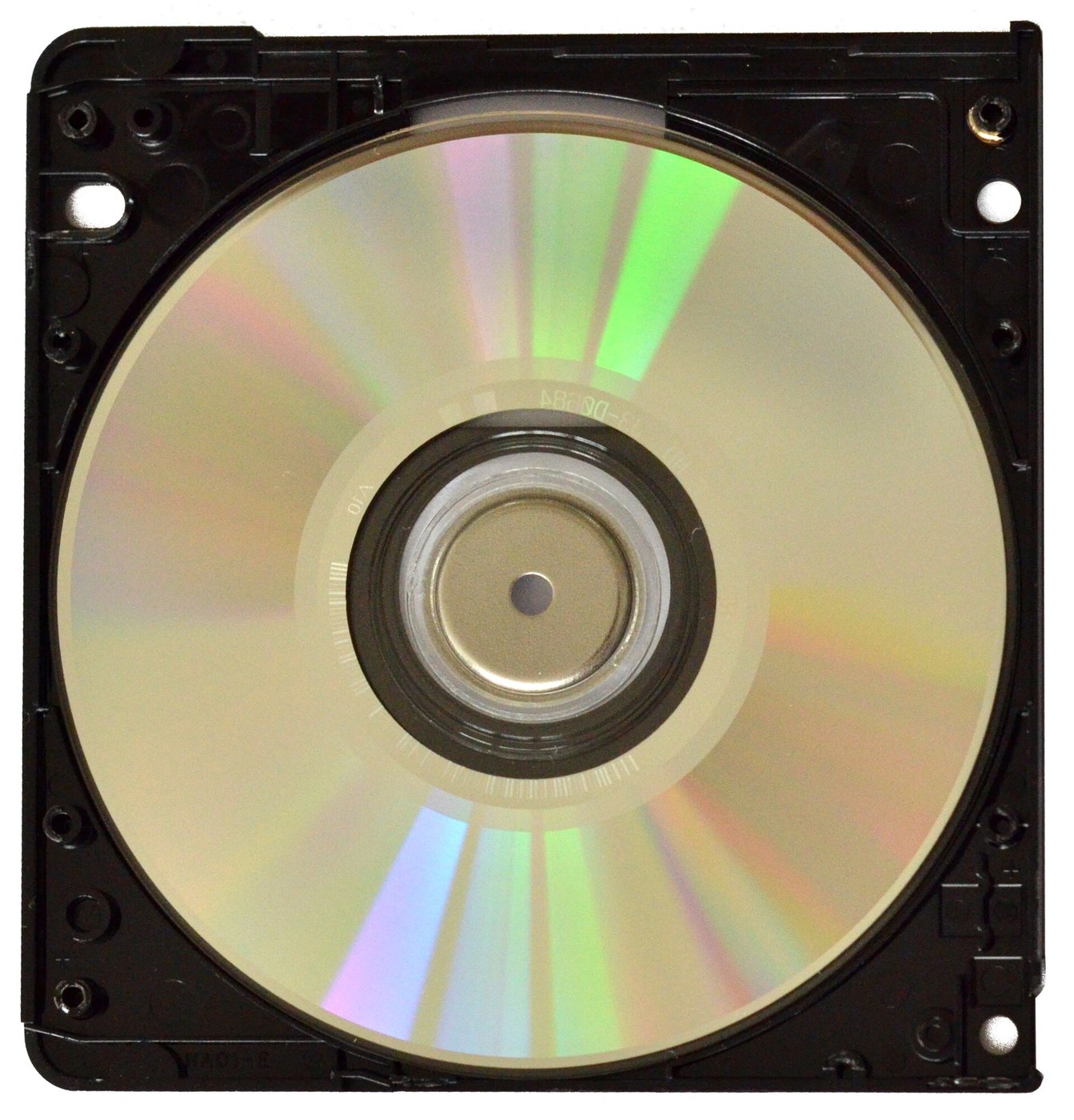


The Magneto-Optical Disc
By the late 1980s storage had split in two and neither half was satisfactory. Magnetic media were fast and rewritable and either sealed away where you could not remove them, or removable and fragile enough that a loudspeaker on the desk could erase them. Optical media were tough and removable and could only be written once.
The magneto-optical disc is the sibling of both, and it works by making the medium almost impossible to write on purpose. An amorphous alloy of terbium, iron and cobalt is sputtered a few tens of nanometres thick, with its easy axis PERPENDICULAR to the surface. At room temperature its coercivity is hundreds of kiloamps per metre — nothing in an office comes close. Heat a two-micrometre spot with the laser and that coercivity collapses towards zero as the Curie point approaches. Now a weak bias field, far too weak to have mattered a moment earlier, sets the direction of that one spot. Take the heat away and it is locked again.
Reading uses a different effect entirely. Light reflected from a perpendicularly magnetised film comes back with its plane of polarisation rotated by about four tenths of a degree, and the SIGN of that rotation follows the magnetisation. That is the polar Kerr effect, and four tenths of a degree is a very small thing to measure, which is why every MO drive splits the return beam between two detectors and subtracts them.
MEASURED, NOT FABRICATED. Sputtering rare-earth transition-metal alloys is not a bench process and this blueprint says so. What you can do is take a salvaged MO or MiniDisc medium, put it between crossed polarisers, and see the Kerr rotation for yourself — the written regions and the erased ones differ visibly.
උසස්
4 hours
උපදෙස්
1
1
Polarisation first
Polarisation first
Work the polariser blueprint first if you have not, because everything here is a polarisation measurement and the intuition has to be solid.
Two things carry forward. Crossed polarisers transmit essentially nothing, and the transmission through an analyser at angle theta from the polariser goes as cos squared theta — Malus's law. Near extinction that function is very flat, so a small ROTATION produces a large FRACTIONAL change in a very small quantity.
That is the whole detection problem in this blueprint, and it is why the answer is a differential measurement rather than a more sensitive detector.
මෙම පියවර සඳහා ද්රව්ය:
 ධ්රැවීකරණ පෙරහන් තහඩුව2 කැබලි
අවශ්ය මෙවලම්:
 ලේසර් දර්ශකය
 ඡායා ඩයෝඩය (BPW34)
 රසායනාගාර තරාතිරමේ ඩිජිටල් බහුමානකය
2
2
See the Kerr rotation
See the Kerr rotation
Break open a MiniDisc or a 3.5-inch MO cartridge and take out the disc. Handle it by the edges; the recording layer is a few tens of nanometres thick under a protective coat.
Set up polariser, disc and analyser on the optical bench with the laser at near-normal incidence, reflecting off the recording layer into the photodiode. Rotate the analyser to extinction — the reading will fall to a minimum but will not reach zero.
Now back off from extinction by one or two degrees and traverse the beam slowly across the disc from a recorded region to a blank one. The photodiode reading shifts. That shift is the Kerr rotation: a few tenths of a degree of polarisation, converted by the analyser into an intensity you can measure.
Record the reading at several analyser angles, on both a written and an erased region. The notebook explains why the best contrast and the best signal do not occur at the same angle, and why that forces the two-detector arrangement.
මෙම පියවර සඳහා ද්රව්ය:
ධ්රැවීකරණ පෙරහන් තහඩුව2 කැබලි චුම්බක-ප්රකාශ තැටි මාධ්ය1 කැබැල්ල
අවශ්ය මෙවලම්:
 ප්රකාශ බංකු කට්ටලය
 ලේසර් ඩයෝඩ මොඩියුල කට්ටලයඡායා ඩයෝඩය (BPW34)රසායනාගාර තරාතිරමේ ඩිජිටල් බහුමානකය
 ලේසර් ආරක්ෂක කණ්නාඩි
 නයිට්රයිල් අත්වැසුම්
3
3
Coercivity, Kerr signal, and the three-way comparison
Coercivity, Kerr signal, and the three-way comparison
Jupyter සටහන් පොත පූරණය වෙමින්…
අවශ්ය මෙවලම්:
 මේස පරිගණකය
4
4
Compendium: the medium that had to be hard to write
Compendium: the medium that had to be hard to write
WHY AN AMORPHOUS RARE-EARTH ALLOY. TbFeCo is sputtered and deliberately amorphous — no grain boundaries. A polycrystalline medium stores a bit across many grains and its noise floor is set by how many fit; an amorphous film has none, so a mark can be as small as the thermal spot that made it. It also has strong PERPENDICULAR anisotropy, which is what the polar Kerr effect needs and what lets marks sit close without demagnetising each other. The price is that rare earths oxidise readily, so the layer is sandwiched between dielectric barriers and sealed.
THE COMPENSATION POINT. Terbium and the iron-cobalt sublattices are antiferromagnetically coupled and fall off with temperature at different rates, so there is a temperature where they cancel exactly. Net magnetisation is zero there and coercivity peaks sharply. Alloys are tuned to put that near room temperature — which is precisely why a stored disc is so stable and why the write window is so sharply defined.
THE VERDICT. Against the hard disk, MO gives up an order of magnitude in speed and density and gains removability and immunity to dust and stray fields. Against the floppy, it is a hundred times denser and cannot be erased by a magnet. Against a pressed CD, it is rewritable. It was the best archival medium of its decade and lost anyway — to rewritable CD, which was cheaper and read in drives everyone owned, and then to flash, which had no moving parts. Being best on the merits has never been sufficient.
ද්රව්ය
2- 2 කැබලිස්ථානගත
- 1 කැබැල්ලස්ථානගත
අවශ්ය මෙවලම්
8- ස්ථානගත
- ස්ථානගත
- ස්ථානගත
- ස්ථානගත
- ස්ථානගත
- ස්ථානගත
- ස්ථානගත
සම්බන්ධ බ්ලූප්රින්ට්
මෙම බ්ලූප්රින්ට් දැනුම බෙදා ගනී — ශිල්ප ක්රම, ද්රව්ය හෝ මූලධර්ම


CC0 පොදු වසම
මෙම බ්ලූප්රින්ට් CC0 යටතේ නිකුත් කර ඇත. ඔබට අවසර නොමැතිව පිටපත් කිරීම, වෙනස් කිරීම, බෙදා හැරීම සහ භාවිතා කිරීම කළ හැක.
බ්ලූප්රින්ට් හරහා නිෂ්පාදන මිලදී ගැනීමෙන් නිර්මාතෘට සහාය වන්න නිර්මාතෘ කොමිසම විකුණුම්කරුවන් විසින් නියම කළ, හෝ මෙම බ්ලූප්රින්ට්හි නව අනුවාදයක් සාදා ආදායම බෙදා ගැනීමට ඔබේ බ්ලූප්රින්ට්හි සම්බන්ධතාවයක් ලෙස ඇතුළත් කරන්න.