කලාව
රූපලාවණ්ය සහ සුවතාව
ශිල්පය
සංස්කෘතිය සහ ඉතිහාසය
විනෝදාස්වාදය
පරිසරය
ආහාර සහ පාන
ප්රතිලෝම ඉංජිනේරු
විද්යාවන්
ක්රීඩා
තාක්ෂණය
පැළඳිය හැකි
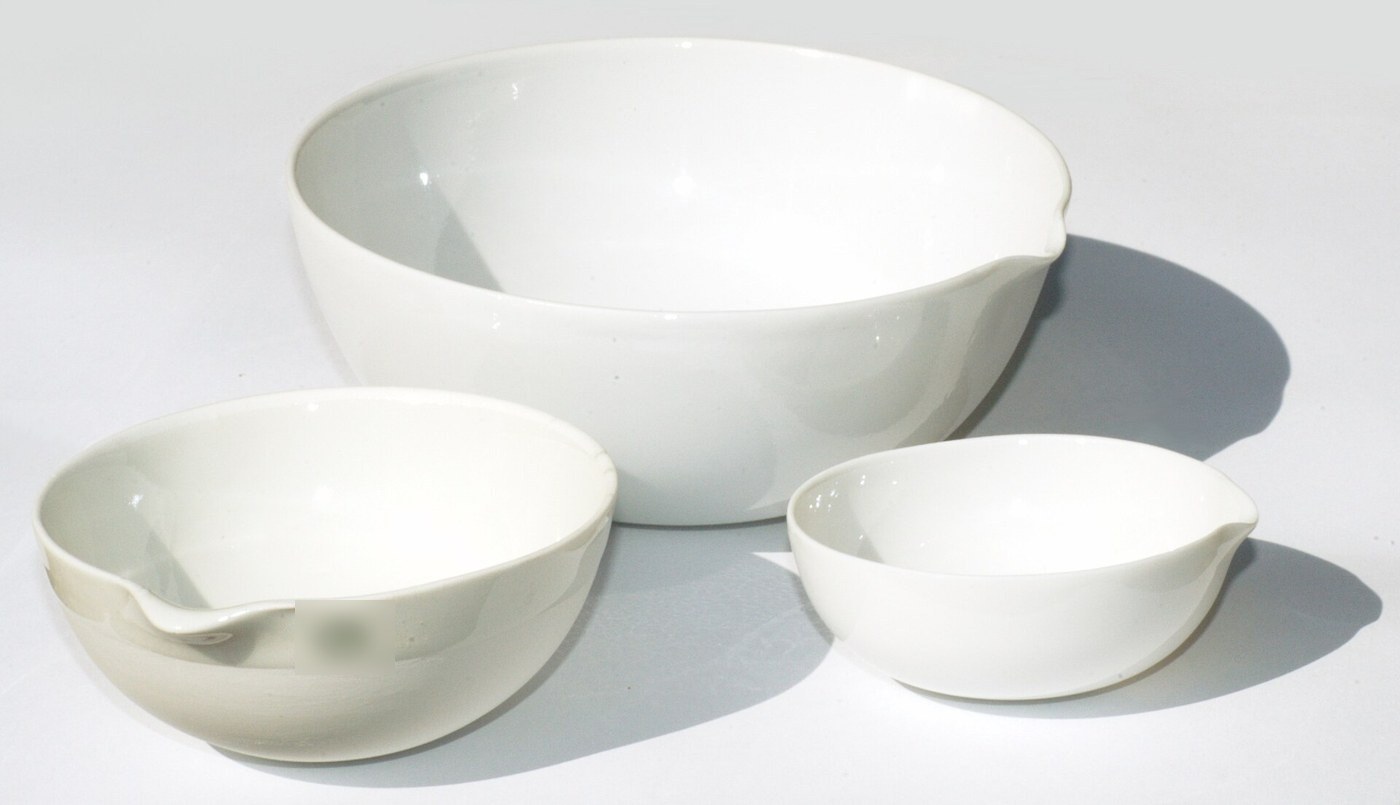


Porcelain Labware: Evaporating Dishes, Crucibles, Funnels and Streak Plates
Hard porcelain stands strong heat and most chemicals, so the laboratory's dishes, crucibles and filter funnels are made of it; left unglazed, its white biscuit is the streak plate for testing minerals. Form the pieces, give them a light first firing, dip them in ground-felspar glaze, and fire them hard in saggers, as Andrew Ure (1839) describes for Sèvres.
The picture: porcelain evaporating dishes in three sizes, glazed, with pouring lips.
උසස්
Weeks with drying and two firings
උපදෙස්
1
1
Form the pieces
Form the pieces
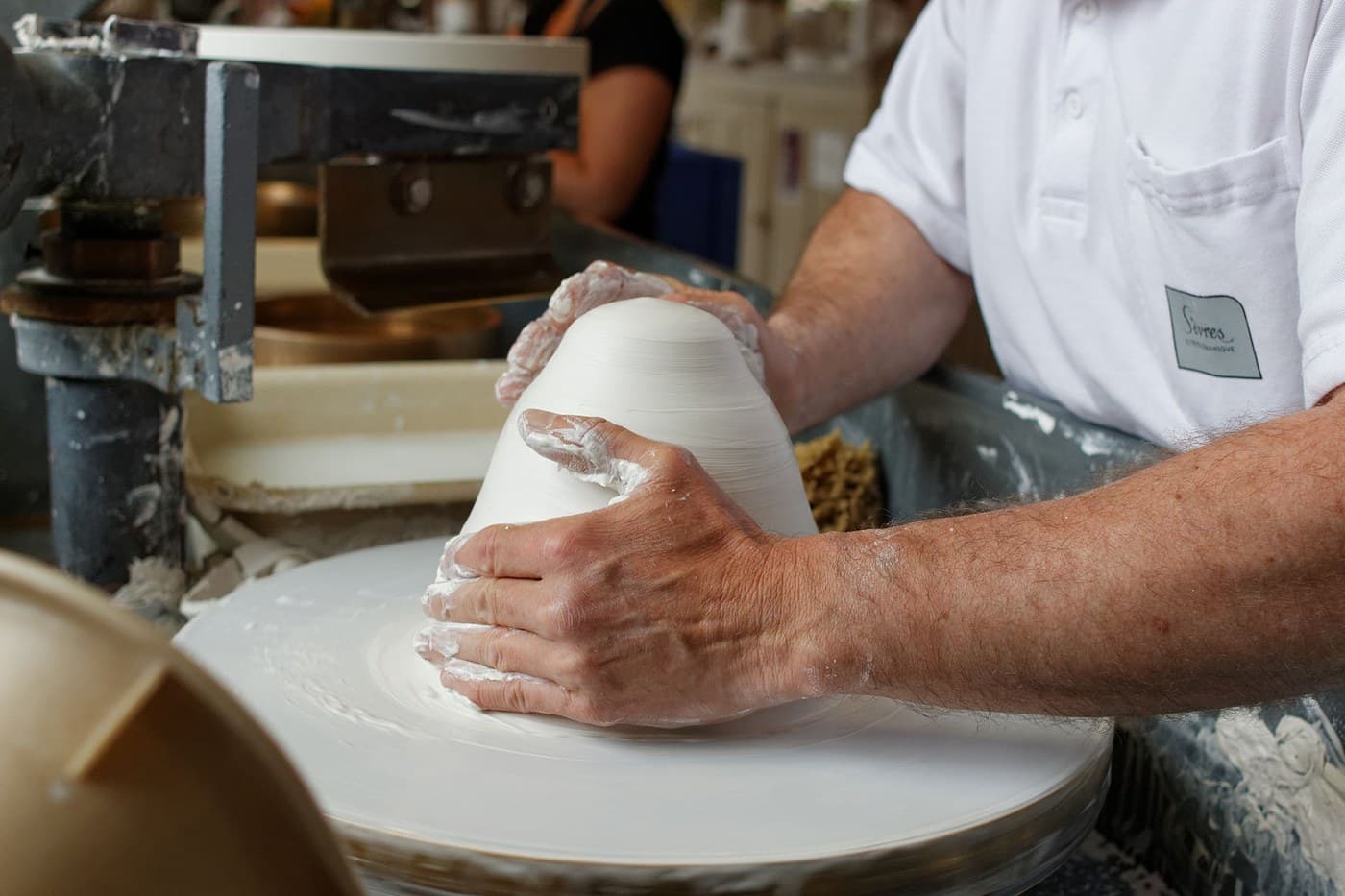
Throw shallow round dishes with a lip and small lidded crucibles on the wheel. For a Büchner funnel throw a cylinder with a flat floor, pierce the floor with many small holes and add a stem. Roll a slab and cut it into small tiles for streak plates.
මෙම පියවර සඳහා ද්රව්ය:
 පෝසිලේන් මැටි5 කිග්රෑ
අවශ්ය මෙවලම්:
 කුඹල් රෝදය
 පිටි පෙරළන දණ්ඩ
 මැටි කර්මාන්ත මෙවලම් කට්ටලය
 රූලක්
රූලක්2
2
Dry very slowly
Dry very slowly
Ure: dry them very slowly; a little hurry spoils them.
3
3
Light first firing
Light first firing
Fire them gently so they keep their shape but become strong enough to handle and be dipped in water.
මෙම පියවර සඳහා ද්රව්ය:
 දර1 as required
අවශ්ය මෙවලම්:
 පිළිස්සුම් උදුන
 තාපයට ඔරොත්තු දෙන අත්වැසුම්
4
4
Felspar glaze
Felspar glaze
Grind felspar very fine, stir it with water and a little vinegar to a thin pap. Dip each dish, crucible and funnel for an instant; the porous body draws the glaze on. Wipe the glaze off the feet. Leave the streak-plate tiles unglazed.
මෙම පියවර සඳහා ද්රව්ය:
 ෆෙල්ඩ්ස්පාර් කැබැල්ල0.5 කිග්රෑ
 ජලය2 ලීටර්
 විනාකිරි0.05 ලීටර්
අවශ්ය මෙවලම්:
 අඹරන ගල
 සියුම් දැල් හලාව
 විශාල ලී බඳුන
 දූවිලි වෙස් මුහුණ
5
5
Set in saggers
Set in saggers
Set every piece in its own sagger on a flat, sand-dusted base so it cannot stick or sag out of shape; small pieces may share a base if they do not touch.
මෙම පියවර සඳහා ද්රව්ය:
 සියුම් වැලි1 කිග්රෑ
අවශ්ය මෙවලම්:
 ගිනි මැටි පෙට්ටිය
6
6
The hard firing
The hard firing
Raise the fire slowly for about 15 hours to a cherry red, then fire hard until the kiln glows white inside, drawing trial pieces to judge when the glaze is smooth. Cool slowly over days.
මෙම පියවර සඳහා ද්රව්ය:
දර1 as requiredඅවශ්ය මෙවලම්:
පිළිස්සුම් උදුනතාපයට ඔරොත්තු දෙන අත්වැසුම්7
7
Ure's firing, hour by hour
Ure's firing, hour by hour
Jupyter සටහන් පොත පූරණය වෙමින්…
8
8
Limits
Limits
The firings, glaze and saggers are Ure's account of Sèvres; the forms of the four wares are ours. A full porcelain firing needs a kiln that reaches white heat.
ද්රව්ය
6- 5 කිග්රෑස්ථානගත
- 1 as requiredස්ථානගත
- 0.5 කිග්රෑස්ථානගත
- 2 ලීටර්ස්ථානගත
- 0.05 ලීටර්ස්ථානගත
- 1 කිග්රෑස්ථානගත
අවශ්ය මෙවලම්
11- ස්ථානගත
- ස්ථානගත
- ස්ථානගත
- ස්ථානගත
- ස්ථානගත
- ස්ථානගත
- ස්ථානගත
- ස්ථානගත
- ස්ථානගත
- ස්ථානගත
- ස්ථානගත
මෙම සැලසුම සාදන්නේ

සම්බන්ධ බ්ලූප්රින්ට්
මෙම බ්ලූප්රින්ට් දැනුම බෙදා ගනී — ශිල්ප ක්රම, ද්රව්ය හෝ මූලධර්ම
CC0 පොදු වසම
මෙම බ්ලූප්රින්ට් CC0 යටතේ නිකුත් කර ඇත. ඔබට අවසර නොමැතිව පිටපත් කිරීම, වෙනස් කිරීම, බෙදා හැරීම සහ භාවිතා කිරීම කළ හැක.
බ්ලූප්රින්ට් හරහා නිෂ්පාදන මිලදී ගැනීමෙන් නිර්මාතෘට සහාය වන්න නිර්මාතෘ කොමිසම විකුණුම්කරුවන් විසින් නියම කළ, හෝ මෙම බ්ලූප්රින්ට්හි නව අනුවාදයක් සාදා ආදායම බෙදා ගැනීමට ඔබේ බ්ලූප්රින්ට්හි සම්බන්ධතාවයක් ලෙස ඇතුළත් කරන්න.