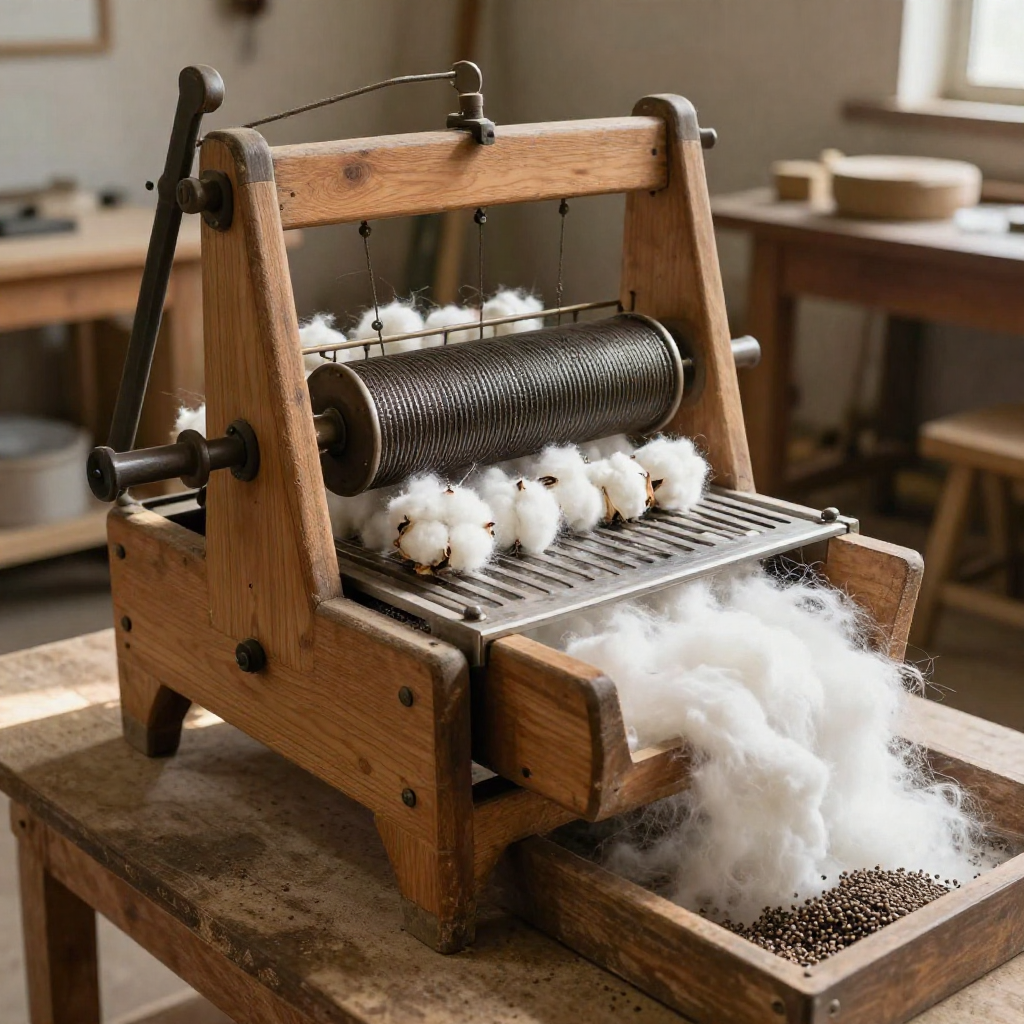

Whitney's Cotton Gin — Separating Seed from Fiber at Industrial Scale
In 1793, Eli Whitney patented the cotton gin ('gin' is short for 'engine') — a machine that mechanically separates cotton fibers from their seeds. Before the gin, separating cotton by hand was agonizingly slow: a laborer could clean roughly one pound of short-staple cotton per day. Whitney's machine could process 50 pounds per day, and later horse-powered versions processed hundreds. The bottleneck that had limited cotton supply was shattered overnight.
The gin's mechanism is simple. Raw cotton bolls (fiber with embedded seeds) are fed into a hopper. A rotating cylinder studded with wire hooks pulls the fibers through a slotted metal screen. The slots are too narrow for the seeds to pass through, so the seeds fall away while the fiber is pulled through. A second rotating cylinder with brushes strips the cleaned fiber from the hooks. The result is clean, seed-free cotton lint ready for carding and spinning.
The cotton gin's impact was profound and paradoxical. It made cotton the world's dominant textile fiber — American cotton exports grew from 138,000 pounds in 1792 to 35 million pounds by 1800. But it also made cotton cultivation vastly more profitable, dramatically expanding the plantation slavery system in the American South. The machine that fed the Industrial Revolution's textile mills simultaneously entrenched one of history's greatest injustices. Understanding the cotton gin means understanding that technological progress and human suffering are not mutually exclusive.
උපදෙස්
Harvest raw cotton bolls
Harvest raw cotton bolls
Raw cotton is picked when the bolls have split open, revealing the fluffy white fiber inside. Each boll contains 20–40 seeds, each seed wrapped tightly in fine cotton fibers (lint) and shorter fuzzy fibers (linters). Short-staple upland cotton (Gossypium hirsutum) — the type that dominates global production — has fibers that cling tenaciously to the seed, making hand-separation extremely labor-intensive. This is the problem the cotton gin solves.
මෙම පියවර සඳහා ද්රව්ය:
 අමු කපු කරල්5 කිග්රෑ
Dry the cotton bolls if freshly picked
Dry the cotton bolls if freshly picked
Spread freshly picked cotton in a thin layer on a clean surface in direct sunlight. The bolls must be thoroughly dry before ginning — damp cotton clogs the wire hooks and produces matted, tangled fiber instead of clean lint. Turn the cotton once during drying. In warm, dry weather, 4–6 hours of sun is sufficient. In humid conditions, allow 1–2 days.
Remove large debris from the cotton
Remove large debris from the cotton
Pick through the dried cotton by hand and remove leaves, stems, boll fragments, and any discolored or damaged bolls. This pre-cleaning step prevents foreign matter from embedding in the fiber during ginning. Sticks and boll fragments can also damage the gin's wire hooks. The cleaned cotton should be fluffy, white, and free of visible plant material.
Feed cotton into the gin hopper
Feed cotton into the gin hopper
Place handfuls of cleaned, seeded cotton into the gin's feed hopper — a wooden trough that directs the cotton toward the gin cylinder. Feed at a steady rate; overloading the hopper jams the mechanism and produces poorly cleaned fiber. The hopper narrows toward the bottom, funneling cotton into contact with the rotating cylinder.
අවශ්ය මෙවලම්:
 කපු ඇට ගලවන යන්ත්රය
Turn the crank to rotate the gin cylinder
Turn the crank to rotate the gin cylinder
Turn the hand crank (or engage the belt drive if horse- or water-powered). The main cylinder, studded with rows of wire hooks or saw-tooth discs, rotates toward the metal breastwork — a screen with narrow slots cut just wide enough for cotton fibers to pass through but too narrow for seeds. The hooks catch the cotton fibers and pull them through the slots.
Observe the seed separation
Observe the seed separation
As the cylinder turns, the wire hooks snag cotton fibers and drag them through the breastwork slots. The seeds, too large to pass through, are stripped from the fiber and tumble downward into a seed collection tray. This is the gin's core function — mechanical separation of fiber from seed. On Whitney's original design, the slots were cut into a iron plate with a file, spaced approximately 3 mm apart.
Watch the brush cylinder clean the hooks
Watch the brush cylinder clean the hooks
A second cylinder, rotating faster and in the opposite direction, is covered with bristle brushes. These brushes sweep the lint off the wire hooks as they pass, preventing fiber from wrapping around the cylinder and jamming the machine. The cleaned lint flies off the brushes and collects in a chamber behind the machine. Without the brush cylinder, the gin clogs within seconds.
Maintain a steady feed rate
Maintain a steady feed rate
Continue adding raw cotton to the hopper at a consistent rate while cranking. The gin works best with a constant, moderate feed — starving the cylinder wastes energy, while overfeeding forces seeds through the breastwork and contaminates the lint. Listen to the machine: a smooth humming sound indicates proper operation; grinding or clicking signals a jam or foreign object.
Collect the cleaned cotton lint
Collect the cleaned cotton lint
Gather the ginned cotton lint from the collection chamber. It emerges as loose, fluffy clouds of seed-free fiber. Five kilograms of raw seeded cotton typically yields approximately 1.5–1.8 kilograms of clean lint (the rest is seed weight). The lint is now ready for baling, carding, and spinning. Check a handful for remaining seed fragments — a well-adjusted gin leaves fewer than 2–3 seed fragments per kilogram of lint.
Collect and save the cotton seeds
Collect and save the cotton seeds
Remove the separated seeds from the seed tray. Cotton seeds are not waste — they are valuable in their own right. They can be pressed for cottonseed oil (used in cooking, soap, and margarine), ground into cottonseed meal (high-protein animal feed), or replanted for the next crop. The linters (short fuzzy fibers still attached to seeds after ginning) are used to make paper, cellulose products, and gun cotton.
Clean and maintain the gin mechanism
Clean and maintain the gin mechanism
After each ginning session, brush all remaining lint from the wire hooks, clear any seed fragments from the breastwork slots, and inspect the brush cylinder for wear. Wire hooks that are bent or broken must be replaced — a damaged hook tears fiber instead of pulling it cleanly, reducing lint quality. Oil any moving bearings lightly. A well-maintained gin can process thousands of pounds of cotton before needing significant repair.
Compress the lint into a bale
Compress the lint into a bale
Pack the cleaned lint tightly into a bale using a cotton press or by stomping it into a wooden frame. Standard cotton bales weigh approximately 220 kilograms (480 pounds) and are bound with iron straps or heavy twine. Baling compresses the fluffy lint into a dense, transportable package. Ginned and baled cotton is the raw material that feeds spinning mills — the next step in the chain from field to fabric.
Understand the cotton gin's dual legacy
Understand the cotton gin's dual legacy
The cotton gin solved the supply problem that limited the textile revolution. Before 1793, English mills starved for raw cotton. After the gin, American cotton production exploded — from 3,000 bales in 1790 to over 4 million bales by 1860. This fed an industrial boom that raised living standards across Europe. But the same machine made cotton planting so profitable that it entrenched and expanded slavery in the American South, increasing the enslaved population from 700,000 in 1790 to nearly 4 million by 1860. The cotton gin is a permanent reminder that machines are tools — their moral impact depends entirely on the systems they operate within.
ද්රව්ය
1- 5 කිග්රෑස්ථානගත
අවශ්ය මෙවලම්
1- ස්ථානගත
සම්බන්ධිත සැලසුම්වල ද්රව්ය
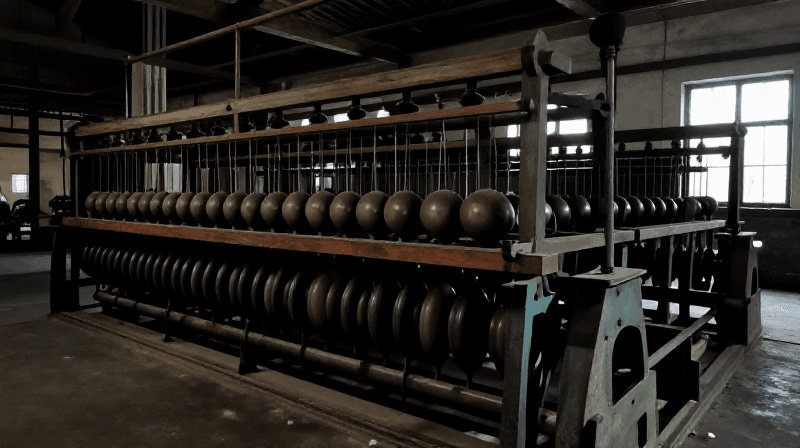
Crompton's Spinning Mule — The Machine That Made Fine Cotton Possible
Tex විසින්
රෙදිපිළි සහ සම්
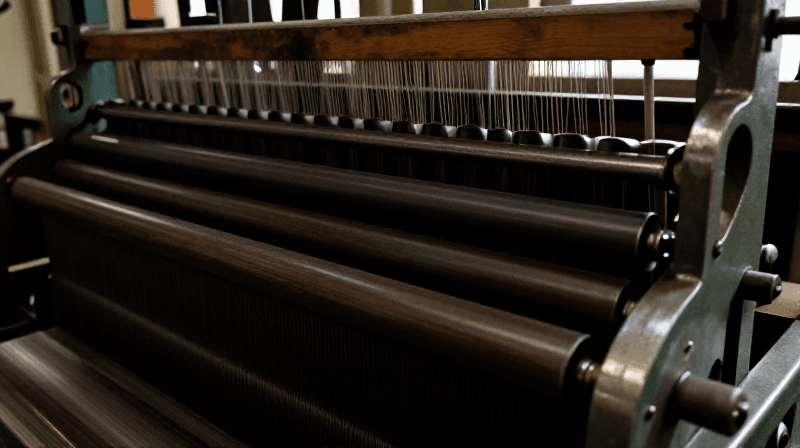
Arkwright's Water Frame — Roller-Drafted Warp Yarn by Water Power
Tex විසින්
රෙදිපිළි සහ සම්
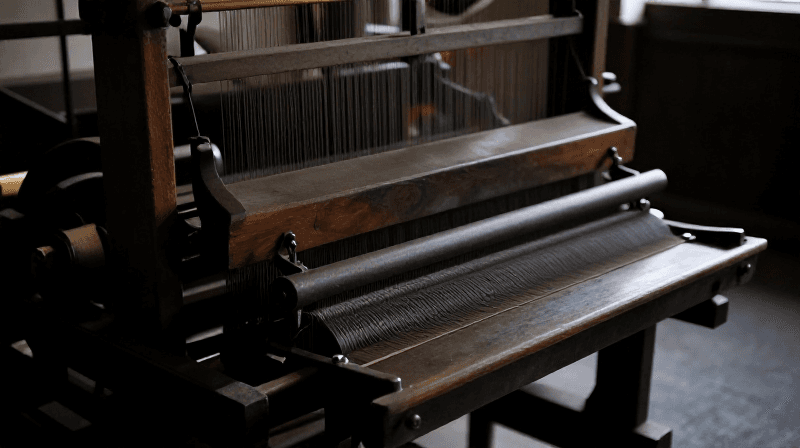
Cartwright's Power Loom — Mechanized Weaving by Steam and Water
Tex විසින්
රෙදිපිළි සහ සම්
සම්බන්ධ බ්ලූප්රින්ට්
මෙම බ්ලූප්රින්ට් දැනුම බෙදා ගනී — ශිල්ප ක්රම, ද්රව්ය හෝ මූලධර්ම
Weaving with a Flying Shuttle — Kay's Invention That Launched the Textile Revolution
Tex විසින්
රෙදිපිළි සහ සම්

The Spinning Jenny — Multi-Spindle Yarn Production
Tex විසින්
රෙදිපිළි සහ සම්
Processing Hemp Fiber for Spinning — From Stalk to Spinnable Bast Fiber
Tex විසින්
රෙදිපිළි සහ සම්
CC0 පොදු වසම
මෙම බ්ලූප්රින්ට් CC0 යටතේ නිකුත් කර ඇත. ඔබට අවසර නොමැතිව පිටපත් කිරීම, වෙනස් කිරීම, බෙදා හැරීම සහ භාවිතා කිරීම කළ හැක.
බ්ලූප්රින්ට් හරහා නිෂ්පාදන මිලදී ගැනීමෙන් නිර්මාතෘට සහාය වන්න නිර්මාතෘ කොමිසම විකුණුම්කරුවන් විසින් නියම කළ, හෝ මෙම බ්ලූප්රින්ට්හි නව අනුවාදයක් සාදා ආදායම බෙදා ගැනීමට ඔබේ බ්ලූප්රින්ට්හි සම්බන්ධතාවයක් ලෙස ඇතුළත් කරන්න.