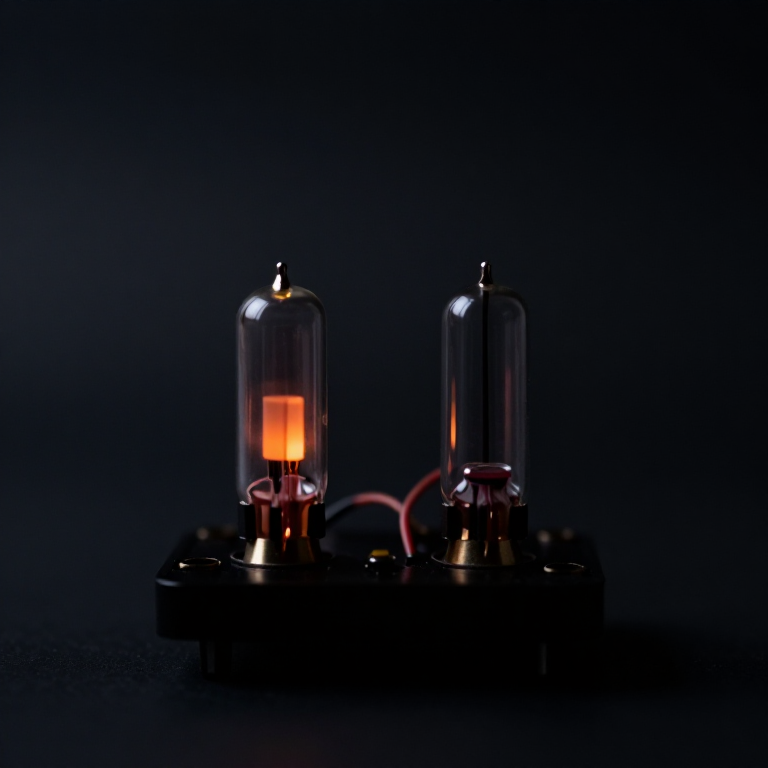

The Eccles-Jordan Flip-Flop
ညွှန်ကြားချက်များ
Cross-couple two amplifiers and watch it latch
Cross-couple two amplifiers and watch it latch
Build it with two transistors — the topology is identical to the 1918 valve original and runs at 5 V instead of 200.
- Wire two common-emitter stages, each with a collector resistor.
- Cross-couple: transistor A’s collector to transistor B’s base through a resistor, and B’s collector to A’s base.
- Fit an LED on each collector.
- Power up and observe. Then briefly ground one base and release it.
One LED lights and the other does not, and it STAYS that way after you remove your hand. Ground the other base and the state flips and stays flipped.
The mechanism is a race that has already been won. If A conducts, it pulls B’s base low, so B is off, so B’s collector is high, which keeps A’s base high, which keeps A on. Each state reinforces itself, so both are stable and there is no third option.
Which state it lands in at power-up is genuinely unpredictable — decided by tiny mismatches in the two transistors and by noise. That is why real systems have a RESET line: a memory that starts in an unknown state is not memory yet.ဤအဆင့်အတွက် ကုန်ကြမ်းများ:
 ထရန်စစ္စတာ စုံလင်အစုံ1 အစုံ
 လျှပ်ကာအစုံ1 အစုံ
 ညွှန်ပြ LED အစုံ1 အစုံ
 အပေါက်ပါဘုတ် / နမူနာဘုတ်1 ခု
 ဆက်သွယ်ဝါယာကြိုး1 reel
လိုအပ်သော ကိရိယာများ:
 ဂဟေဆော်စခန်း
 အိုစီလိုစကုပ်
 ဓာတ်ခွဲခန်းအဆင့် ဒစ်ဂျစ်တယ် မာလ်တီမီတာ
 ချိန်ညှိနိုင်သော စားပွဲတင် ပါဝါစနစ်
The SR latch state table, including the forbidden one
The SR latch state table, including the forbidden one
Trace all four input combinations on your circuit and confirm each. The first one — both inputs inactive — is the whole point: the circuit does nothing, and doing nothing is how it remembers.
The fourth is the interesting failure. Asserting SET and RESET together demands the output be both 1 and 0; the circuit obeys as best it can, and on release the two halves race. Which one wins is decided by propagation delays of a few nanoseconds, so the same circuit can settle differently on identical inputs.
That is metastability, and it never fully goes away — it is pushed into a smaller and smaller time window as circuits get faster. Every clocked system has setup and hold times precisely because data changing too close to a clock edge can put a flip-flop into this race, and a synchroniser is two flip-flops in series giving the first one a whole clock period to make up its mind.Flow
လိုအပ်သော ကိရိယာများ:
 စားပွဲတင်ကွန်ပျူတာ
Add a clock, and make it count
Add a clock, and make it count
Upload and open the serial monitor. Part 1 drives the latch you built and — crucially — reads Q back 500 ms after every input has gone idle. If Q is unchanged, the circuit stored a bit with nothing holding it there.
Part 2 models four toggle flip-flops in a chain. Watch the toggles column: most clocks flip only one stage, but every so often a carry ripples through all four. That variable propagation is the ripple counter's defect — the count is briefly wrong while the carry travels, so you must not read it mid-ripple.
ဤအဆင့်အတွက် ကုန်ကြမ်းများ:
 မိုက်ခရိုကွန်ထရိုလာဘုတ်1 ခုထရန်စစ္စတာ စုံလင်အစုံ1 အစုံလျှပ်ကာအစုံ1 အစုံဆက်သွယ်ဝါယာကြိုး1 reel
လိုအပ်သော ကိရိယာများ:
 Arduino IDE ပါ ကွန်ပျူတာအိုစီလိုစကုပ်ဓာတ်ခွဲခန်းအဆင့် ဒစ်ဂျစ်တယ် မာလ်တီမီတာဂဟေဆော်စခန်း
Measure setup, hold and the metastable window
Measure setup, hold and the metastable window
Find the timing rules that every synchronous system obeys, by violating them.
- Clock a D-type flip-flop from a generator and feed data from a second generator, slightly offset in frequency so the data edge slowly walks across the clock edge.
- Watch the output on the oscilloscope, triggered on the clock.
- Find the region where the output sometimes takes noticeably longer to settle, or lands on the wrong value.
There is a window around the clock edge where the flip-flop cannot decide quickly — data must be stable for a setup time BEFORE the edge and a hold time AFTER it, and inside that window the output resolution time stretches unpredictably.
It is worth being precise about why this cannot be engineered away: the flip-flop is deciding which of two stable states to fall into, and if pushed exactly to the boundary it sits near the balance point. Nothing forces it off quickly. You cannot make the probability zero — only make the window small and give the circuit time. This is a genuine physical limit, not a manufacturing defect.ဤအဆင့်အတွက် ကုန်ကြမ်းများ:
 လော်ဂျစ် IC စုံလင်အစုံ1 အစုံအပေါက်ပါဘုတ် / နမူနာဘုတ်1 ခု
လိုအပ်သော ကိရိယာများ:
အိုစီလိုစကုပ် လှိုင်းထုတ်စက်
 အချက်ပြထုတ်စက်ဓာတ်ခွဲခန်းအဆင့် ဒစ်ဂျစ်တယ် မာလ်တီမီတာ
One bit costs two transistors — now scale it
One bit costs two transistors — now scale it
Count the cost of memory, because that number shaped every computer built before 1970.
- Count the components in your latch: transistors, resistors, connections.
- Multiply by 8 for a byte, by 1024 for a kilobyte.
- Estimate power: measure the current your single latch draws and scale it.
A flip-flop is fast and expensive. Two active devices per bit means a kilobyte of flip-flop memory needs some sixteen thousand transistors and draws real power continuously — in the valve era it meant sixteen thousand valves, each with a heater, each eventually failing.
That is why early machines had tiny fast register memory and desperately sought something cheaper for bulk storage. Mercury delay lines, Williams tubes and magnetic cores were all answers to this one economic problem, and each traded speed or convenience for cost per bit.
The flip-flop never went away — it is still what a CPU register and a cache cell are made of, because nothing beats it for speed. It simply stopped being how you store megabytes. That split between a small fast expensive store and a large slow cheap one is the memory hierarchy, and it exists in every computer today for exactly the reason you have just measured.လိုအပ်သော ကိရိယာများ:
ဓာတ်ခွဲခန်းအဆင့် ဒစ်ဂျစ်တယ် မာလ်တီမီတာစားပွဲတင်ကွန်ပျူတာပစ္စည်းများ
7- 1 အစုံနေရာယူပစ္စည်း
- နေရာယူပစ္စည်း
- 1 အစုံနေရာယူပစ္စည်း
- နေရာယူပစ္စည်း
- 1 reelနေရာယူပစ္စည်း
- နေရာယူပစ္စည်း
- 1 အစုံနေရာယူပစ္စည်း
လိုအပ်သော ကိရိယာများ
8- နေရာယူပစ္စည်း
- နေရာယူပစ္စည်း
- နေရာယူပစ္စည်း
- နေရာယူပစ္စည်း
- နေရာယူပစ္စည်း
- နေရာယူပစ္စည်း
- နေရာယူပစ္စည်း
- နေရာယူပစ္စည်း
ဆက်စပ် အစီအစဉ်များ
ဤအစီအစဉ်များသည် အသိပညာမျှဝေသည် — နည်းပညာ၊ ပစ္စည်း သို့မဟုတ် မူများ

CC0 အများပိုင်
ဤအစီအစဉ်ကို CC0 အောက်တွင် ထုတ်ဝေထားသည်။ ခွင့်ပြုချက်မလိုဘဲ ကူးယူ၊ ပြင်ဆင်၊ ဖြန့်ဝေ နှင့် အသုံးပြုနိုင်သည်။
အစီအစဉ်မှတစ်ဆင့် ကုန်ပစ္စည်းများဝယ်ယူ၍ လက်မှုပညာရှင်ကို ပံ့ပိုးပါ လက်မှုပညာရှင် ကော်မရှင် ရောင်းချသူက သတ်မှတ်သည်၊ သို့မဟုတ် ဤအစီအစဉ်၏ ဗားရှင်းအသစ်ဖန်တီး၍ ဝင်ငွေခွဲဝေရန် သင့်အစီအစဉ်တွင် ချိတ်ဆက်မှုအဖြစ် ထည့်သွင်းပါ။