
Extracting Nickel from Pentlandite — The Devil's Copper That Wouldn't Behave
Nickel (Ni, element 28) gets its name from the German Kupfernickel — 'Old Nick's copper' or 'the Devil's copper.' Saxonian miners in the Erzgebirge encountered a reddish-brown ore (now called nickeline, NiAs) that resembled copper ore but yielded no copper when smelted. They blamed the mischievous sprite Nickel (a diminutive of Nicholas, used as a name for a troublesome goblin) for bewitching the copper. Swedish mineralogist Axel Fredrik Cronstedt isolated metallic nickel in 1751 by heating nickeline with charcoal, proving it was a distinct metal.
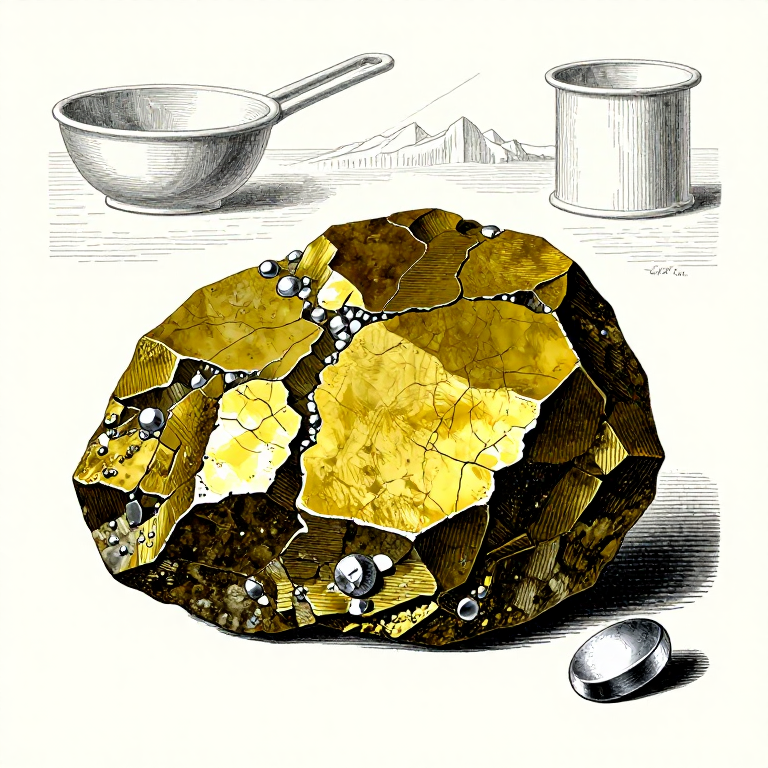
Pentlandite ((Fe,Ni)₉S₈) is the world's primary nickel ore mineral, typically containing 22–42% nickel. It occurs almost exclusively in magmatic sulfide deposits — massive concentrations of metal sulfides that crystallized from sulfide-rich magma deep in the Earth's crust. The two largest deposits on Earth, Sudbury (Ontario, Canada) and Norilsk (Siberia, Russia), together supply a large fraction of the world's nickel.
The extraction of nickel from pentlandite follows a roast-reduce sequence: roasting converts the sulfide to nickel oxide (NiO), and carbon reduction at high temperature produces metallic nickel. The process is complicated by the iron content — pentlandite contains both iron and nickel, and separating them requires careful control of roasting conditions or a matte-smelting step.
HAZARD: Nickel compounds are classified as Group 1 carcinogens (confirmed human carcinogens) by IARC. Nickel dust and nickel oxide dust cause lung and nasal cancer with chronic exposure. Nickel is also one of the most common contact allergens — approximately 10–20% of women and 1–3% of men are sensitized. All work must use respiratory protection and gloves. Roasting produces sulfur dioxide (SO₂), a toxic, choking gas — work outdoors only.
အန္တရာယ်ရှိသော အကြောင်းအရာ
ဤ Blueprint တွင် အန္တရာယ်ရှိသော လုပ်ငန်းစဉ်များ ပါဝင်သည်။ အဆင့်ဆင့် ညွှန်ကြားချက်များကို ကြည့်ရန် ဝင်ရောက်ပြီး အကောင့်ဆက်တင်များတွင် အန္တရာယ်ရှိသော အကြောင်းအရာကို ဖွင့်ပါ။
ဝင်ရောက်ရန်ဤဘလူးပရင့်က ပြုလုပ်သည်
CC0 အများပိုင်
ဤအစီအစဉ်ကို CC0 အောက်တွင် ထုတ်ဝေထားသည်။ ခွင့်ပြုချက်မလိုဘဲ ကူးယူ၊ ပြင်ဆင်၊ ဖြန့်ဝေ နှင့် အသုံးပြုနိုင်သည်။
အစီအစဉ်မှတစ်ဆင့် ကုန်ပစ္စည်းများဝယ်ယူ၍ လက်မှုပညာရှင်ကို ပံ့ပိုးပါ လက်မှုပညာရှင် ကော်မရှင် ရောင်းချသူက သတ်မှတ်သည်၊ သို့မဟုတ် ဤအစီအစဉ်၏ ဗားရှင်းအသစ်ဖန်တီး၍ ဝင်ငွေခွဲဝေရန် သင့်အစီအစဉ်တွင် ချိတ်ဆက်မှုအဖြစ် ထည့်သွင်းပါ။