
Making Friction Matches — Fire on the Strike of a Stick
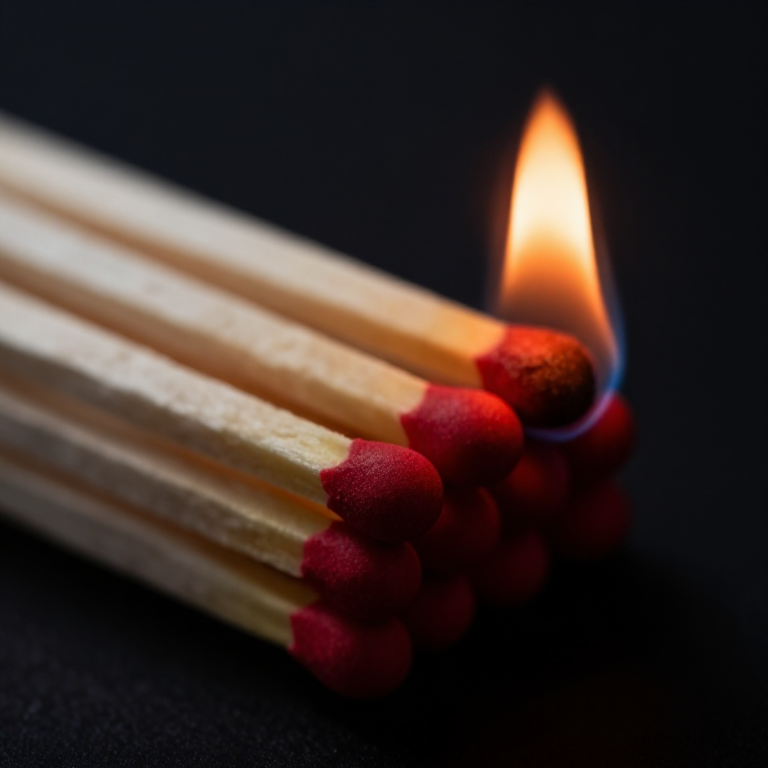
For all of history, making fire meant friction sticks, flint and steel, or carrying an ember. Then in the 1820s and 30s the friction match put instant fire in a pocket: a little stick whose tip bursts into flame when dragged across a rough surface. It seems trivial now, but it was a genuine chemical invention that transformed daily life.
The head packs three things together: an oxidiser to supply oxygen, an igniter that catches from the heat of friction, and a fuel bridge to carry the flame down to the wood. In the original strike-anywhere matches the igniter was white phosphorus, which lights at the gentlest heat. Drag the head and the friction warms the phosphorus enough to ignite; it sets off the oxidiser in a fierce little flare; the sulphur-tipped splint catches and the wood burns.
White phosphorus also had a dark side — its vapour gave match factory workers a horrific bone disease called phossy jaw, which is why it was eventually banned in favour of the red-phosphorus safety match. This blueprint covers the chemistry of both, and treats the materials with the respect that a powerful oxidiser and a deadly poison demand.
အန္တရာယ်ရှိသော အကြောင်းအရာ
ဤ Blueprint တွင် အန္တရာယ်ရှိသော လုပ်ငန်းစဉ်များ ပါဝင်သည်။ အဆင့်ဆင့် ညွှန်ကြားချက်များကို ကြည့်ရန် ဝင်ရောက်ပြီး အကောင့်ဆက်တင်များတွင် အန္တရာယ်ရှိသော အကြောင်းအရာကို ဖွင့်ပါ။
ဝင်ရောက်ရန်ဤဘလူးပရင့်က ပြုလုပ်သည်
ဆက်စပ် အစီအစဉ်များ
ဤအစီအစဉ်များသည် အသိပညာမျှဝေသည် — နည်းပညာ၊ ပစ္စည်း သို့မဟုတ် မူများ

CC0 အများပိုင်
ဤအစီအစဉ်ကို CC0 အောက်တွင် ထုတ်ဝေထားသည်။ ခွင့်ပြုချက်မလိုဘဲ ကူးယူ၊ ပြင်ဆင်၊ ဖြန့်ဝေ နှင့် အသုံးပြုနိုင်သည်။
အစီအစဉ်မှတစ်ဆင့် ကုန်ပစ္စည်းများဝယ်ယူ၍ လက်မှုပညာရှင်ကို ပံ့ပိုးပါ လက်မှုပညာရှင် ကော်မရှင် ရောင်းချသူက သတ်မှတ်သည်၊ သို့မဟုတ် ဤအစီအစဉ်၏ ဗားရှင်းအသစ်ဖန်တီး၍ ဝင်ငွေခွဲဝေရန် သင့်အစီအစဉ်တွင် ချိတ်ဆက်မှုအဖြစ် ထည့်သွင်းပါ။