ပူးပေါင်းဆောင်ရွက်ခြင်း
အနုပညာ
အလှအပနှင့် ကျန်းမာရေး
လက်မှုအနုပညာ
ယဉ်ကျေးမှုနှင့် သမိုင်း
ဖျော်ဖြေရေး
ပတ်ဝန်းကျင်
အစားအစာနှင့် အချိုရည်
ပြောင်းပြန်အင်ဂျင်နီယာပညာ
သိပ္ပံပညာများ
အားကစား
နည်းပညာ
ဝတ်ဆင်နိုင်သောပစ္စည်းများ
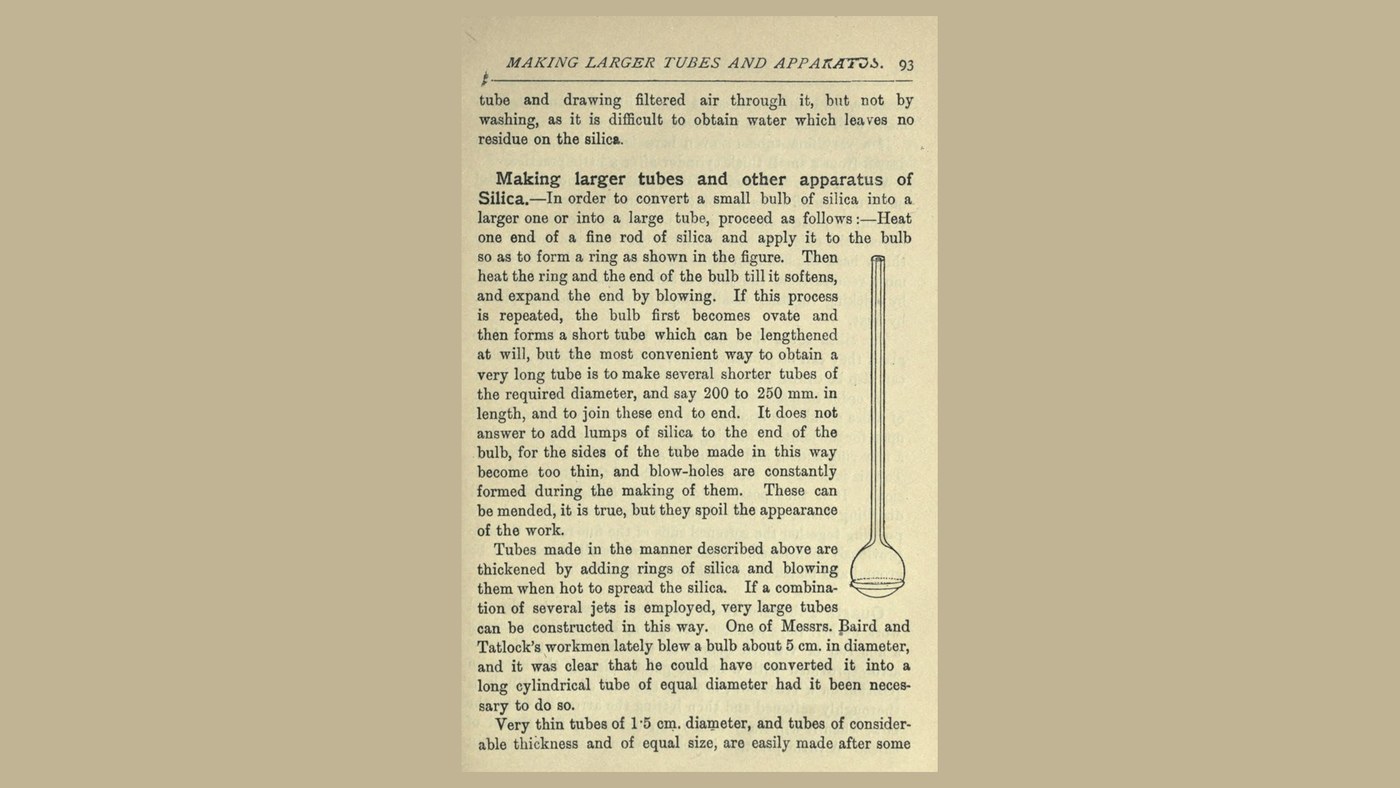


Fused Quartz Tube: Blown from Brazil Pebble in the Oxy-Gas Flame (Shenstone, 1916)
Fused silica stands sudden heating and cooling that would crack glass, but natural quartz splinters violently in a flame.
W. A. Shenstone, in The Methods of Glass-Blowing and of Working Silica in the Oxy-Gas Flame (1916), first turns Brazil pebble into a "non-splintering" silica by quenching it from a yellow-red heat, then melts it in an oxy-gas flame into fine rods, wraps the rods round a platinum core into a first tube, and enlarges it with rings of rod blown out.
Not given: quantities and times. He advises most workers to start from bought tubes and to learn each stage by practice.
Source: W. A. Shenstone (1916), pp. 88-94. Picture: his p. 93.
အဆင့်မြင့်
Several days of practice
ညွှန်ကြားချက်များ
1
1
Read Shenstone
Read Shenstone
"The silica tubes thus made can be cut and broken like glass, they can be joined together before the flame, and they can also be drawn into smaller tubes when softened by heat."
2
2
Crack the Brazil pebble
Crack the Brazil pebble
Clean the chips of Brazil pebble (rock crystal) thoroughly, heat them in boiling water and drop them into cold water. Repeat until they have cracked enough to break easily with a clean steel pestle or hammer. Hand-pick the fragments and reject any that are not perfectly free from foreign matter.
ဤအဆင့်အတွက် ကုန်ကြမ်းများ:
 ကျောက်သလင်း1 as required
 ရေ1 as required
လိုအပ်သော ကိရိယာများ:
 နံရံမြင့်အိုး
 အပူပေး ပြားချပ်
 ပုံး
 လုံးဝိုင်းခေါင်းတူ
3
3
Make it non-splintering
Make it non-splintering
Heat the pure, transparent pieces to a yellow-red heat in a covered platinum dish in a muffle furnace and plunge them quickly into a deep clean vessel of distilled water. Repeat until they are semi-opaque, friable masses like white enamel. Wash them with distilled water, drain and dry. Now they can go straight into the hottest part of the flame without splintering.
ဤအဆင့်အတွက် ကုန်ကြမ်းများ:
 သန့်စင်ရေ1 as required
လိုအပ်သော ကိရိယာများ:
 ပလက်တီနမ် ပန်းကန်
 မာဖယ်မီးဖို
 မီးခံခွက်ညှပ်
 ဖန်ခွက်
4
4
Set up the flame
Set up the flame
Use an efficient oxy-gas burner fed with coal gas and oxygen from a bottle fitted with a gauge and regulator; watch the oxygen used. Protect your eyes with very dark glasses, so dark that work is a little difficult at first, and keep a second pair for long spells, as the glasses get hot. The hottest spot is near the tip of the inner cone: bring the work exactly there.
ဤအဆင့်အတွက် ကုန်ကြမ်းများ:
 ကျောက်မီးသွေးဓာတ်ငွေ့1 as required
 အောက်ဆီဂျင်1 as required
လိုအပ်သော ကိရိယာများ:
 အောက်ဆီဂျင်-ကျောက်မီးသွေးဓာတ်ငွေ့ မီးတောက်စက်
 ဖိအားပါ ဓာတ်ငွေ့ အိုး
 ဖိအားလျှော့ချ ထိန်းညှိကိရိယာ
 ဖိအားတိုင်းကိရိယာ
 ဖိုအတွက် အမှောင်မျက်မှန်
5
5
Draw fine rods
Draw fine rods
Hold a fragment in platinum-tipped forceps and melt one corner. Press a second fragment against the melted part until they stick, and heat from below upwards (to avoid bubbles) until it is clear. Add a third, a fourth and so on until you have an irregular rod. Reheat it in sections and draw it out into rods or coarse threads 1 to 2 mm across.
လိုအပ်သော ကိရိယာများ:
 ပလက်တီနမ် ထိပ်ပါ ညှပ်အောက်ဆီဂျင်-ကျောက်မီးသွေးဓာတ်ငွေ့ မီးတောက်စက်ဖိုအတွက် အမှောင်မျက်မှန်
6
6
Make the first tube
Make the first tube
Bind a few rods round a platinum rod about 1 mm across with platinum wires at both ends. Withdraw the core slightly from one end and heat gradually from there until a rough tube 4 to 5 cm long has formed. Close one end, blow it into a small bulb, fix a silica rod to the far end of the bulb, reheat and draw it out into a fine tube. Blow a fresh bulb on one end and draw it out again, until the tube is 6 to 8 cm long.
လိုအပ်သော ကိရိယာများ:
 ပလက်တီနမ်ကြိုးပလက်တီနမ် ထိပ်ပါ ညှပ်အောက်ဆီဂျင်-ကျောက်မီးသွေးဓာတ်ငွေ့ မီးတောက်စက်ဖိုအတွက် အမှောင်မျက်မှန်
7
7
Blow without soiling it
Blow without soiling it
Blow through a rubber tube on the open end of the silica tube, with a glass tube loosely packed with granulated potash between your mouth and the work so the inside stays clean. Do not take a hot bulb out of the flame to blow it; move it just off the hot spot. Mend holes with plastic silica from the softened end of a fine rod and blow the lump out. Keep the silica clean: a white crust that forms is removed by reheating, but dust or handling can spoil the surface for good.
လိုအပ်သော ကိရိယာများ:
 ရော်ဘာပိုက်
 ဖန်ပြွန်
 ပိုတက်စီယမ်ကာဗွန်နိတ် (ပိုတက်ရှ်)အောက်ဆီဂျင်-ကျောက်မီးသွေးဓာတ်ငွေ့ မီးတောက်စက်
8
8
Enlarge and lengthen
Enlarge and lengthen
To widen a bulb into a tube, lay a ring of fine rod round its end, heat the ring and the end until soft and blow; repeat until the bulb becomes a short tube. For a long tube make several pieces 200 to 250 mm long at the diameter you need and join them end to end. Thicken a tube by adding rings and blowing them out. For a large tube, set a plate of silica behind the work to throw the flame back onto its far side.
လိုအပ်သော ကိရိယာများ:
အောက်ဆီဂျင်-ကျောက်မီးသွေးဓာတ်ငွေ့ မီးတောက်စက်ပလက်တီနမ် ထိပ်ပါ ညှပ်ဖိုအတွက် အမှောင်မျက်မှန်9
9
History and honest limits
History and honest limits
Thorpe's Dictionary (vol. IV, 1913) records Gaudin spinning fused silica threads in 1839, Boys making quartz fibres in 1887, and Shenstone showing in 1901 how to make tubes and bulbs before the oxy-coal-gas blowpipe.
Shenstone gives no quantities or times and says most workers save time and money by starting from bought silica tubes. A finished tube holds a little moisture and nitric peroxide; he removes them by heating it and drawing filtered air through, not by washing.
ပစ္စည်းများ
5- 1 as requiredနေရာယူပစ္စည်း
- 1 as requiredနေရာယူပစ္စည်း
- 1 as requiredနေရာယူပစ္စည်း
- 1 as requiredနေရာယူပစ္စည်း
- 1 as requiredနေရာယူပစ္စည်း
လိုအပ်သော ကိရိယာများ
18- နေရာယူပစ္စည်း
- နေရာယူပစ္စည်း
- နေရာယူပစ္စည်း
- နေရာယူပစ္စည်း
- နေရာယူပစ္စည်း
- နေရာယူပစ္စည်း
- နေရာယူပစ္စည်း
- နေရာယူပစ္စည်း
- နေရာယူပစ္စည်း
- နေရာယူပစ္စည်း
- နေရာယူပစ္စည်း
- နေရာယူပစ္စည်း
- နေရာယူပစ္စည်း
- နေရာယူပစ္စည်း
- နေရာယူပစ္စည်း
- နေရာယူပစ္စည်း
- နေရာယူပစ္စည်း
- နေရာယူပစ္စည်း
ဤဘလူးပရင့်က ပြုလုပ်သည်
CC0 အများပိုင်
ဤအစီအစဉ်ကို CC0 အောက်တွင် ထုတ်ဝေထားသည်။ ခွင့်ပြုချက်မလိုဘဲ ကူးယူ၊ ပြင်ဆင်၊ ဖြန့်ဝေ နှင့် အသုံးပြုနိုင်သည်။
အစီအစဉ်မှတစ်ဆင့် ကုန်ပစ္စည်းများဝယ်ယူ၍ လက်မှုပညာရှင်ကို ပံ့ပိုးပါ လက်မှုပညာရှင် ကော်မရှင် ရောင်းချသူက သတ်မှတ်သည်၊ သို့မဟုတ် ဤအစီအစဉ်၏ ဗားရှင်းအသစ်ဖန်တီး၍ ဝင်ငွေခွဲဝေရန် သင့်အစီအစဉ်တွင် ချိတ်ဆက်မှုအဖြစ် ထည့်သွင်းပါ။