

Erector Set
A toy building set of solid blocks can only stack; you cannot make a crane arm or a bridge span that carries a load. Real structures are built from girders — long members bolted together into open frameworks — and until 1913 no toy let a child build that way.
Gilbert's Erector Set is a box of perforated steel strips and little nuts and bolts. Every strip is punched with a row of holes at a fixed spacing, so any two can be bolted together anywhere along their length, at any angle. From flat strips you fold and bolt up girders, and from girders you build beams, towers, cranes and bridges — real engineering in miniature.
The magic is triangulation: bolt three strips into a triangle and it cannot be pushed out of shape, so a frame of triangles is rigid and strong for almost no weight. And because it is all bolts, you can take it apart and build something new.
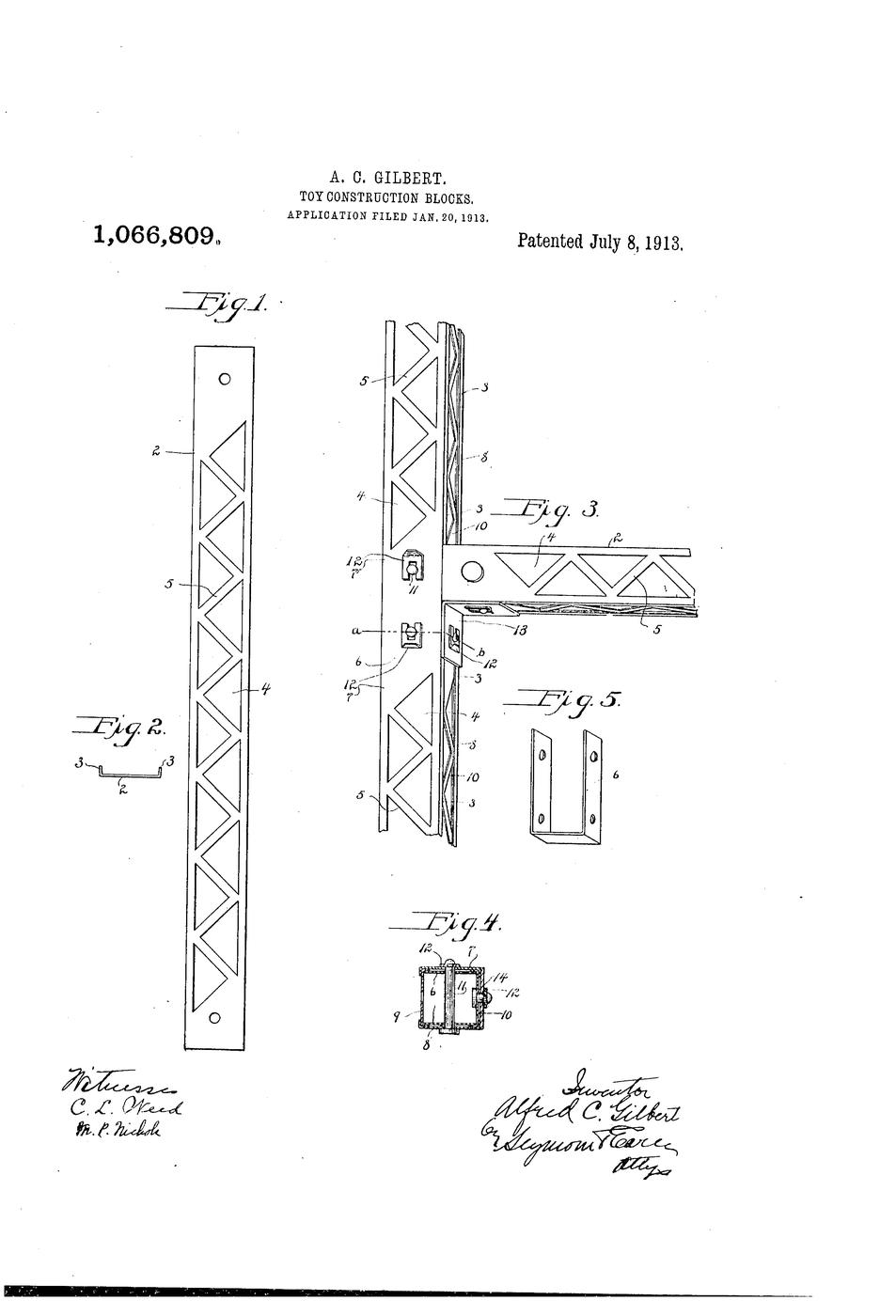
US Patent 1,066,809, "Toy Construction-Blocks", granted 8 July 1913 to Alfred C. Gilbert.
ညွှန်ကြားချက်များ
Read the claim: perforated strips bolted into frames
Read the claim: perforated strips bolted into frames
Gilbert claims metal strips punched with regular holes that bolt together anywhere, at any angle, to build model structures. Note: the holes make every strip joinable to every other.
Cut strips and punch a row of holes
Cut strips and punch a row of holes
Cut several long strips from aluminium and mark and pierce a row of evenly spaced holes down each — the fixed hole pitch is what lets any two strips bolt up.
ဤအဆင့်အတွက် ကုန်ကြမ်းများ:
 အလူမီနီယံပြား1 ရွက်
လိုအပ်သော ကိရိယာများ:
 သံဖြတ်လွှ
Bolt two strips together
Bolt two strips together
Overlap two strips and run a small machine screw and nut through a shared hole. Tighten. You now have your first bolted joint.
ဤအဆင့်အတွက် ကုန်ကြမ်းများ:
 စက်မူလီများ10 ခု
 ခြောက်ထောင့်နတ်10 ခု
လိုအပ်သော ကိရိယာများ:
 ပြားသောထိပ် ဝက်အူလှည့်
Bolt a square and push it
Bolt a square and push it
Bolt four strips into a square with a single bolt at each corner and push a corner. It racks into a diamond — a four-bar frame has no stiffness of its own.
Add a diagonal — make a triangle
Add a diagonal — make a triangle
Bolt one strip across the square as a diagonal and push again. Now it is rigid — a triangle cannot change shape. This is the whole secret of frame-building.
Build a triangulated girder
Build a triangulated girder
Bolt a row of triangles into a long open beam — a truss girder. Light, open, and stiff, because every panel is triangulated.
Load the girder
Load the girder
Rest the girder across two supports and hang a weight from the middle. It barely sags — the triangles carry the load as pushes and pulls along the strips. Measure the deflection.
လိုအပ်သော ကိရိယာများ:
 အားတိုင်းကိရိယာ (စပရိန်ချိန်ခွင်)
Stand the girders up as a tower
Stand the girders up as a tower
Bolt four girders into a tapering tower with triangulated sides. It stands tall and resists being pushed over — the same frame as a real pylon or crane mast.
Build a bridge span
Build a bridge span
Lay a truss girder between two towers as a bridge and walk a weight across. The load runs through the triangles to the supports. You have built a truss bridge from a toy box.
Take it apart and rebuild
Take it apart and rebuild
Unbolt the bridge and build a crane from the same strips. Because it is all bolts, not glue, the parts are reusable forever — one box, endless machines.
Feel a loose bolt fail
Feel a loose bolt fail
Leave one joint bolt loose and load the girder. That panel flexes and the beam sags — a real structure is only as good as its joints. Tighten it and the stiffness returns.
Note why engineers use triangles
Note why engineers use triangles
Write it down: a triangle is the only shape that cannot deform without changing a side's length. That is why bridges, cranes, pylons and roofs are all made of triangles — and why your bolted strips could build any of them.
History & Context — the toy that taught a century of engineers
History & Context — the toy that taught a century of engineers
The patent. US 1,066,809, "Toy Construction-Blocks", granted 8 July 1913 to Alfred Carlton Gilbert. Gilbert — a Yale-trained doctor and an Olympic pole-vault champion — is said to have had the idea watching the riveted steel girders of electric-railway towers go up from a train window. His Erector Set, sold from 1913, was the first construction toy built around bolted structural members rather than blocks, and it came with a real electric motor and instructions to build working cranes and machines.
The engineering it teaches is triangulation. A frame of four bars pinned at the corners is a mechanism, not a structure — push it and it folds (step 4), because the angles are free to change. Add a diagonal and you split it into two triangles, and a triangle is rigid: you cannot alter its shape without stretching one of its sides (steps 5, 12). Build a beam out of triangles — a truss — and every member carries its load as pure tension or compression along its length, so a light open framework is enormously stiff (steps 6-7). This is exactly how real bridges, crane jibs, transmission pylons and roof trusses are built, and the Erector Set lets a child discover it by hand: the difference between a wobbly square and a rock-solid triangle is something you feel, not just read.
Where it went. Gilbert built a toy empire (chemistry sets, the American Flyer trains) and Erector ran for most of the twentieth century; its British cousin Meccano taught the same lessons. Generations of engineers, architects and inventors trace their first understanding of structure to bolting these perforated strips into triangles — a toy that is also a genuine course in how the built world stands up. The bolted truss you made here is, in miniature and in principle, the girder bridge and the tower crane.
ပစ္စည်းများ
3- 1 ရွက်နေရာယူပစ္စည်း
- 10 ခုနေရာယူပစ္စည်း
- 10 ခုနေရာယူပစ္စည်း
လိုအပ်သော ကိရိယာများ
3- နေရာယူပစ္စည်း
- နေရာယူပစ္စည်း
- နေရာယူပစ္စည်း
ဤဘလူးပရင့်က ပြုလုပ်သည်
CC0 အများပိုင်
ဤအစီအစဉ်ကို CC0 အောက်တွင် ထုတ်ဝေထားသည်။ ခွင့်ပြုချက်မလိုဘဲ ကူးယူ၊ ပြင်ဆင်၊ ဖြန့်ဝေ နှင့် အသုံးပြုနိုင်သည်။
အစီအစဉ်မှတစ်ဆင့် ကုန်ပစ္စည်းများဝယ်ယူ၍ လက်မှုပညာရှင်ကို ပံ့ပိုးပါ လက်မှုပညာရှင် ကော်မရှင် ရောင်းချသူက သတ်မှတ်သည်၊ သို့မဟုတ် ဤအစီအစဉ်၏ ဗားရှင်းအသစ်ဖန်တီး၍ ဝင်ငွေခွဲဝေရန် သင့်အစီအစဉ်တွင် ချိတ်ဆက်မှုအဖြစ် ထည့်သွင်းပါ။