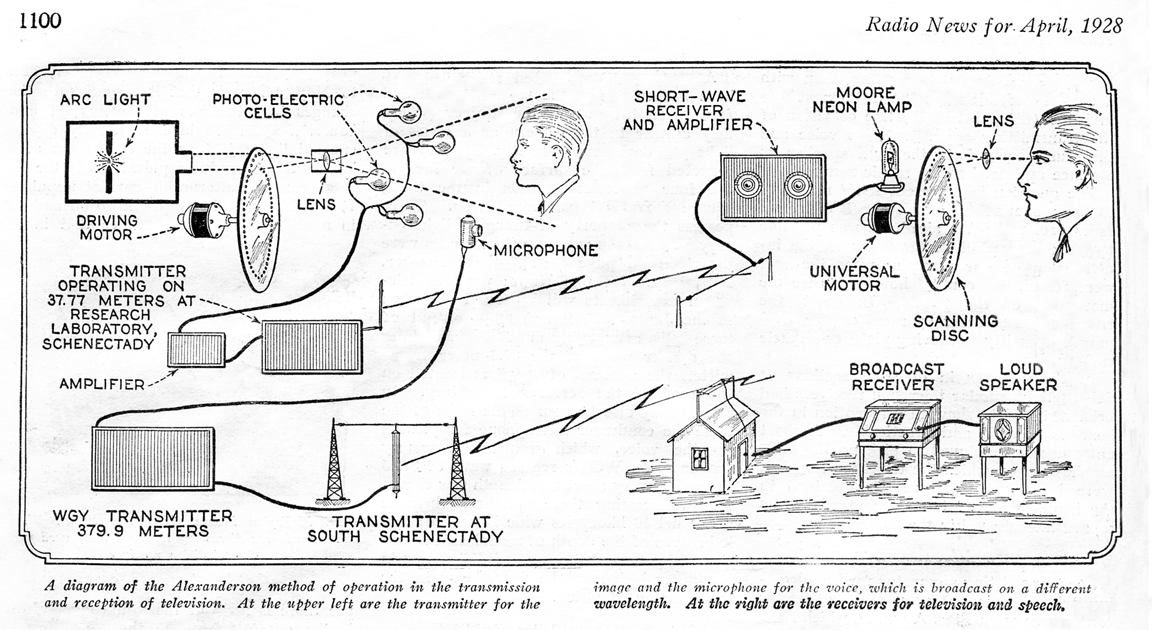

Nipkow-Scheibe
Ein Draht kann immer nur eine Sache gleichzeitig übertragen: einen Wert, in einem Augenblick. Ein Bild besteht aber aus unzähligen Punkten, die alle gleichzeitig da sind. Genau daran scheiterte jeder Versuch, ein Bild durch eine Leitung zu schicken.
Die Lösung ist, das Bild zu zerlegen — nicht im Raum, sondern in der Zeit. Man tastet es Punkt für Punkt ab, schickt die Helligkeitswerte nacheinander durch den einen Draht, und setzt sie am anderen Ende in derselben Reihenfolge wieder zusammen. Wenn das schnell genug geschieht, sieht das Auge wieder ein ganzes Bild.
Nipkows Trick dafür ist verblüffend einfach: eine Scheibe mit Löchern auf einer Spirale. Dreht sie sich, so zieht jedes Loch eine Zeile über das Bild — und weil jedes Loch etwas weiter innen sitzt, liegt jede Zeile unter der vorherigen. Eine Umdrehung tastet das ganze Bild ab.
Deutsches Reichspatent DE 30105, "Elektrisches Teleskop", angemeldet am 6. Januar 1884, veröffentlicht am 15. Januar 1885, von Paul Nipkow. Das Wort Fernsehen kommt in der Schrift nicht vor.
ညွှန်ကြားချက်များ
Lies DE 30105 und achte auf die Spirale
Lies DE 30105 und achte auf die Spirale
Nipkow beansprucht eine Scheibe mit spiralförmig angeordneten Löchern, dazu eine Selenzelle als Auge und eine zweite, gleich schnell laufende Scheibe am Empfänger.
Halte ein Bild hinter ein einzelnes Loch
Halte ein Bild hinter ein einzelnes Loch
Stich ein Loch in Pappe und schau hindurch auf ein Bild. Du siehst genau einen Punkt. Mehr kann eine Leitung auch nicht auf einmal.
Bewege das Loch langsam über das Bild
Bewege das Loch langsam über das Bild
Führe die Pappe zeilenweise über die Vorlage. Nacheinander siehst du alles — aber nie gleichzeitig. Das ist Abtastung, und mehr steckt nicht dahinter.
Schneide eine Scheibe aus fester Pappe
Schneide eine Scheibe aus fester Pappe
Schneide einen Kreis von 300 mm Durchmesser. Bohre genau in der Mitte ein Achsloch — sitzt die Achse schief, eiert die Scheibe und das Bild zerreißt.
Zeichne die Spirale mit 24 Punkten an
Zeichne die Spirale mit 24 Punkten an
Markiere 24 Punkte im Abstand von je 15°. Rücke dabei jeden Punkt 1 mm weiter nach innen als den vorigen. Das ergibt ein Bildfeld von 24 mm Höhe.
Stich die 24 Löcher
Stich die 24 Löcher
Alle Löcher gleich groß, etwa 1 mm. Ein zu großes Loch macht seine Zeile heller und breiter als die anderen — das sieht man später sofort.
လိုအပ်သော ကိရိယာများ:
 နှုတ်ခမ်းပြား ညှပ်
Setze die Scheibe auf eine freilaufende Achse
Setze die Scheibe auf eine freilaufende Achse
Stecke sie auf einen Rundstab und lagere ihn so, dass sie leicht läuft. Sie muss ruhig drehen, ohne zu schlagen.
ဤအဆင့်အတွက် ကုန်ကြမ်းများ:
 သစ်သားချွန်တံ1 ခု
Baue eine Blende vor die Scheibe
Baue eine Blende vor die Scheibe
Schneide in Pappe ein Fenster von 24 × 24 mm. Nur ein Loch darf gleichzeitig im Fenster stehen — sonst tasten mehrere Zeilen zugleich ab und alles verschmiert.
Beleuchte eine einfache Vorlage
Beleuchte eine einfache Vorlage
Nimm eine schwarze Figur auf weißem Grund, kein Foto. Nipkows Selenzelle war träge; grobe Kontraste sind auch heute die ehrlichste Vorlage.
Drehe langsam und beobachte das Fenster
Drehe langsam und beobachte das Fenster
Dreh die Scheibe von Hand. Im Fenster wandert ein Lichtpunkt Zeile für Zeile — das Bild wird in eine zeitliche Folge zerlegt.
Setze einen Fotowiderstand hinter das Fenster
Setze einen Fotowiderstand hinter das Fenster
Klemme einen LDR dahinter und miss seinen Widerstand beim Drehen. Er schwankt im Takt der hellen und dunklen Stellen — das ist das Bildsignal.
ဤအဆင့်အတွက် ကုန်ကြမ်းများ:
 LDR အလင်းခုခံကိရိယာ1 ခု
လိုအပ်သော ကိရိယာများ:
 ဒစ်ဂျစ်တယ် မာလ်တီမီတာ — အလိုအလျောက် အတိုင်းအတာ၊ စစ်မှန်သော RMS
Steuere damit eine Leuchtdiode
Steuere damit eine Leuchtdiode
Schalte den LDR so, dass eine helle LED umso stärker leuchtet, je heller der abgetastete Punkt ist. Jetzt hängt das Licht am Signal.
လိုအပ်သော ကိရိယာများ:
 စားပွဲတင် လျှပ်စစ်ဓာတ်အားပေးစက်
Sieh die LED durch dieselbe Scheibe an
Sieh die LED durch dieselbe Scheibe an
Stelle die LED hinter die Scheibe und schau von vorn durch die Löcher. Weil dieselbe Scheibe abtastet und anzeigt, laufen Sender und Empfänger zwangsläufig synchron.
Dreh schnell — und das Bild entsteht
Dreh schnell — und das Bild entsteht
Bring die Scheibe auf mehrere Umdrehungen pro Sekunde. Ab etwa 12 bis 15 Umdrehungen verschmelzen die Zeilen zu einem stehenden, groben Bild.
Dreh wieder langsamer und beobachte den Zerfall
Dreh wieder langsamer und beobachte den Zerfall
Nimm die Drehzahl zurück, bis das Bild in wandernde Streifen zerfällt. Das Bild steckt nicht in der Scheibe, sondern im Auge — es entsteht erst durch die Trägheit der Wahrnehmung.
Geschichte & Hintergrund — ein Patent, das nie gebaut wurde
Geschichte & Hintergrund — ein Patent, das nie gebaut wurde
Das Patent. DE 30105, "Elektrisches Teleskop", angemeldet am 6. Januar 1884, veröffentlicht am 15. Januar 1885, von Paul Nipkow, damals Student in Berlin. Üblicherweise wird das Jahr 1884 genannt — das ist das Anmeldedatum, nicht die Veröffentlichung. Der Titel spricht von einem Teleskop, weil es das Wort Fernsehen noch nicht gab.
Nipkow hat sein Gerät nie gebaut. Er hatte die Idee vollständig und richtig, aber nicht die Bauteile. Die Selenzellen jener Zeit reagierten viel zu langsam und zu schwach, Verstärker gab es nicht — die Elektronenröhre kam erst zwanzig Jahre später, und ohne Verstärkung ist das Signal einer Selenzelle für nichts zu gebrauchen. Das Patent lief aus, ohne dass daraus ein Apparat wurde. Erst in den 1920er Jahren, als es Verstärkerröhren und lichtstarke Lampen gab, baute man mit genau dieser Scheibe die ersten funktionierenden Fernsehsysteme; John Logie Bairds Televisor von 1925 ist eine Nipkow-Scheibe.
Warum die Spirale genau das Richtige ist. Man braucht zwei Bewegungen: eine schnelle entlang der Zeile und eine langsame nach unten. Die Spirale erledigt beide mit einem einzigen drehenden Teil — die Drehung liefert die Zeile, der schrittweise kleinere Radius liefert den Zeilenvorschub. Keine Schwingspiegel, keine zweite Achse, kein Getriebe. Deshalb ist die Auflösung auch gleich der Lochzahl: 24 Löcher heißt 24 Zeilen, und mehr Zeilen heißt eine größere Scheibe. Genau daran ist das mechanische Fernsehen später gescheitert — für Bilder in brauchbarer Schärfe hätte die Scheibe meterweise wachsen müssen. Die Elektronenstrahlröhre tastet dasselbe Bild ohne bewegte Masse ab und gewann deswegen.
Was hier trotzdem bleibt. Der eigentliche Gedanke ist nicht die Scheibe, sondern die Zerlegung eines Bildes in eine zeitliche Folge von Helligkeitswerten und ihr Wiederaufbau in derselben Reihenfolge. Das ist bis heute so — bei jeder Kamera, jedem Bildschirm, jeder Videodatei. Geändert hat sich nur, was abtastet. Schritt 15 zeigt den zweiten bleibenden Punkt: ohne die Trägheit des menschlichen Auges gäbe es kein Fernsehen, sondern nur eine schnelle Folge einzelner Punkte.
ပစ္စည်းများ
2- 1 ခုနေရာယူပစ္စည်း
- နေရာယူပစ္စည်း
လိုအပ်သော ကိရိယာများ
3- နေရာယူပစ္စည်း
- နေရာယူပစ္စည်း
ဆက်စပ် အစီအစဉ်များ
ဤအစီအစဉ်များသည် အသိပညာမျှဝေသည် — နည်းပညာ၊ ပစ္စည်း သို့မဟုတ် မူများ


CC0 အများပိုင်
ဤအစီအစဉ်ကို CC0 အောက်တွင် ထုတ်ဝေထားသည်။ ခွင့်ပြုချက်မလိုဘဲ ကူးယူ၊ ပြင်ဆင်၊ ဖြန့်ဝေ နှင့် အသုံးပြုနိုင်သည်။
အစီအစဉ်မှတစ်ဆင့် ကုန်ပစ္စည်းများဝယ်ယူ၍ လက်မှုပညာရှင်ကို ပံ့ပိုးပါ လက်မှုပညာရှင် ကော်မရှင် ရောင်းချသူက သတ်မှတ်သည်၊ သို့မဟုတ် ဤအစီအစဉ်၏ ဗားရှင်းအသစ်ဖန်တီး၍ ဝင်ငွေခွဲဝေရန် သင့်အစီအစဉ်တွင် ချိတ်ဆက်မှုအဖြစ် ထည့်သွင်းပါ။