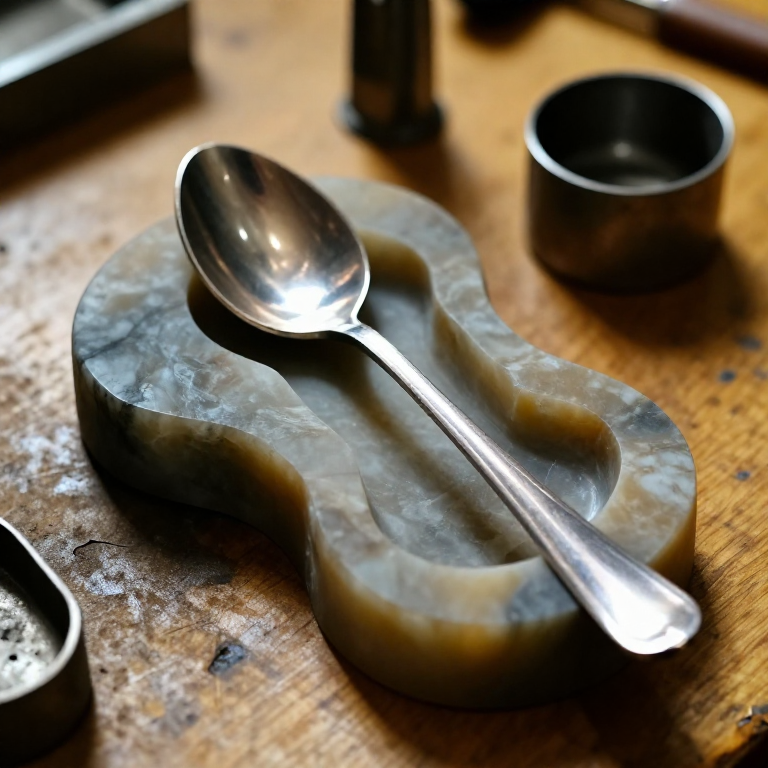


Casting a Pewter Spoon in a Soapstone Mould — Low-Temperature Metal Casting
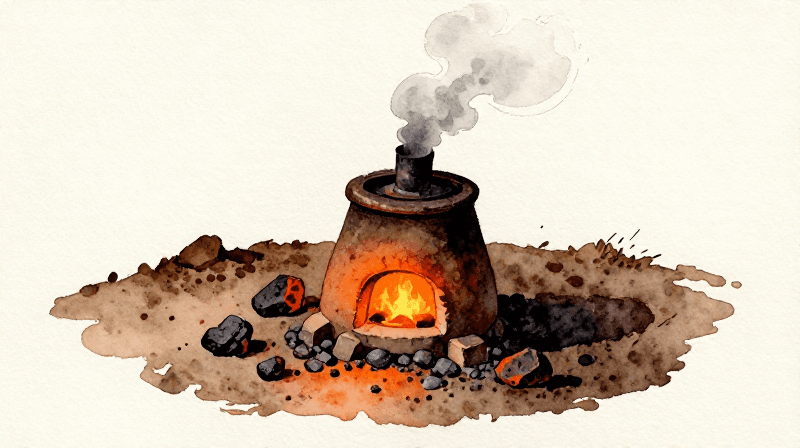
Pewter — an alloy of roughly 92% tin with small amounts of antimony and copper — melts at just 230°C, making it the most accessible metal for casting. Medieval spoon-makers carved two-part moulds from soapstone, poured molten pewter, and finished the castings with files and burnishing. The result is a bright, food-safe utensil that lasts generations. This blueprint covers carving the soapstone mould, melting the pewter over a simple charcoal fire, casting, and finishing.
ညွှန်ကြားချက်များ
Select the soapstone
Select the soapstone
ဤအဆင့်အတွက် ကုန်ကြမ်းများ:
 ဆပ်ပြာကျောက်တုံး1 ခု
Flatten the mould faces
Flatten the mould faces
Draw the spoon pattern
Draw the spoon pattern
Carve the bowl cavity
Carve the bowl cavity
လိုအပ်သော ကိရိယာများ:
 သစ်သားထွင်း အကွေးဆောက်
 စလွိုက်ဓား
Carve the matching half
Carve the matching half
Carve alignment keys and pour gate
Carve alignment keys and pour gate
Pre-heat the mould
Pre-heat the mould
Melt the pewter
Melt the pewter
ဤအဆင့်အတွက် ကုန်ကြမ်းများ:
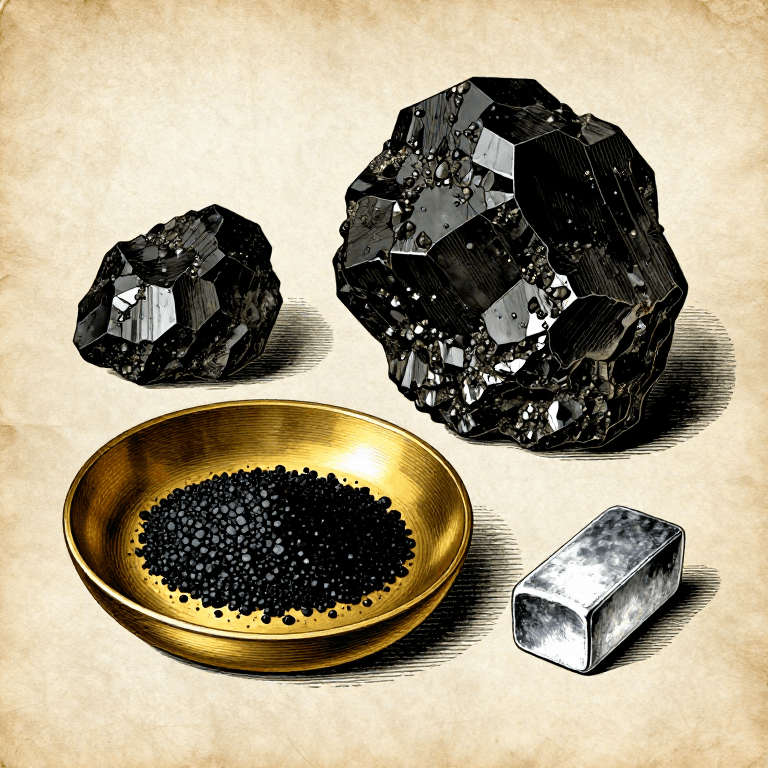
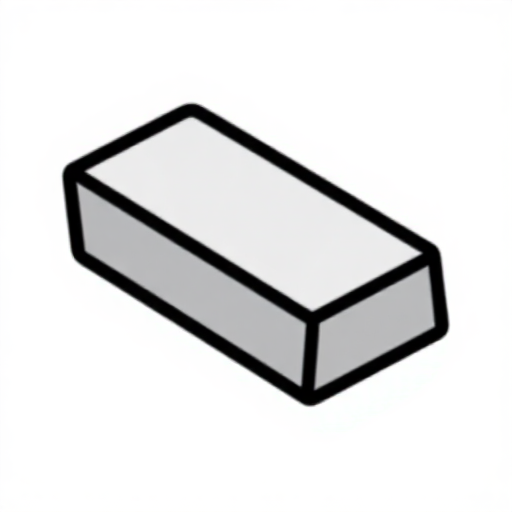 ပယူတာတုံး200 ဂရမ်
လိုအပ်သော ကိရိယာများ:
 သံ ကရူးစီးဘယ်
 မီးခံခွက်ညှပ်
Pour the casting
Pour the casting
Cool and open the mould
Cool and open the mould
Remove the gate and flash
Remove the gate and flash
လိုအပ်သော ကိရိယာများ:
 အပ်ရိုက်တံအစုံ
Shape and refine the spoon
Shape and refine the spoon
Burnish to a bright finish
Burnish to a bright finish
လိုအပ်သော ကိရိယာများ
5- နေရာယူပစ္စည်း
- နေရာယူပစ္စည်း
- နေရာယူပစ္စည်း
- နေရာယူပစ္စည်း
- နေရာယူပစ္စည်း
ချိတ်ဆက်ထားသော ဘလူးပရင့် ကုန်ကြမ်းများ
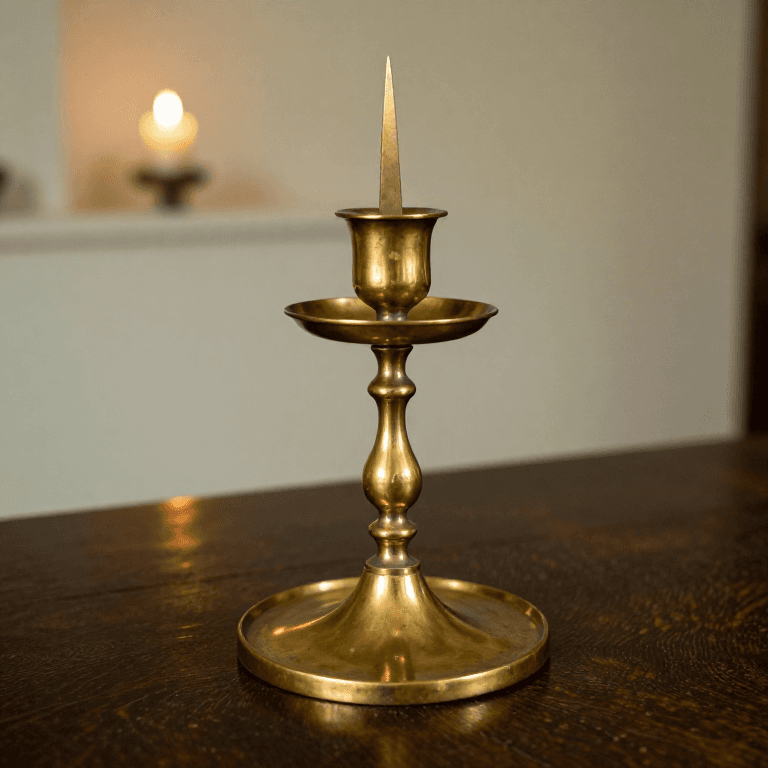
ဤဘလူးပရင့်က ပြုလုပ်သည်

ဆက်စပ် အစီအစဉ်များ
ဤအစီအစဉ်များသည် အသိပညာမျှဝေသည် — နည်းပညာ၊ ပစ္စည်း သို့မဟုတ် မူများ

CC0 အများပိုင်
ဤအစီအစဉ်ကို CC0 အောက်တွင် ထုတ်ဝေထားသည်။ ခွင့်ပြုချက်မလိုဘဲ ကူးယူ၊ ပြင်ဆင်၊ ဖြန့်ဝေ နှင့် အသုံးပြုနိုင်သည်။
အစီအစဉ်မှတစ်ဆင့် ကုန်ပစ္စည်းများဝယ်ယူ၍ လက်မှုပညာရှင်ကို ပံ့ပိုးပါ လက်မှုပညာရှင် ကော်မရှင် ရောင်းချသူက သတ်မှတ်သည်၊ သို့မဟုတ် ဤအစီအစဉ်၏ ဗားရှင်းအသစ်ဖန်တီး၍ ဝင်ငွေခွဲဝေရန် သင့်အစီအစဉ်တွင် ချိတ်ဆက်မှုအဖြစ် ထည့်သွင်းပါ။