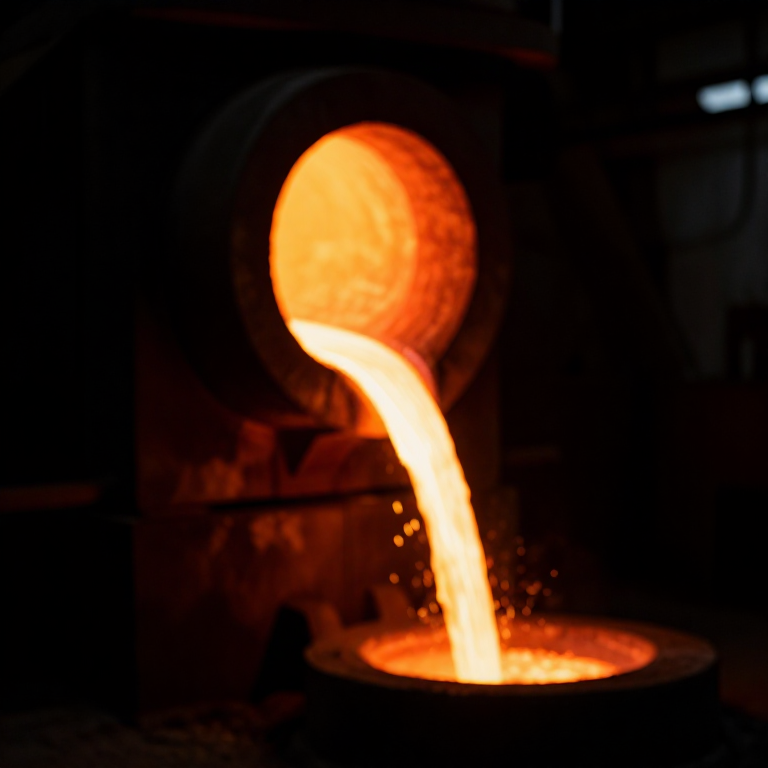


Smelting Pig Iron in a Coke Blast Furnace — Molten Iron at Industrial Scale
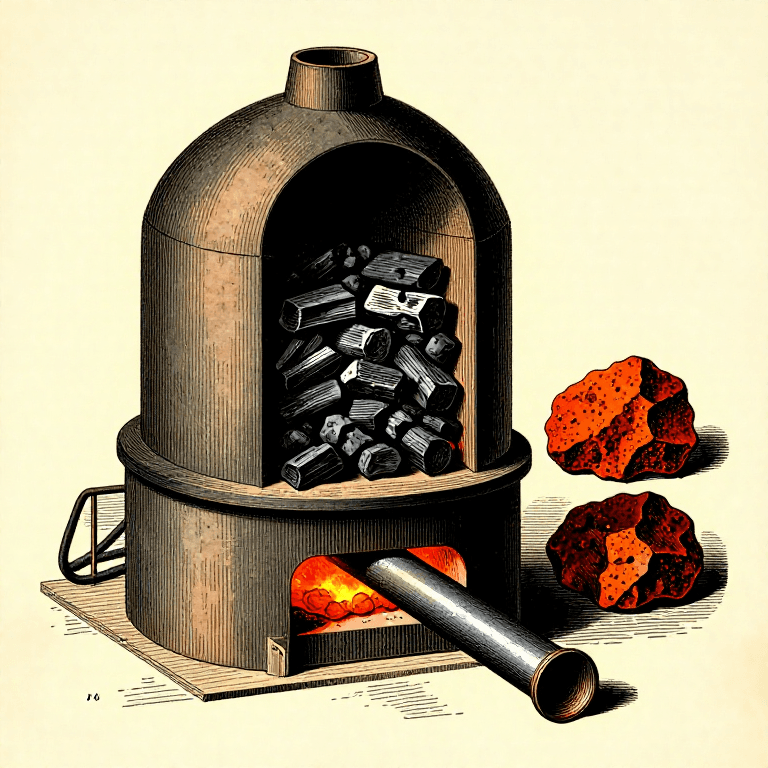
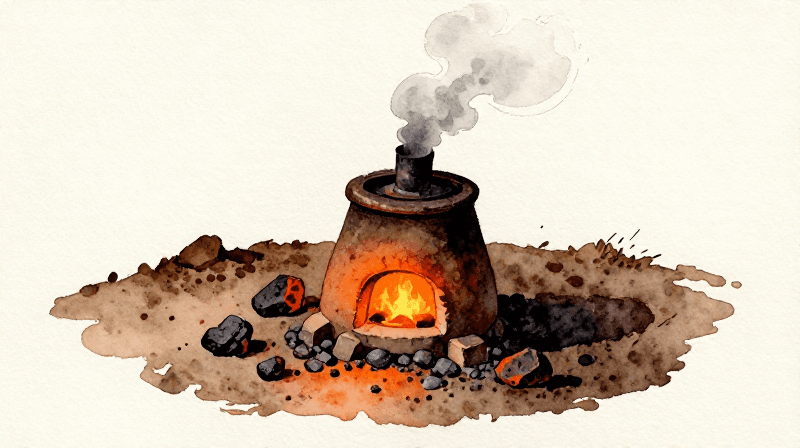
The bloomery gave the ancient world iron, but only in small spongy lumps, one slow batch at a time. The blast furnace changed everything: a tall shaft kept continuously charged and blown produces a steady river of molten iron. Where a bloomery never melts its metal, a blast furnace runs hot enough to liquefy iron entirely, letting it pool at the hearth and be tapped out by the tonne.
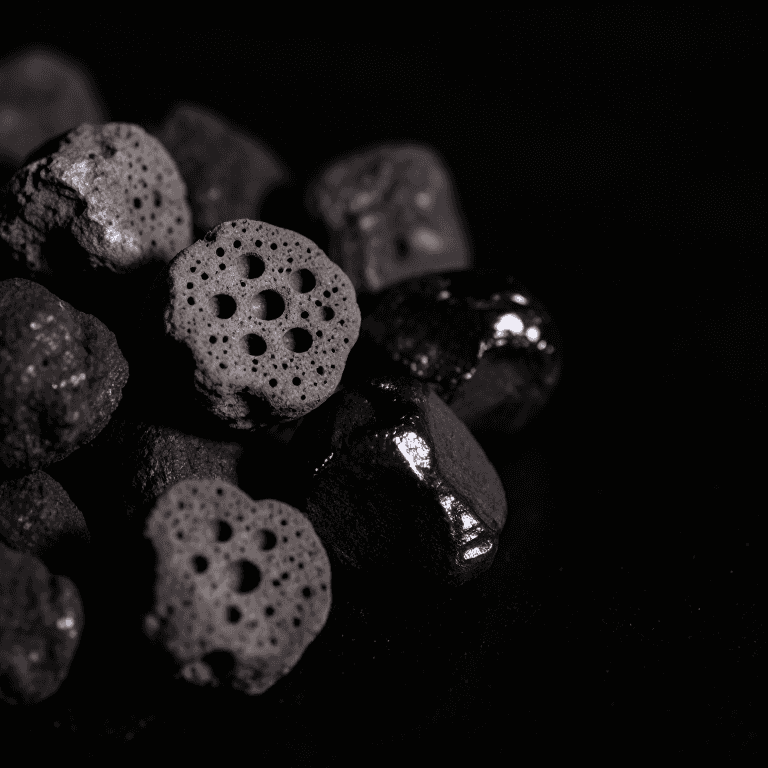
The key is heat and chemistry working together. A powerful air blast burns coke to carbon monoxide, which strips the oxygen from iron ore; meanwhile the descending iron soaks up carbon until it melts. Limestone added as flux carries off the stony impurities as a floating slag. What runs out of the tap hole is pig iron — iron saturated with about four percent carbon: hard, brittle, and perfect for casting or for refining into wrought iron and steel.
When coke replaced charcoal as the blast-furnace fuel in the early 1700s, iron could finally be made in unlimited quantity without consuming whole forests. Cheap pig iron became the raw material of the Industrial Revolution — the metal behind rails, bridges, engines, and machines.
ညွှန်ကြားချက်များ
Understand pig iron
Understand pig iron
Build the shaft furnace
Build the shaft furnace
ဤအဆင့်အတွက် ကုန်ကြမ်းများ:
 မီးခံအုတ်80 ခု
လိုအပ်သော ကိရိယာများ:
 လက်ကိုင်ဂေါ်ပြားငယ်
Crush the ore and flux
Crush the ore and flux
ဤအဆင့်အတွက် ကုန်ကြမ်းများ:
 ခြောက်သွေ့သော ညွန်သံရိုင်း30 ကီလို
 ထုံးကျောက်ပြား8 ကီလို
လိုအပ်သော ကိရိယာများ:
 တူ
တူSet up the air blast
Set up the air blast
လိုအပ်သော ကိရိယာများ:
 လေမှုတ်အိတ်
Light the coke bed
Light the coke bed
ဤအဆင့်အတွက် ကုန်ကြမ်းများ:
 သတ္တုတွင်းကုတ်40 ကီလို
Charge in layers
Charge in layers
ဤအဆင့်အတွက် ကုန်ကြမ်းများ:
သတ္တုတွင်းကုတ်40 ကီလိုReduce the ore
Reduce the ore
Melt and carburize
Melt and carburize
Form and tap the slag
Form and tap the slag
လိုအပ်သော ကိရိယာများ:
 ဖိုဖောက်တံ
Tap the molten iron
Tap the molten iron
လိုအပ်သော ကိရိယာများ:
ဖိုဖောက်တံCast the pigs
Cast the pigs
ဤအဆင့်အတွက် ကုန်ကြမ်းများ:
 သွန်းလောင်းရေးသဲ50 ကီလို
Cool, break, and identify
Cool, break, and identify
လိုအပ်သော ကိရိယာများ:
တူပစ္စည်းများ
5- 80 ခုနေရာယူပစ္စည်း
- 30 ကီလိုနေရာယူပစ္စည်း
- 8 ကီလိုနေရာယူပစ္စည်း
- 40 ကီလိုနေရာယူပစ္စည်း
- 50 ကီလိုနေရာယူပစ္စည်း
ချိတ်ဆက်ထားသော ဘလူးပရင့် ကုန်ကြမ်းများ

ဆက်စပ် အစီအစဉ်များ
ဤအစီအစဉ်များသည် အသိပညာမျှဝေသည် — နည်းပညာ၊ ပစ္စည်း သို့မဟုတ် မူများ


CC0 အများပိုင်
ဤအစီအစဉ်ကို CC0 အောက်တွင် ထုတ်ဝေထားသည်။ ခွင့်ပြုချက်မလိုဘဲ ကူးယူ၊ ပြင်ဆင်၊ ဖြန့်ဝေ နှင့် အသုံးပြုနိုင်သည်။
အစီအစဉ်မှတစ်ဆင့် ကုန်ပစ္စည်းများဝယ်ယူ၍ လက်မှုပညာရှင်ကို ပံ့ပိုးပါ လက်မှုပညာရှင် ကော်မရှင် ရောင်းချသူက သတ်မှတ်သည်၊ သို့မဟုတ် ဤအစီအစဉ်၏ ဗားရှင်းအသစ်ဖန်တီး၍ ဝင်ငွေခွဲဝေရန် သင့်အစီအစဉ်တွင် ချိတ်ဆက်မှုအဖြစ် ထည့်သွင်းပါ။