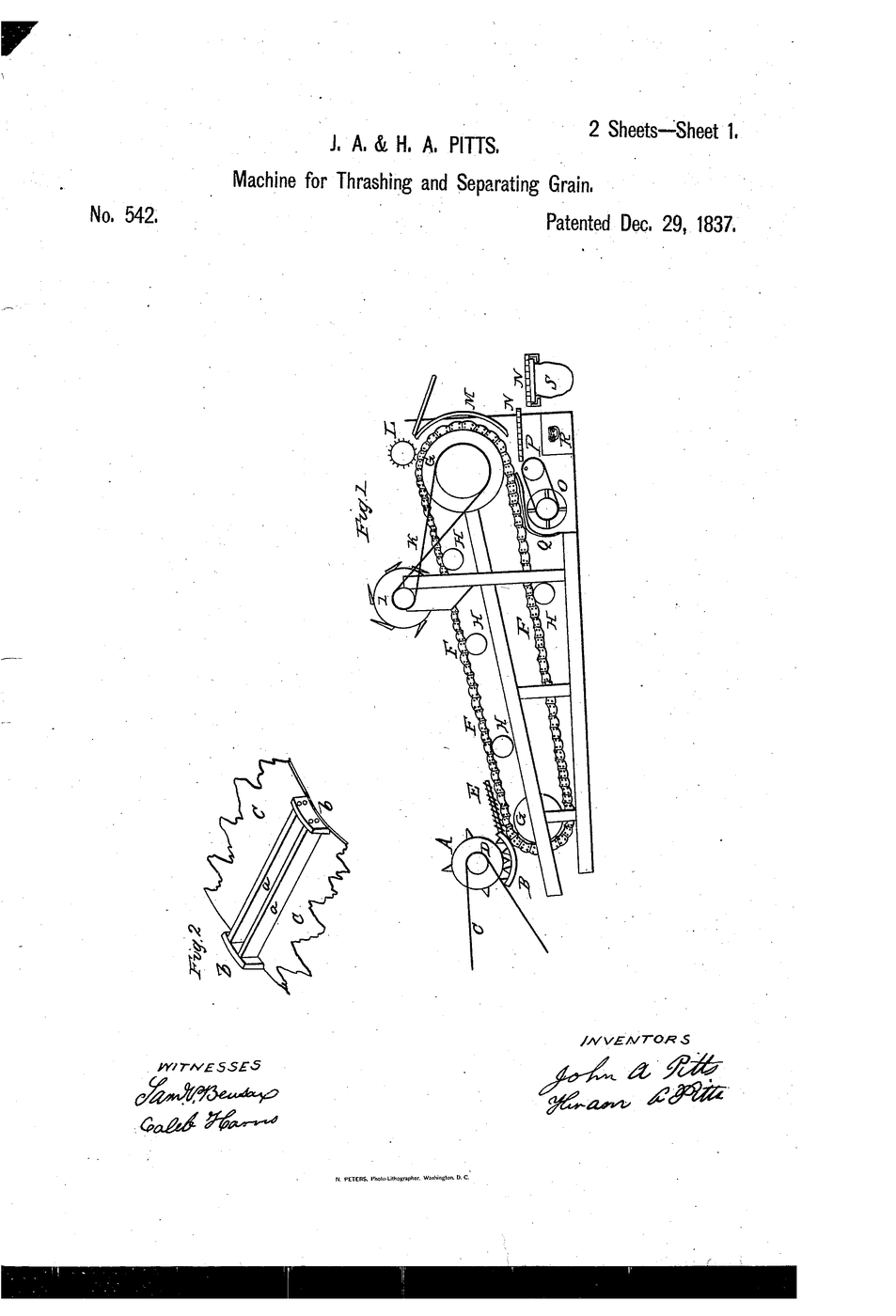


Threshing Machine
For thousands of years, getting the grain out of the ear was the hardest, slowest job on the farm. You spread the cut stalks on a floor and beat them with a flail, or drove oxen over them, then tossed the mess in the air so the wind carried off the chaff. A strong worker with a flail could thresh a few bushels a day.
The Pitts machine does the whole job in one pass — and does the second half, which everyone forgets. A spiked cylinder spinning inside a curved bed rubs the grain free of the straw; then a set of shaking sieves and a draught of air separate the loose grain from the straw and chaff, so clean grain falls out one end and straw out the other.
The threshing was known; the continuous separating in the same machine is the leap. The granted title says both: "thrashing and separating grain."
US Patent 542, "Machine for thrashing and separating grain", granted 29 December 1837 to John A. Pitts and Hiram A. Pitts, twin brothers, of Winthrop, Maine.
ညွှန်ကြားချက်များ
Read the two verbs in the title
Read the two verbs in the title
US 542 is a machine for "thrashing AND separating" grain. Two jobs — rub the grain loose, then get it away from the straw. Note both; the second is the harder one.
Thresh a handful of grain heads by hand first
Thresh a handful of grain heads by hand first
Rub ten wheat heads between your palms and time how long to free the grain. Record the time and how much chaff ends up mixed in. This is the flail baseline.
ဤအဆင့်အတွက် ကုန်ကြမ်းများ:
 ဂျုံစေ့လုံး100 ဂရမ်
လိုအပ်သော ကိရိယာများ:
 အချိန်တိုင်းနာရီ
Build a spiked cylinder
Build a spiked cylinder
Fix short pegs into a dowel roller so it can spin. The pegs are the teeth that rub the grain from the ear.
ဤအဆင့်အတွက် ကုန်ကြမ်းများ:
 သစ်သားချွန်တံ1 ခု
လိုအပ်သော ကိရိယာများ:
 ကြိုးမဲ့ တူးစက်
Set a curved concave under it
Set a curved concave under it
Shape a curved bed (the concave) close beneath the cylinder, with a small gap. Grain heads fed into the gap are rubbed between the moving pegs and the fixed bed.
ဤအဆင့်အတွက် ကုန်ကြမ်းများ:
 သစ်သားအလွှာပြား1 ရွက်
Feed grain heads through the gap
Feed grain heads through the gap
Spin the cylinder and feed heads in. Grain, straw and chaff all come out the bottom together — threshed, but not yet separated. Note the mess.
Adjust the concave gap and re-run
Adjust the concave gap and re-run
Too wide and heads pass unthreshed; too tight and grain is crushed. Find the gap that frees the grain without cracking it — the setting every combine still has today.
လိုအပ်သော ကိရိယာများ:
 ဗားနီယာ ကလစ်ပါ
Build a shaking sieve
Build a shaking sieve
Make a sloped screen whose holes let grain through but hold back straw. Mount it to shake. This is the start of separating.
လိုအပ်သော ကိရိယာများ:
 မက်ရှ် ၁၂၀ ဇကာ
Shake the threshed mixture over the sieve
Shake the threshed mixture over the sieve
Tip the mixture onto the shaking screen. Grain drops through; straw walks off the end. The heavy grain and the light straw part company by size and motion.
Add a draught of air to carry the chaff
Add a draught of air to carry the chaff
Blow a steady draught across the falling grain. The light chaff blows aside while heavy grain falls straight down. Air finishes what the sieve began.
လိုအပ်သော ကိရိယာများ:
 ဂီယာပါ မော်တာ
Weigh the clean grain and the losses
Weigh the clean grain and the losses
Weigh the clean grain, the grain lost in the straw, and the chaff. Clean-grain fraction is how a thresher is judged. Tune the air until losses drop.
လိုအပ်သော ကိရိယာများ:
 လက်တံညီ ချိန်ခွင်
Time a full machine pass against step 2
Time a full machine pass against step 2
Run a fresh batch straight through cylinder → sieve → air and time it. Compare with the hand-rubbing time. One motion instead of three, and far faster.
Feed too fast and watch losses rise
Feed too fast and watch losses rise
Overfeed the machine. Grain rides out on top of the straw un-separated. Capacity is limited by separating, not by threshing — the lesson that shaped every machine after.
History & Context — the twins who mechanised the harvest's other half
History & Context — the twins who mechanised the harvest's other half
The patent. US 542, "Machine for thrashing and separating grain", granted 29 December 1837 to John A. Pitts AND Hiram A. Pitts of Winthrop, Maine. They were twin brothers, and both names are on the patent — a good reminder to read the inventor line, because "the Pitts thresher" quietly halves the credit. It is one of the oldest numbered US patents to survive intact (numbering restarted after the 1836 Patent Office fire, so US 542 is very early).
Threshing was old; separating in the same machine was the invention. Simple threshing drums — a spiked cylinder rubbing grain against a concave — existed before the Pitts brothers; Andrew Meikle in Scotland had built one in 1786. What the granted title puts second, and what actually mattered, is "and separating": the Pitts machine carried the threshed mixture straight onto shaking sieves and through a fan-blast that parted the grain from the straw and chaff continuously, in one pass. Steps 5 to 9 walk exactly that progression — thresh, sieve, winnow — and step 12 shows why the second half is the bottleneck. A machine that only threshes still leaves you the ancient job of winnowing by hand.
Why it changed farming. The flail set the pace of grain agriculture for millennia: a worker threshed maybe seven bushels a day, and the crop had to be processed slowly through the whole winter. A horse-powered Pitts machine did in an hour what took a person a day, which meant a farm could grow far more grain than its own hands could process — a precondition for the vast wheat farms of the American Midwest and the grain exports that fed industrial cities. The separating is the part that scaled: it is the direct ancestor of the walkers, sieves and fan in every combine harvester, which simply folds the Pitts brothers' cylinder, sieves and blast into one self-propelled machine that also cuts the crop.
The honest limits. Early threshers were dangerous — open belts and cylinders maimed workers regularly — and dusty enough to cause "thresher's lung." And they threshed but did not cut; that job stayed with the reaper and the binder (see the grain-binder blueprint) until the combine married the two. Reading US 542, the striking thing is how completely the grain-cleaning problem was already solved in 1837: sieve, shake, and blow, in that order, is still how it is done.
ပစ္စည်းများ
3- 100 ဂရမ်နေရာယူပစ္စည်း
- 1 ခုနေရာယူပစ္စည်း
- 1 ရွက်နေရာယူပစ္စည်း
လိုအပ်သော ကိရိယာများ
6- နေရာယူပစ္စည်း
- 1 vendor sell this, none ship to you yetနေရာယူပစ္စည်း
- နေရာယူပစ္စည်း
- နေရာယူပစ္စည်း
- 1 vendor sell this, none ship to you yetနေရာယူပစ္စည်း
- နေရာယူပစ္စည်း
ဆက်စပ် အစီအစဉ်များ
ဤအစီအစဉ်များသည် အသိပညာမျှဝေသည် — နည်းပညာ၊ ပစ္စည်း သို့မဟုတ် မူများ

CC0 အများပိုင်
ဤအစီအစဉ်ကို CC0 အောက်တွင် ထုတ်ဝေထားသည်။ ခွင့်ပြုချက်မလိုဘဲ ကူးယူ၊ ပြင်ဆင်၊ ဖြန့်ဝေ နှင့် အသုံးပြုနိုင်သည်။
အစီအစဉ်မှတစ်ဆင့် ကုန်ပစ္စည်းများဝယ်ယူ၍ လက်မှုပညာရှင်ကို ပံ့ပိုးပါ လက်မှုပညာရှင် ကော်မရှင် ရောင်းချသူက သတ်မှတ်သည်၊ သို့မဟုတ် ဤအစီအစဉ်၏ ဗားရှင်းအသစ်ဖန်တီး၍ ဝင်ငွေခွဲဝေရန် သင့်အစီအစဉ်တွင် ချိတ်ဆက်မှုအဖြစ် ထည့်သွင်းပါ။