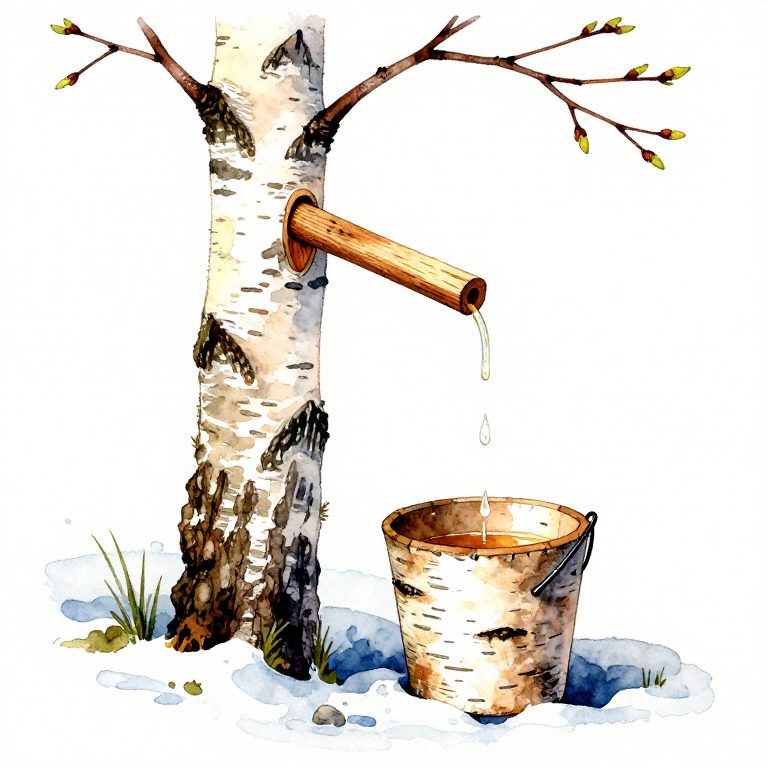


Tapping Birch Sap — Spring Harvest from Living Trees
Зааварчилгаа
Choose the Right Tree and Timing
Choose the Right Tree and Timing
Birch sap flows for a narrow window of 2-4 weeks in early spring, when daytime temperatures rise above 0°C but nights still freeze. This freeze-thaw cycle creates pressure that pushes sap up from the roots. In Scandinavia, this is typically late March to mid-April.
Select a healthy, mature birch tree — at least 25cm diameter. Silver birch (Betula pendula) and downy birch (B. pubescens) both produce abundant sap. A single tree can yield 5-10 liters per day at peak flow without harm, though traditional practice is to take no more than 5 liters per day to avoid weakening the tree.
Choose a spot on the south-facing side of the trunk, about 50-100cm above ground level, where the bark is smooth.
Drill and Insert the Spile
Drill and Insert the Spile
Using a knife point, brace-and-bit, or a 10mm drill, bore a hole 3-5cm deep into the trunk at a slight upward angle. You want to penetrate through the bark and into the sapwood (xylem) but not past it. Sap flows in the outermost wood layers.
Whittle a spile (tap spout) from a hollow elder or willow twig — about 8-10cm long, with a slight taper at the insertion end. Push it firmly into the hole. Sap should begin dripping from the spile within minutes if the timing is right.
If using a V-cut method instead (traditional in some regions): cut a shallow V-shaped notch in the bark with the point facing down, and place a small twig at the bottom of the V to channel sap into a container below.
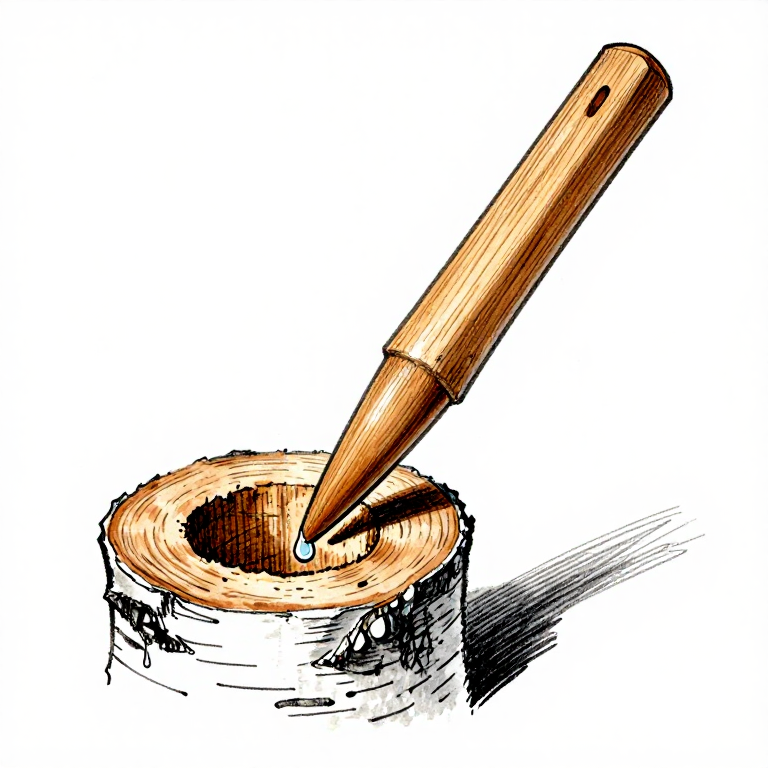
Энэ алхмын материал:
 Модон шүүс дамжуулах хоолой1 ширхэг
 Бузина модны мөчир (хөндий)1 ширхэг
Шаардлагатай багаж:
 Утасгүй өрөм
 Ажлын хутга
Collect the Sap
Collect the Sap
Hang or place a container beneath the spile. Birch bark containers, clay pots, wooden buckets, or any clean vessel works. Cover the top to keep out insects and debris.
Check and empty your container at least once daily — birch sap ferments quickly in warm weather (within 24-48 hours). On peak flow days, a productive tree can fill a 5-liter bucket in a single day.
Fresh birch sap is clear, with a very slightly sweet taste (about 1-2% sugar, mainly glucose and fructose). It also contains minerals (potassium, calcium, manganese), amino acids, and vitamin C.
Энэ алхмын материал:
 Цуглуулгын хувин1 ширхэг
Process or Preserve the Sap
Process or Preserve the Sap
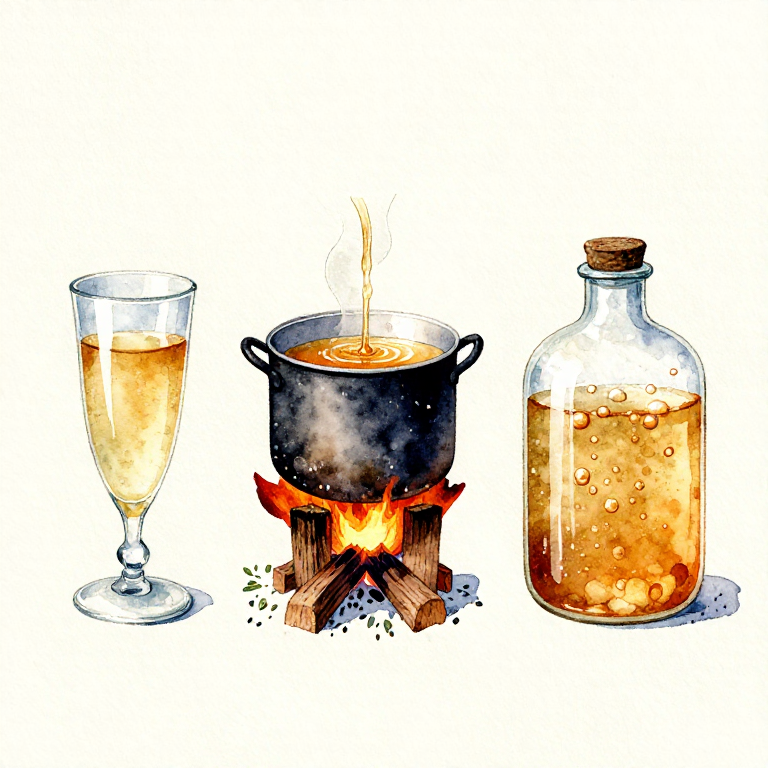
Fresh drinking: Drink within 2-3 days of collection, refrigerated. This was the primary Viking-era use — a mineral-rich spring tonic after winter.
Birch syrup: Boil down sap at a 100:1 ratio — 100 liters of sap yields roughly 1 liter of syrup. This is far more labor-intensive than maple syrup (which concentrates at 40:1). The resulting syrup has a complex, slightly savory-sweet flavor distinct from maple.
Fermented birch sap wine: Leave raw sap in a warm place for 3-5 days with wild yeasts. Add honey for stronger fermentation. Traditional across Russia, Belarus, and the Baltic states.
Энэ алхмын материал:
 Ус500 мл
 Зөгийн балas needed tbsp
Шаардлагатай багаж:
 Том тогоо
Seal the Tree
Seal the Tree
When sap flow stops (the sap turns cloudy and the flow slows as leaves begin to emerge), remove the spile and seal the hole. Pack it with a tight-fitting wooden plug, or apply a paste of clay mixed with pine resin.
A properly sealed tap hole will heal over within one growing season. Avoid tapping the same hole or the same side of the tree the following year — rotate to a new position to allow full recovery.
One tree can be tapped for decades without harm if done responsibly. Finnish and Latvian traditions emphasize sustainable harvesting — never take more than the tree can spare, and always seal your tap.
Шаардлагатай багаж:
Ажлын хутгаМатериал
5- 1 ширхэгТүр орлуулагч
- 1 ширхэгТүр орлуулагч
- 1 ширхэгТүр орлуулагч
- 500 млТүр орлуулагч
- as needed tbspТүр орлуулагч
Энэ загвараар хийдэг

CC0 Нийтийн домэйн
Энэ загвар CC0 дор гаргагдсан. Та зөвшөөрөл авахгүйгээр хуулах, өөрчлөх, түгээх, ашиглах боломжтой.
Загвараар дамжуулан бүтээгдэхүүн худалдаж авч Бүтээгчийг дэмжээрэй Бүтээгчийн шимтгэл Борлуулагчаар тогтоосон, эсвэл энэ загварын шинэ хувилбар үүсгэж орлогоо хуваахын тулд өөрийн загварт холбоос болгон оруулна уу.