

Chebyshev Linkage
Зааварчилгаа
Set the proportions
Set the proportions
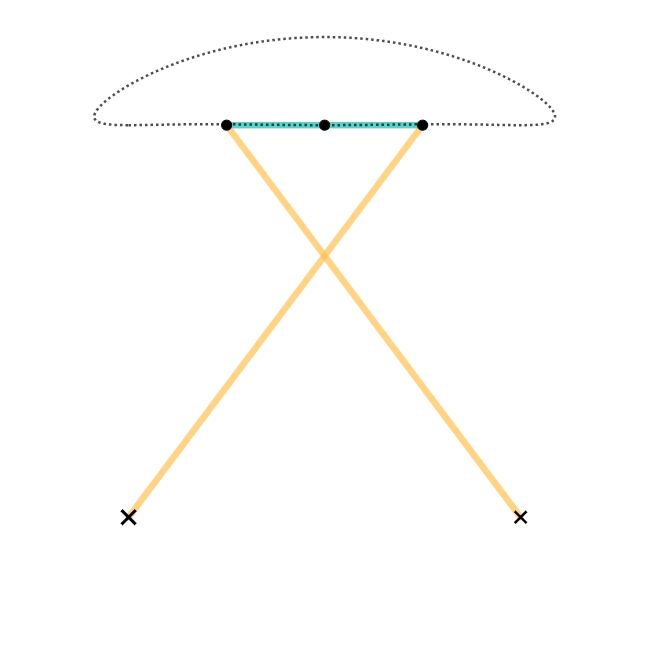
Three numbers in a fixed ratio produce the whole behaviour.
- Ground link (distance between the two fixed pivots): 50 mm.
- Two equal cranks: 100 mm each, so 2 × ground.
- Coupler: 125 mm, so 2.5 × ground.
- Mark the coupler's exact midpoint at 62.5 mm — this is the tracing point.
Where the ratio comes from: Chebyshev derived it by minimising the MAXIMUM deviation from a straight line across the travel, rather than by making the error zero at a few chosen points. That is the minimax criterion, and it is the same idea behind the Chebyshev polynomials used in filter design and numerical approximation.
Scale all four numbers together if you want a bigger model — the ratio is what matters, not the absolute size. Change one number alone and the approximation degrades quickly.Энэ алхмын материал:
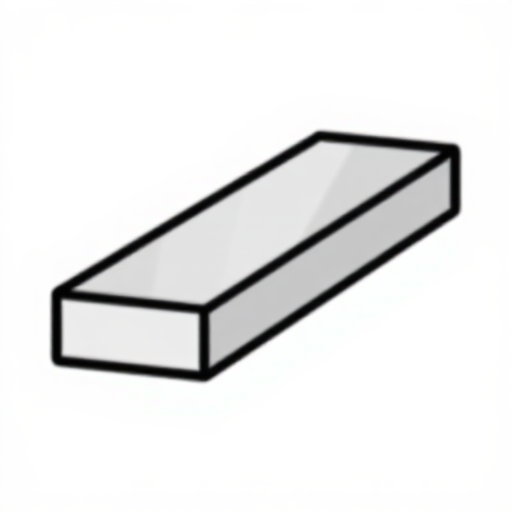 Хавтгай хөнгөн цагаан баганз1 ширхэг
Шаардлагатай багаж:
 Дижитал штангенциркуль 6 инч
 Төвлүүлэх цүүц
Cut and drill the three moving links
Cut and drill the three moving links
Only three bars move, which is why this build is an evening's work rather than a weekend's.
- Cut two cranks at 100 mm hole centres and one coupler at 125 mm.
- Clamp the two cranks together and drill both ends 4.1 mm as a stack, so they are identical.
- Drill the coupler's two end holes, then its midpoint hole at 62.5 mm.
- Deburr every hole and round the bar ends.
Шаардлагатай багаж:
 Төмөр хөрөөний хүрээ ба ир
 Ширээний хавчаар
 Утасгүй өрөм
 Өрмийн үзүүрийн иж бүрдэл
 Гилбэрийн иж бүрдэлДижитал штангенциркуль 6 инч
Mount the ground pivots and assemble
Mount the ground pivots and assemble
Four pivots in total — compare that with Peaucellier's seven.
- Mark two fixed pivot centres 50 mm apart on an 18 mm ply baseplate.
- Drill 4.2 mm and fit two M4 × 30 socket head cap screws as ground pins, secured underneath with M4 flat washers × 2 and M4 hex nuts × 2.
- Fit each crank over a ground pin with a washer above and below, retained by an M4 nylon insert lock nut.
- Join the crank ends to the coupler with M4 × 16 socket head cap screws × 2, washers each side, and lock nuts.
Fastener count for the whole mechanism: 4 pivot screws, 2 ground screws, 12 washers, 2 hex nuts, 4 lock nuts. Peaucellier's needs roughly double. That difference in parts, holes and setting time is exactly what Chebyshev bought by accepting an approximation.
Set each pivot to swing freely with no side rock, same as any linkage. Clearance at four joints accumulates into path error just as it does at seven — there is simply less of it.Энэ алхмын материал:
 Фанер хуудас1 хуудас
 Дотор зургаан талт толгойтой шураг4 ширхэг
 Хавтгай угаагуур12 ширхэг
 Зургаан талт эрэг2 ширхэг
 Нейлон оруулгатай тогтоох гайка4 ширхэг
Шаардлагатай багаж:
Утасгүй өрөмӨрмийн үзүүрийн иж бүрдэл Зургаан талт түлхүүрийн иж бүрдэл
 Хосолсон өнцөг хэмжигч
Trace the path and find where it stops being straight
Trace the path and find where it stops being straight
Approximations have a working region. Find yours.
- Fit a marker at the coupler midpoint.
- Sweep the mechanism through its full range and let it draw.
- Lay a straight edge on the central portion and mark where the traced path first departs visibly.
- Measure that usable length, and measure the maximum deviation within it.
Энэ алхмын материал:
Фанер хуудас1 баглааШаардлагатай багаж:
Дижитал штангенциркуль 6 инчХосолсон өнцөг хэмжигчHistory and the approximation argument
History and the approximation argument
Pafnuty Lvovich Chebyshev (1821-1894) came to mechanisms from mathematics, and it shows in how he attacked the problem. He asked which linkage minimises the LARGEST error across the range — the minimax question — rather than which one is exact. That habit of mind produced the Chebyshev polynomials, still the standard tool for approximating functions with the smallest worst-case error, and used today in filter design and numerical methods.
He built a great deal of machinery. Chebyshev designed a walking mechanism, a rowing mechanism and a sorting machine, several of which were exhibited at the Paris exposition of 1878. His walking linkage is a direct ancestor of the leg mechanisms in modern walking robots, where a near-straight foot path with a fast return is exactly what is wanted.
Why the approximation usually wins in practice. Four bars, four pivots, one moving assembly, and a deviation smaller than the clearance in the pivots themselves. Peaucellier's exactness is real but it is delivered through eight bars and seven pivots, each with its own clearance — so a well-made Chebyshev linkage can easily be straighter IN PRACTICE than a poorly made exact one. Mathematical exactness and manufactured accuracy are different things, and knowing which one is the binding constraint is the engineering judgement.
Its neighbours: Watt's linkage is more compact still with three bars and a figure-of-eight path; Peaucellier is exact and expensive; Chebyshev sits between them with the error mathematically minimised. Three approaches to one goal, and this catalogue holds all three precisely so the trade can be compared with a straight edge instead of an argument.
Материал
6- 1 ширхэгТүр орлуулагч
- 1 баглааТүр орлуулагч
- Түр орлуулагч
- 12 ширхэгТүр орлуулагч
- 2 ширхэгТүр орлуулагч
- 4 ширхэгТүр орлуулагч
Шаардлагатай багаж
9- Түр орлуулагч
- Түр орлуулагч
- Түр орлуулагч
- Түр орлуулагч
- 1 vendor sell this, none ship to you yetТүр орлуулагч
- Түр орлуулагч
- Түр орлуулагч
- Түр орлуулагч
- Түр орлуулагч
Холбоотой загварууд
Эдгээр загварууд мэдлэг хуваалцдаг — арга техник, материал эсвэл зарчим
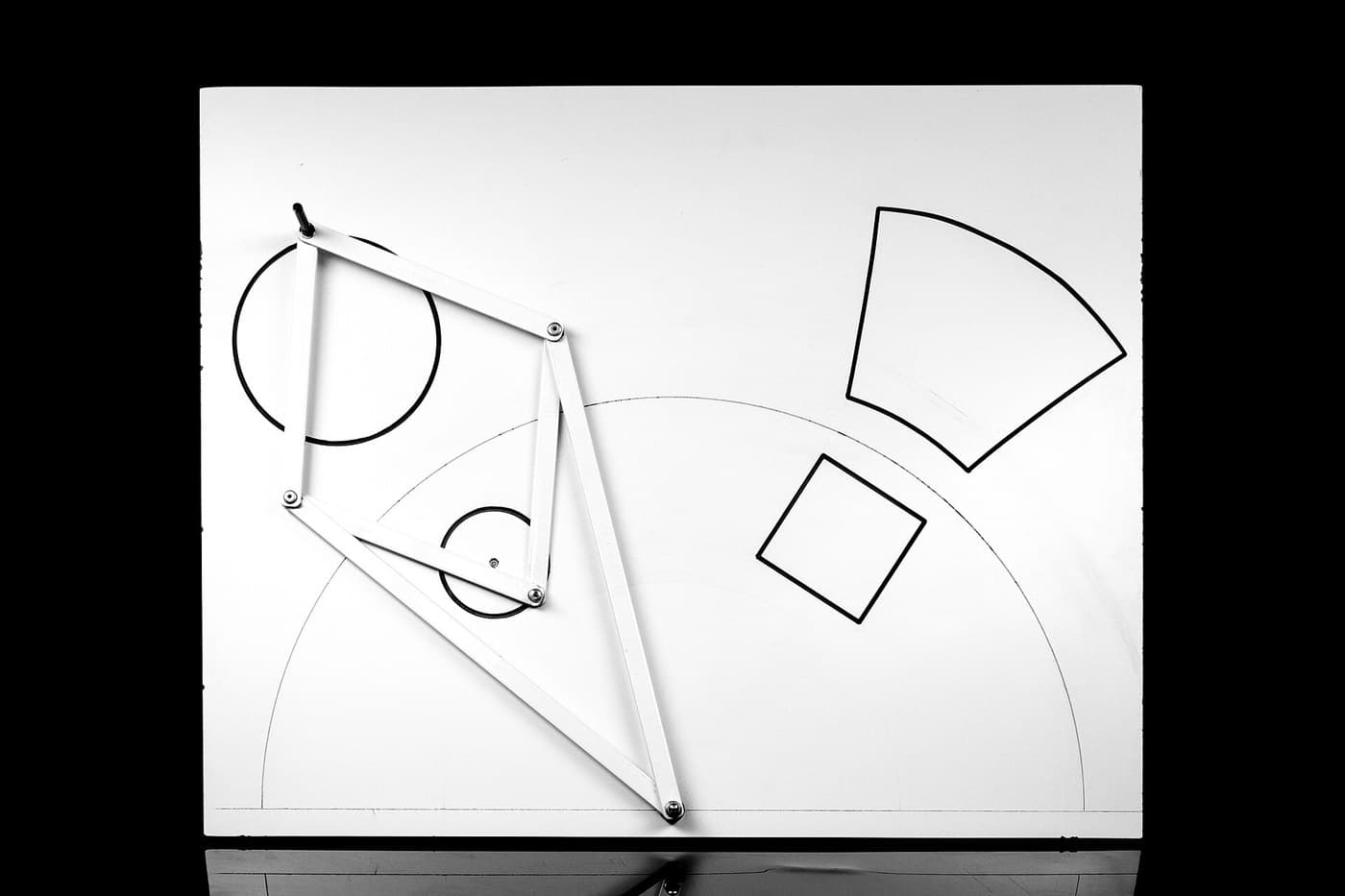

CC0 Нийтийн домэйн
Энэ загвар CC0 дор гаргагдсан. Та зөвшөөрөл авахгүйгээр хуулах, өөрчлөх, түгээх, ашиглах боломжтой.
Загвараар дамжуулан бүтээгдэхүүн худалдаж авч Бүтээгчийг дэмжээрэй Бүтээгчийн шимтгэл Борлуулагчаар тогтоосон, эсвэл энэ загварын шинэ хувилбар үүсгэж орлогоо хуваахын тулд өөрийн загварт холбоос болгон оруулна уу.