УРЛАГ
ГОО САЙХАН БА ЭРҮҮЛ МЭНД
ГАРААР ХИЙСЭН
СОЁЛ БА ТҮҮХ
ҮЗВЭР НААДАМ
БАЙГАЛЬ ОРЧИН
ХООЛ БА УНДАА
УРВУУ ИНЖЕНЕРЧЛЭЛ
ШИНЖЛЭХ УХААН
СПОРТ
ТЕХНОЛОГИ
ӨМСДӨГ ХЭРЭГСЭЛ
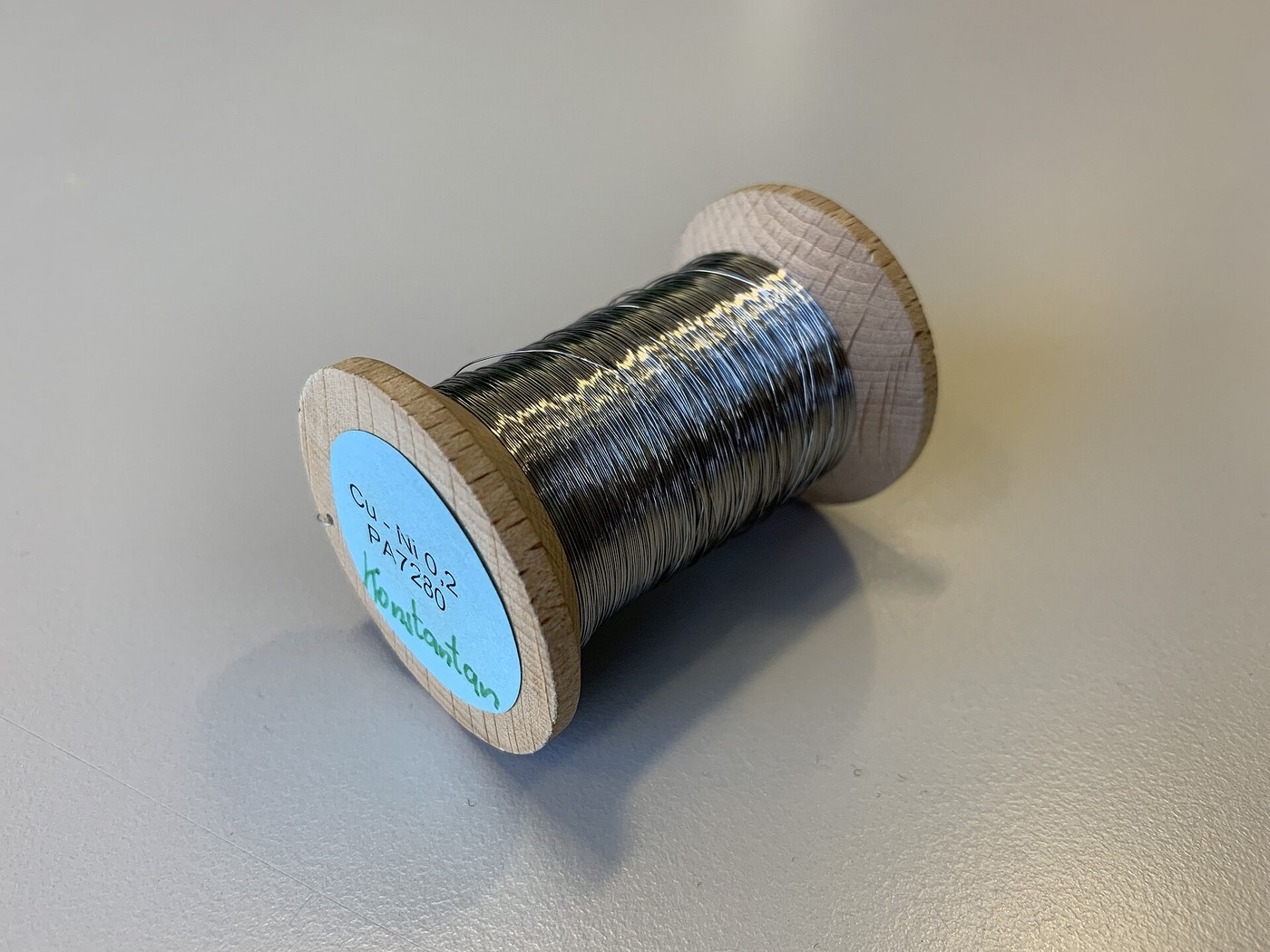


Constantan Resistance Wire from Copper and Nickel
Constantan is a copper-nickel alloy, usually 55 % copper and 45 % nickel, whose electrical resistance stays nearly the same as it warms; that is why strain gauges, thermocouples and resistance coils are wound with it. Copper and nickel melt together in any proportion, so the alloy is made by fusing the two, casting small sticks and drawing them into wire.
The melt follows C. Morfit's copper-nickel alloy as Brannt gives it in *The Metallic Alloys* (1889): nickel and an equal weight of copper fused with borax in a graphite crucible, the rest of the copper stirred in. Hiorns (1912) adds that the nickel must be as pure as possible, which is what the Mond process gives.
Дээд шат
Foundry day, then drawing
Зааварчилгаа
1
1
Weigh the charge
Weigh the charge
For 1 kg of 55/45 constantan weigh 450 g nickel and 550 g copper, and set aside 100 g of the copper for the second addition. Use nickel as pure as you can get: Hiorns warns that silicon, carbon, iron and sulphur in it greatly reduce how well the alloy works.
Энэ алхмын материал:
 Зэс гулдмай550 г
 Карбонилын аргын никель450 г
Шаардлагатай багаж:
 Дэнсний жинлүүр
2
2
Fuse nickel with an equal weight of copper
Fuse nickel with an equal weight of copper
Put the nickel and an equal weight of copper (450 g of each) into a graphite crucible with some borax, and fuse them in the furnace. This is Morfit's first stage: nickel melts far hotter than copper, and melting it among copper brings it down sooner. Constantan itself melts at about 1,220–1,300 °C.
Энэ алхмын материал:
 Борын нунтаг1 as required
Шаардлагатай багаж:
 Бал чулуу-шаврын тигель
 Нүүрсний голомт
 Тигелийн хямсаа
 Халуунд тэсвэртэй бээлий
 Арьсан хормогч
3
3
Stir in the rest of the copper
Stir in the rest of the copper
Add the remaining 100 g of copper to the melted mass, stirring constantly with an iron rod until it has gone in and the metal is one even liquid.
Шаардлагатай багаж:
 Төмөр хутгуурНүүрсний голомтТигелийн хямсааХалуунд тэсвэртэй бээлий
4
4
Cast small sticks
Cast small sticks
Pour the alloy into a warmed ingot mould as small sticks, as Morfit did. Pour in one run; the alloy chills quickly.
Шаардлагатай багаж:
 Гулдмайн хэвТигелийн хямсааХалуунд тэсвэртэй бээлийАрьсан хормогч
5
5
Anneal the sticks
Anneal the sticks
Anneal the cast sticks before working them: cast copper-nickel is crystalline, and Hiorns gives careful annealing at a moderate temperature as the cure.
Шаардлагатай багаж:
 Зөөлрүүлэх зуухТигелийн хямсааХалуунд тэсвэртэй бээлий
6
6
Draw it like copper wire
Draw it like copper wire
Forge a stick into a round rod, file a taper and draw it through the drawplate hole by hole, as copper wire is drawn. Never take the size down too fast: Hiorns warns that metal drawn without annealing breaks unless it rests five to ten minutes between passes. Anneal it as the copper wire is annealed. Simmons's strain gauges used No. 40 gauge, about 0.08 mm.
7
7
Measure the resistance
Measure the resistance
Measure the diameter in several places, cut a measured length and find its resistance on a Wheatstone bridge. Compare the result with the ohms per metre in the next step. A wire that reads much higher than expected has a thin place or a crack in it.
Шаардлагатай багаж:
 Микрометр
 Уитстоны гүүр
8
8
Charge and resistance figures
Charge and resistance figures
Jupyter дэвтэр ачаалж байна…
9
9
Troubleshooting
Troubleshooting
Constantan wire troubleshooting.
Flow
Loading...
10
10
History and honest limits
History and honest limits
In 1887 Edward Weston found an alloy whose resistance falls as it warms, a property, he wrote, of no other metallic conductor he knew. Wikipedia says his "Alloy No. 2" was produced in Germany and renamed Konstantan. By 1912 Hiorns listed Constantan, Eureka and Heckenham metal among the copper-nickel alloys used for resistances.
Morfit's alloy was 33 nickel to 67 copper; we keep his two-stage method and scale it to 55/45, the usual constantan and Simmons's wire. That scaling is ours. The 55/45 figure and the resistivity are from Wikipedia's Constantan article. Very fine wire like No. 40 gauge needs drawplate holes that fine.
Материал
3- 550 гТүр орлуулагч
- Түр орлуулагч
- 1 as requiredТүр орлуулагч
Шаардлагатай багаж
11- Түр орлуулагч
- Түр орлуулагч
- Түр орлуулагч
- Түр орлуулагч
- Түр орлуулагч
- Түр орлуулагч
- Түр орлуулагч
- Түр орлуулагч
- Түр орлуулагч
- Түр орлуулагч
- Түр орлуулагч
Энэ загвараар хийдэг

Холбоотой загварууд
Эдгээр загварууд мэдлэг хуваалцдаг — арга техник, материал эсвэл зарчим

CC0 Нийтийн домэйн
Энэ загвар CC0 дор гаргагдсан. Та зөвшөөрөл авахгүйгээр хуулах, өөрчлөх, түгээх, ашиглах боломжтой.
Загвараар дамжуулан бүтээгдэхүүн худалдаж авч Бүтээгчийг дэмжээрэй Бүтээгчийн шимтгэл Борлуулагчаар тогтоосон, эсвэл энэ загварын шинэ хувилбар үүсгэж орлогоо хуваахын тулд өөрийн загварт холбоос болгон оруулна уу.