УРЛАГ
ГОО САЙХАН БА ЭРҮҮЛ МЭНД
ГАРААР ХИЙСЭН
СОЁЛ БА ТҮҮХ
ҮЗВЭР НААДАМ
БАЙГАЛЬ ОРЧИН
ХООЛ БА УНДАА
УРВУУ ИНЖЕНЕРЧЛЭЛ
ШИНЖЛЭХ УХААН
СПОРТ
ТЕХНОЛОГИ
ӨМСДӨГ ХЭРЭГСЭЛ
Youblob (generated from this blueprint's notebook) · CC0

Counterflow: The Same Area Does More When the Streams Run Opposite
Every heat exchanger in this batch — the economiser, the condenser, the plate exchanger — is built to one rule: make the hot and cold streams run in opposite directions. It is the single cheapest improvement in heat transfer, because it costs no extra metal.
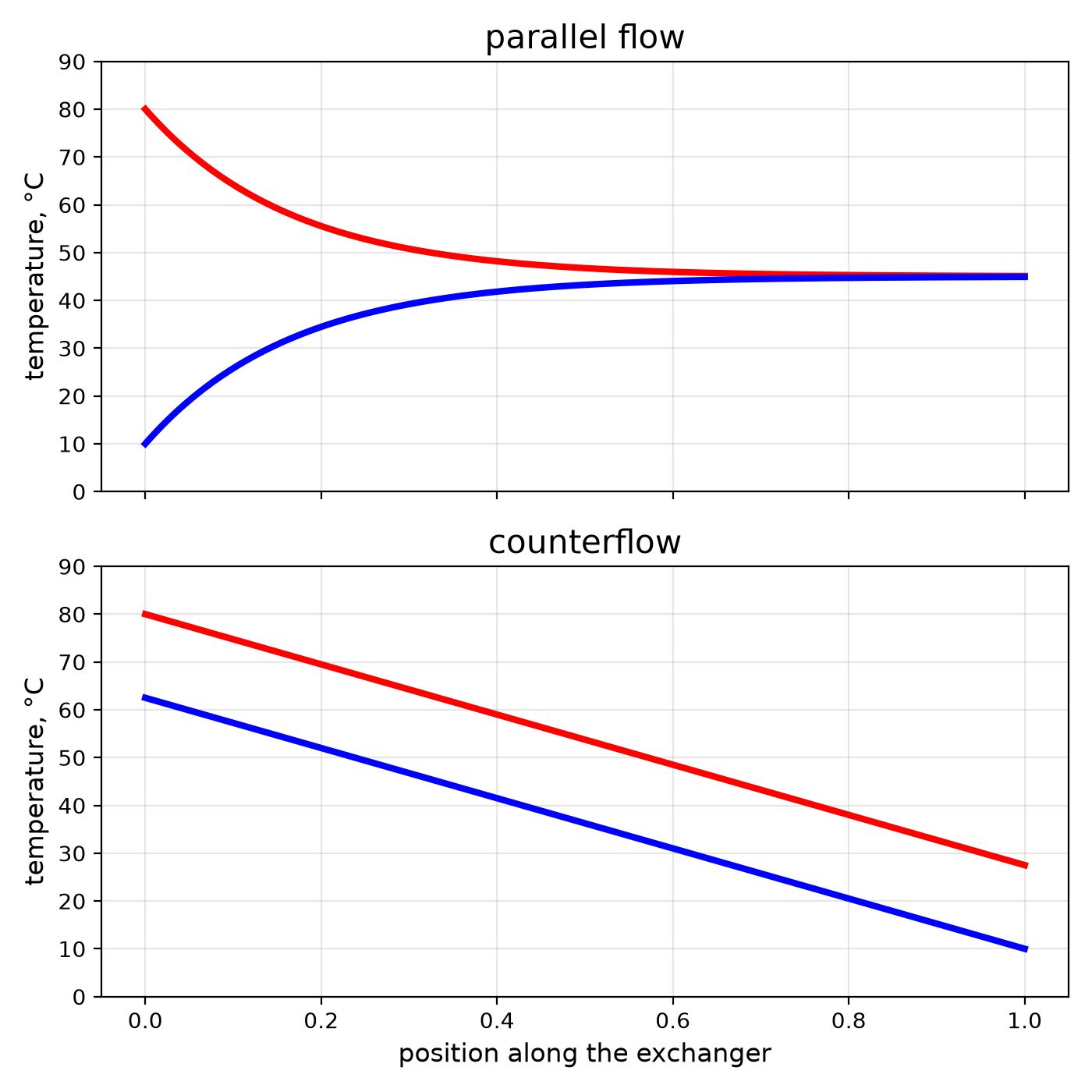
Run the same way, two streams approach a common middle temperature and stop; the cold one can never leave hotter than the hot one does. Run opposite, the cold stream meets the hottest fluid just as it leaves, and can come out warmer than the hot stream exits.
This rung builds a tube-in-tube exchanger from a copper tube inside a hose, logs four temperatures with an Arduino, and runs it both ways to measure the difference.
Дунд шат
About 5 hours
Зааварчилгаа
1
1
Parallel against counterflow, in numbers
Parallel against counterflow, in numbers
Jupyter дэвтэр ачаалж байна…
2
2
Build a tube-in-tube exchanger
Build a tube-in-tube exchanger
Take 2 m of 10 mm copper tube and slide it inside 2 m of clear vinyl tube with a bore comfortably larger — the annulus between them is the second channel. At each end fit a tee from the PVC fittings kit: the copper passes straight through the tee and is sealed where it exits with silicone; the tee's side branch is the jacket connection.
You now have two independent channels: inside the copper, and between copper and vinyl. Coil the whole thing loosely and insulate it with glass wool, leaving the four connections free. Push a waterproof temperature probe into each of the four connections through a hole sealed with silicone.
Энэ алхмын материал:
 Зэс хоолой2 метр
 Тунгалаг винил хоолой2.5 метр
 ПВХ хоолойн холбогчийн иж бүрдэл1 багц
 Силиконон битүүлэгч1 ширхэг
 Шилэн хөвөн дулаалга1 sqm
 Хоолойн хавчаарын хэрэглэл1 багц
 Температурын мэдрэгч4 ширхэг
Шаардлагатай багаж:
 Хоолой огтлогч
 Утасгүй өрөм
 Өрмийн үзүүрийн иж бүрдэл
 Арьсан ажлын бээлий
3
3
The logger
The logger
Four DS18B20 probes on a single data wire, logging hot in, hot out, cold in and cold out every few seconds as comma-separated lines you can paste into the notebook or a spreadsheet.
hx_logger.inoarduino
Энэ алхмын материал:
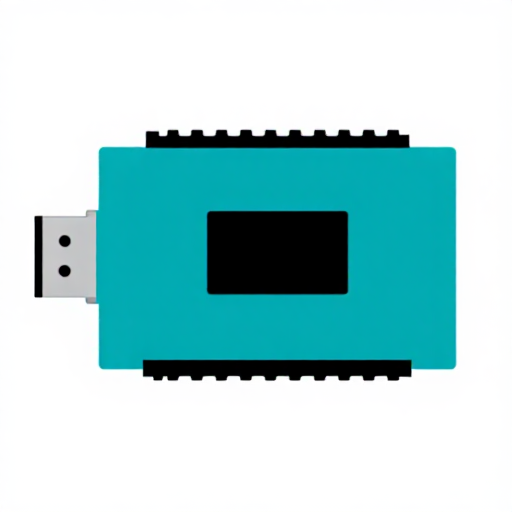 Arduino Uno R31 ширхэг
 10 килоом эсэргүүцэл2 ширхэг
 Холбогч утас1 багц
Шаардлагатай багаж:
 Arduino IDE суулгасан компьютер
4
4
Run it both ways
Run it both ways
Feed the copper with hot water from a bucket on a shelf — about 60 °C from a kettle topped up with cold — and the jacket with cold tap water. Set both flows to the same rate by timing each outlet into a measuring jug (aim for about 1 litre per minute).
**Parallel:** both streams enter at the same end. Let the logger settle for five minutes and note the four temperatures.
**Counterflow:** swap the jacket's hoses so the cold enters at the far end. Keep both flows the same. Settle and note.
Compare the cold outlet in the two runs. In counterflow it comes out noticeably warmer — often warmer than the hot outlet — with no change to the hardware except which way one hose points. Work out the heat each side carried; they should agree within a few per cent.
Энэ алхмын материал:
 Ус40 литр
Шаардлагатай багаж:
 Шилэн цахилгаан данх
 Хувин
Хувин Хэмжих аяга
 Секунд хэмжигч
 Гал тогооны термометр
5
5
Context
Context
A practice rung: no patent anchors counterflow — it is physics that engineers learned and wrote into every exchanger. The effectiveness–NTU method used in the notebook was set out in the mid-twentieth century and is how exchangers are sized today.
Where it shows up in this catalogue: the economiser meets the coolest gas with the coldest water; the Stirling engine's regenerator and a rocket's regenerative cooling both depend on it; the Linde air liquefier works only because its counterflow exchanger lets the cold returning gas pre-cool the incoming gas.
**Honest limits.** Counterflow gains most when you want the streams to approach each other's temperatures; for a small temperature change on one side it matters less. And it cannot beat the laws: with equal flows even a perfect counterflow exchanger only approaches 100 % effectiveness as its area goes to infinity.
Материал
11- 2 метрТүр орлуулагч
- 2.5 метрТүр орлуулагч
- Түр орлуулагч
- 1 ширхэгТүр орлуулагч
- 1 sqmТүр орлуулагч
- Түр орлуулагч
- Түр орлуулагч
- Түр орлуулагч
- Түр орлуулагч
- Түр орлуулагч
- 40 литрТүр орлуулагч
Шаардлагатай багаж
10- Түр орлуулагч
- 1 vendor sell this, none ship to you yetТүр орлуулагч
- Түр орлуулагч
- Түр орлуулагч
- Түр орлуулагч
- Түр орлуулагч
- Түр орлуулагч
- Түр орлуулагч
- Түр орлуулагч
- Түр орлуулагч
Холбоотой загварууд
Эдгээр загварууд мэдлэг хуваалцдаг — арга техник, материал эсвэл зарчим

The Economiser: The Heat Still Going Up the Chimney
Martin зохиосон
Механик
38
0
0
0
0
0
The Radiator: Mostly Convection, and Why Temperature Is Everything
Emma зохиосон
Механик
33
0
0
0
0
0
Stirling Engine
Martin зохиосон
БАЙГАЛЬ ОРЧИН
57
0
0
0
0
0
The Cooling Tower
Peter зохиосон
Шингэний механик
44
0
0
0
1
0
Regenerative Cooling
Emma зохиосон
Сансар
76
0
0
0
0
0
Ammonia Refrigeration Machine
Emma зохиосон
ТЕХНОЛОГИ
42
0
0
0
2
0
CC0 Нийтийн домэйн
Энэ загвар CC0 дор гаргагдсан. Та зөвшөөрөл авахгүйгээр хуулах, өөрчлөх, түгээх, ашиглах боломжтой.
Загвараар дамжуулан бүтээгдэхүүн худалдаж авч Бүтээгчийг дэмжээрэй Бүтээгчийн шимтгэл Борлуулагчаар тогтоосон, эсвэл энэ загварын шинэ хувилбар үүсгэж орлогоо хуваахын тулд өөрийн загварт холбоос болгон оруулна уу.