УРЛАГ
ГОО САЙХАН БА ЭРҮҮЛ МЭНД
ГАРААР ХИЙСЭН
СОЁЛ БА ТҮҮХ
ҮЗВЭР НААДАМ
БАЙГАЛЬ ОРЧИН
ХООЛ БА УНДАА
УРВУУ ИНЖЕНЕРЧЛЭЛ
ШИНЖЛЭХ УХААН
СПОРТ
ТЕХНОЛОГИ
ӨМСДӨГ ХЭРЭГСЭЛ
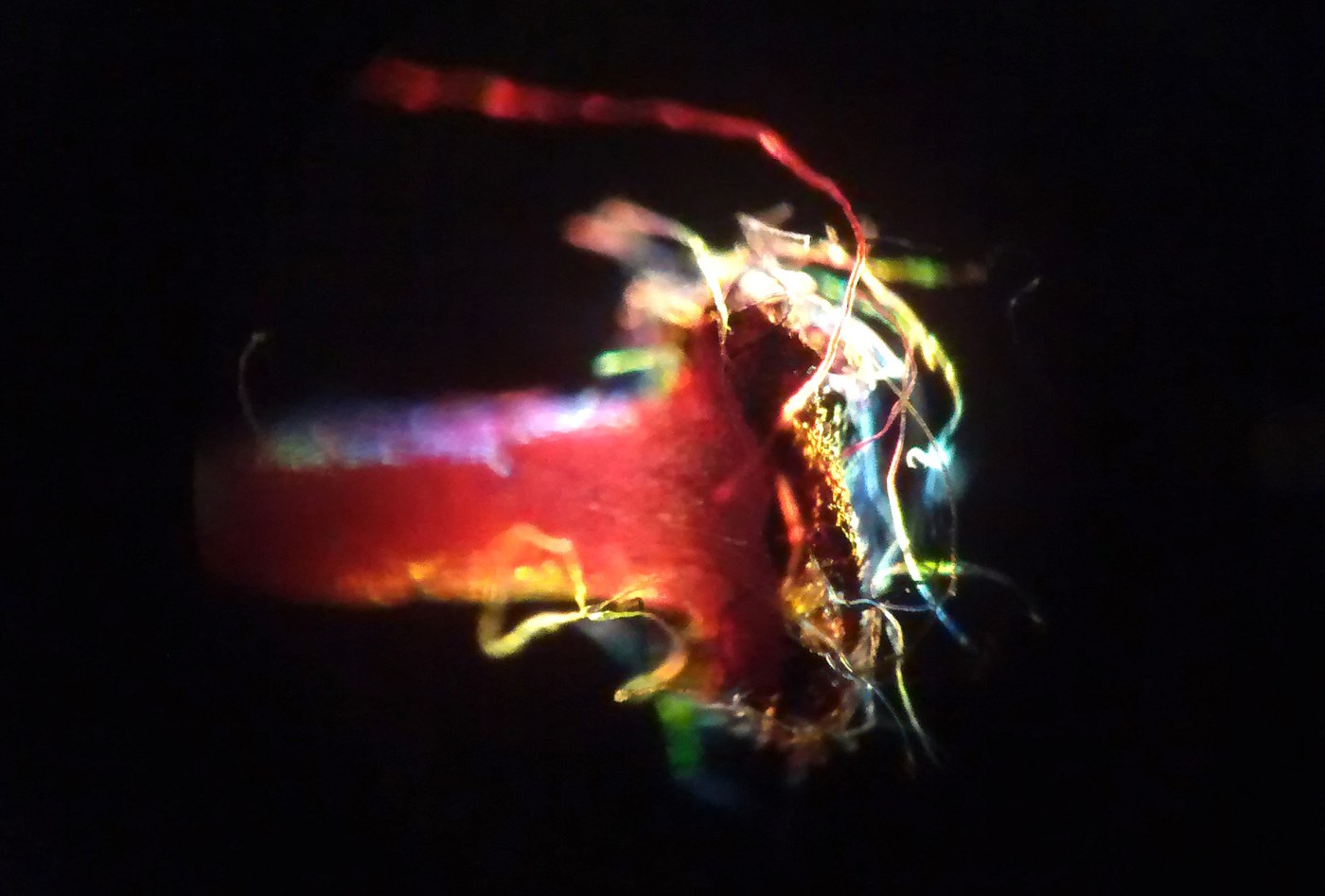

Dark-Field Illumination
Staining puts contrast into a specimen chemically, and it has a price: almost every stain requires the specimen to be dead, fixed and usually sectioned. If you want to watch something alive and moving, the chemistry is no use to you.
Dark-field puts the contrast in optically instead, and it is astonishingly simple. Block the centre of the illuminating cone so that no direct light can enter the objective at all. The field goes black. Anything in the specimen that SCATTERS light then throws some of it sideways into the objective, and appears brilliantly bright against that blackness.
The effect is out of all proportion to the effort — a coin of black card in the right place — and it reveals things far below the resolution limit. You cannot resolve a bacterial flagellum, but you can see that one is there, because it scatters.
Анхан шат
2 hours
Зааварчилгаа
1
1
Cut a stop, and get the size right
Cut a stop, and get the size right
Cut a disc of black card and centre it on a clear disc that fits under the condenser — a coverslip or a cut-down transparency works.
The size is the whole design. The stop must block every ray that would enter the objective directly, and no more, so its diameter depends on your objective's numerical aperture and on the condenser's focal length. Too small and direct light leaks in and the field greys out; too large and there is not enough oblique light left to illuminate anything. The notebook works out the size for your own optics.
Энэ алхмын материал:
 Хар цаасан суурь4 ширхэг
 Микроскопын шил ба бүрхүүл10 ширхэг
Шаардлагатай багаж:
 Мэс заслын хутга
 Шугам
Шугам2
2
Centre it, and open the condenser fully
Centre it, and open the condenser fully
Drop the stop into the filter holder below the condenser, open the condenser diaphragm all the way, and centre the stop by eye until the field goes evenly black.
Open all the way is deliberate and it feels wrong after the Köhler rung. Here you need the widest possible cone, because only the OUTER rays survive the stop and those outer rays are the whole illumination. Any stopping-down removes exactly the light you are relying on.
Шаардлагатай багаж:
 Микроскоп
3
3
Use a low-aperture objective, or stop it down
Use a low-aperture objective, or stop it down
Dark-field works when the objective's aperture is smaller than the illuminating cone's inner edge. A 10× or 20× objective is ideal; a high-aperture 40× or 100× will collect the direct light and defeat the stop.
This is the method's real constraint, and it is worth stating plainly: dark-field and high magnification fight each other. Proper high-power dark-field needs a special condenser with an internal mirror, which is exactly the piece you cannot easily make at home.
Шаардлагатай багаж:
Микроскоп4
4
Look at living things
Look at living things
Put a drop of pond water, or a smear of yeast in water, on a slide and look.
Nothing is stained, nothing is dead, and organisms that were nearly invisible in bright-field now blaze white against black. Watch a ciliate swim. This is the view Leeuwenhoek was chasing with his beads of glass, and it is why dark-field is still used for living samples where a stain would end the experiment.
Энэ алхмын материал:
 Талхны хөрөнгө10 гМикроскопын шил ба бүрхүүл10 ширхэг
Шаардлагатай багаж:
Микроскоп Хуваарьтай пипетк (Мор)
5
5
Keep everything scrupulously clean
Keep everything scrupulously clean
Dust on the slide, grease on the coverslip and scratches in the glass all scatter light, and dark-field shows scattering — so they all blaze as brightly as your specimen.
In bright-field a dust speck is a grey dot you learn to ignore. Here it is a brilliant star sitting beside an organism, indistinguishable at a glance. Clean slides matter more in this technique than in any other in this batch, and a filtered drop of water is worth the extra minute.
Энэ алхмын материал:
 Шүүлтүүрийн цаас10 ширхэг
Шаардлагатай багаж:
 Нитрилийн бээлий
6
6
Sizing the stop, and what dark-field can and cannot tell you
Sizing the stop, and what dark-field can and cannot tell you
Jupyter дэвтэр ачаалж байна…
Шаардлагатай багаж:
Шугам7
7
Try oblique illumination as the cheaper cousin
Try oblique illumination as the cheaper cousin
Instead of a central stop, slide a piece of card across HALF the condenser aperture so the specimen is lit from one side only.
The result looks three-dimensional, as though lit by a low sun, and it brings out edges and steps that vanish in even illumination. It is not quantitative and the apparent relief can reverse if you move the card to the other side — so it is a way of SEEING structure, never of proving it. It costs a piece of card and five seconds, and it is the most under-used trick in microscopy.
Энэ алхмын материал:
Хар цаасан суурь2 ширхэгШаардлагатай багаж:
МикроскопМатериал
4- 4 ширхэгТүр орлуулагч
- 10 ширхэгТүр орлуулагч
- 10 гТүр орлуулагч
- 10 ширхэгТүр орлуулагч
Холбоотой загварууд
Эдгээр загварууд мэдлэг хуваалцдаг — арга техник, материал эсвэл зарчим



CC0 Нийтийн домэйн
Энэ загвар CC0 дор гаргагдсан. Та зөвшөөрөл авахгүйгээр хуулах, өөрчлөх, түгээх, ашиглах боломжтой.
Загвараар дамжуулан бүтээгдэхүүн худалдаж авч Бүтээгчийг дэмжээрэй Бүтээгчийн шимтгэл Борлуулагчаар тогтоосон, эсвэл энэ загварын шинэ хувилбар үүсгэж орлогоо хуваахын тулд өөрийн загварт холбоос болгон оруулна уу.