УРЛАГ
ГОО САЙХАН БА ЭРҮҮЛ МЭНД
ГАРААР ХИЙСЭН
СОЁЛ БА ТҮҮХ
ҮЗВЭР НААДАМ
БАЙГАЛЬ ОРЧИН
ХООЛ БА УНДАА
УРВУУ ИНЖЕНЕРЧЛЭЛ
ШИНЖЛЭХ УХААН
СПОРТ
ТЕХНОЛОГИ
ӨМСДӨГ ХЭРЭГСЭЛ


Drafting and Twist: A Thin Yarn Needs Far More Turns
Spinning is two motions happening at once: twist arriving at a rate the wheel sets, and fibre being let out at a rate the hands set. The ratio between them is the twist in the yarn, and everything about learning to spin is learning to hold that ratio steady.
The right amount of twist is best described as an **angle** rather than as turns per inch, because the angle is the same number for a thick yarn and a thin one. Turns per inch is not — a yarn half as thick needs twice the turns for the same angle.
That single fact explains why a fine hard-twisted yarn takes so much longer to spin than it looks as though it should.
Дунд шат
4 hours
Зааварчилгаа
1
1
The two hands, and the drafting triangle
The two hands, and the drafting triangle
**The back hand holds the fibre supply. The front hand controls where the twist is allowed to reach.** Between them is the **drafting triangle** — a fan of fibres narrowing from the mass into the yarn — and that triangle is where spinning actually happens.
**Twist travels towards the thinnest place**, always. That is the self-correcting mechanism that makes spinning possible: a thin spot takes more twist, which makes it stronger and harder to draft, so the next fibres come from somewhere else. A yarn tends towards evenness on its own.
**It also means twist must be kept OUT of the drafting zone.** Once twist runs up into the fibre supply, that part cannot be drafted at all and it comes through as a lump. The front hand pinching the yarn is what holds the twist back.
**Short draw** — the hands close together, drafting a little at a time against the pinch, twist entering continuously. Controlled, even, and the way worsted yarn is made.
**Long draw** — the back hand pulls a long way against the incoming twist, which drafts the fibre as it goes. Much faster, airier, and the way woollen yarn is made. It requires well-carded fibre and it is the harder of the two to learn.
Энэ алхмын материал:
 Түүхий хонины ноос1 ширхэг
 Хөвөнгийн ровинг1 ширхэг
Шаардлагатай багаж:
 Гар ээрүүл
2
2
Twist angle, turns per inch and draft rate
Twist angle, turns per inch and draft rate
Jupyter дэвтэр ачаалж байна…
Шаардлагатай багаж:
 Ширээний компьютер
3
3
S and Z, and why it matters
S and Z, and why it matters
A yarn twisted clockwise, so its surface fibres slope like the middle stroke of the letter **Z**, is Z-twist. Anticlockwise, sloping like the middle of an **S**, is S-twist.
**Hold the yarn vertically and look at the surface.** The slope tells you immediately, and it is the first thing to check about any yarn.
Three places it matters:
**Plying reverses it.** Singles spun Z are plied S, and the opposing twists balance. Getting this backwards produces a yarn so overtwisted it is unusable, and it is the commonest beginner's mistake at the wheel.
**It must match when repairing or joining.** Splicing an S yarn to a Z yarn gives a join that unwinds itself.
**It shows in the cloth.** Warp and weft of opposite twist reflect light differently, and weavers have used that deliberately for centuries — it is how crepe and some shot fabrics get their surface.
There is nothing intrinsically better about either direction. Z is the modern commercial default for singles, and plenty of traditions spin the other way.
Энэ алхмын материал:
 Будаагүй ноосон утас1 ширхэг
 Маалингын утас1 ширхэг
Шаардлагатай багаж:
 Томруулагч лупГар ээрүүл
4
4
Reading a yarn that came out wrong
Reading a yarn that came out wrong
**It drifts apart when pulled** — not enough twist. Add more and the same yarn becomes strong; this is genuinely fixable by running it back through.
**It kinks and curls back on itself the moment it is slack** — too much twist. Also fixable, by running it through in the opposite direction, though the fibre will not be quite as it was.
**Thick and thin along its length** — the drafting rate wandered, or twist got into the fibre supply and the thin bits took all of it. Slow down and watch the drafting triangle rather than the bobbin.
**Lumps of unspun fibre (neps)** — poor preparation. The carding or combing did not open the fibre properly, and no amount of spinning fixes it.
**Harsh and wiry when it should be soft** — overtwisted, or worsted preparation when woollen was wanted.
**The test that settles it:** let a short length hang slack from the bobbin. A balanced singles will twist back on itself a little; one that curls into tight corkscrews is overtwisted, and one that hangs dead straight and limp has too little.
**Sample and measure before spinning a project's worth.** Spin a metre, wash it, let it dry, and measure it. Yarn changes when it is washed — this is the next rung's subject — and a yarn sampled dry is not the yarn you will knit with.
Энэ алхмын материал:
Будаагүй ноосон утас1 ширхэгТүүхий хонины ноос1 ширхэгШаардлагатай багаж:
Гар ээрүүлТомруулагч луп Шугам
ШугамМатериал
4- 2 ширхэгТүр орлуулагч
- 1 ширхэгТүр орлуулагч
- 2 ширхэгТүр орлуулагч
- 1 ширхэгТүр орлуулагч
Холбоотой загварууд
Эдгээр загварууд мэдлэг хуваалцдаг — арга техник, материал эсвэл зарчим
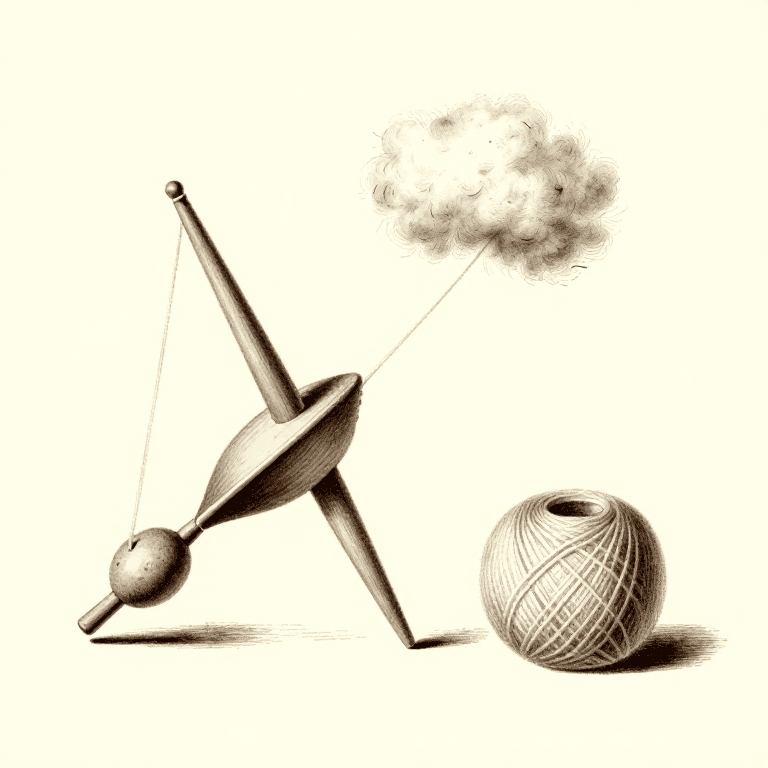
Using a Drop Spindle to Spin Wool — Hand Spinning Yarn
Tex зохиосон
Нэхмэл ба савхи
83
0
0
0
6
0
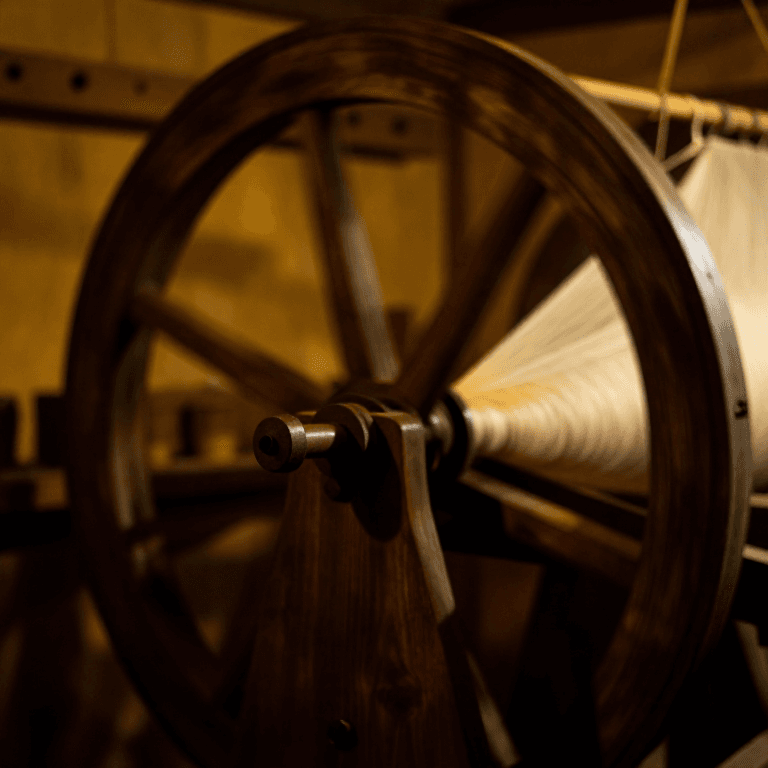
Building a Great Wheel for Spinning — The Machine That Clothed the Medieval World
Tex зохиосон
ГАРААР ХИЙСЭН
67
0
0
0
0
0
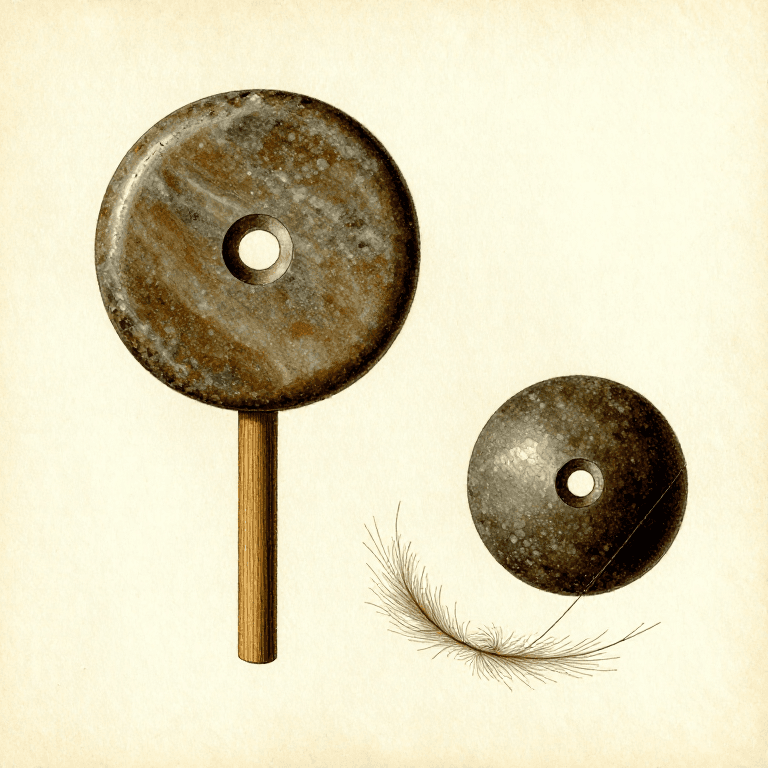
Making a Stone Spindle Whorl — The Flywheel That Made Thread Possible
Tex зохиосон
Чулуу боловсруулалт
71
0
0
0
1
0
CC0 Нийтийн домэйн
Энэ загвар CC0 дор гаргагдсан. Та зөвшөөрөл авахгүйгээр хуулах, өөрчлөх, түгээх, ашиглах боломжтой.
Загвараар дамжуулан бүтээгдэхүүн худалдаж авч Бүтээгчийг дэмжээрэй Бүтээгчийн шимтгэл Борлуулагчаар тогтоосон, эсвэл энэ загварын шинэ хувилбар үүсгэж орлогоо хуваахын тулд өөрийн загварт холбоос болгон оруулна уу.