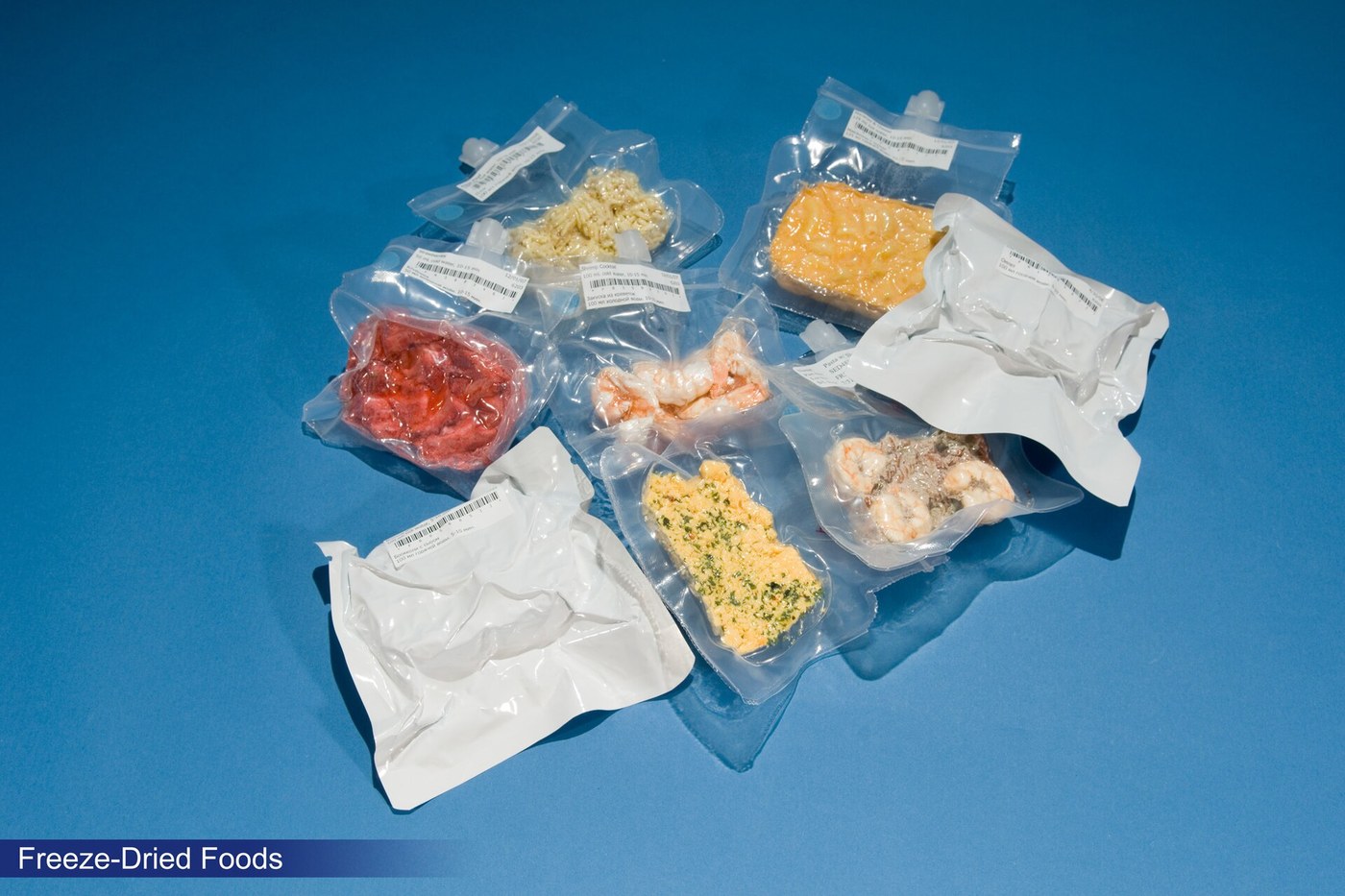


Freeze Drying
Зааварчилгаа
Find the pressure below which ice cannot melt
Find the pressure below which ice cannot melt
One threshold governs the entire process, and it is worth locating experimentally.
- Place a small ice cube in a vacuum chamber with a gauge.
- Pump down slowly and watch what happens as pressure falls.
- At moderate vacuum the ice melts to water, then the water boils.
- Keep pumping: below roughly 6 millibar the ice stops melting and begins to vanish directly.
- Record the pressure at which the change of behaviour occurs.
That is the triple point of water — the pressure below which the liquid phase cannot exist at all. Above it, warming ice gives you water. Below it, warming ice gives you vapour directly and never anything wet. Everything freeze drying achieves follows from staying on the correct side of that line.
Watch the intermediate stage carefully: water boiling at room temperature is startling the first time, and it makes the point that boiling is about pressure rather than heat.Энэ алхмын материал:
 Шилэн хоолойн багц1 багц
Шаардлагатай багаж:
 Лабораторийн зэрэглэлийн дижитал мультиметр
 Хоол хийх термометр
 Секунд хэмжигч
 Вакуум хийгүйжүүлэх камер
Add a cold trap, which is the real engineering problem
Add a cold trap, which is the real engineering problem
All that water vapour has to go somewhere, and it must not be the pump.
- Fit a trap between the chamber and the pump, cooled well below the sample's temperature.
- Use dry ice with a solvent, or a mechanical refrigeration coil.
- Ensure the vapour path from chamber to trap is short and wide.
- Run a drying cycle and afterwards inspect the trap.
The trap does the actual pumping of water. A rotary vane pump handles water vapour badly — it condenses in the oil, ruins its vapour pressure and destroys the pump's ultimate vacuum. The cold trap intercepts the vapour and freezes it out before it gets there, so the pump only has to handle the small quantity of air. In an industrial freeze dryer the condenser is a larger investment than the pump.
Look at the ice collected in the trap after a run: that is precisely the water removed from the sample, and weighing it is the most direct measure of how far the process has gone.Энэ алхмын материал:
 Зэс дугуй саваа1 ширхэг
 Резинэн хоолой1 ширхэг
Шаардлагатай багаж:
 Дижитал гал тогооны жинХоол хийх термометр
 Дижитал штангенциркуль 6 инчСекунд хэмжигч
 Хуурай мөс гаргах залгуур (CO2 баллон)
Freeze fast, then dry slowly
Freeze fast, then dry slowly
How you freeze decides what the dried product looks like, before drying even starts.
- Freeze one sample slowly in a domestic freezer.
- Freeze an identical one rapidly in dry ice or liquid nitrogen.
- Freeze-dry both under identical conditions.
- Rehydrate both and compare texture and appearance.
Энэ алхмын материал:
 Хөвөн муслин даавуу1 metre
Шаардлагатай багаж:
Хоол хийх термометрДижитал гал тогооны жинСекунд хэмжигчTrack the drying curve and find the second phase
Track the drying curve and find the second phase
Freeze drying has two distinct stages and most failures come from stopping after the first.
- Weigh the sample before drying.
- Interrupt the run to weigh it at intervals, and plot weight against time.
- Note the steady rapid loss, then a distinct slowing.
- Continue well past the slowing point with slightly more heat.
- Weigh a fully dried sample and compute total water removed.
Энэ алхмын материал:
 Нүдэлсэн цаас1 pad
Шаардлагатай багаж:
Дижитал гал тогооны жинСекунд хэмжигчХоол хийх термометрVacuum as a tool, and history
Vacuum as a tool, and history
Freeze drying was developed as an industrial process during the Second World War, driven by the need to transport blood plasma and later penicillin without refrigeration. Both are destroyed by heat drying and both keep indefinitely once freeze dried. The technique had been described earlier — the principle was known from the nineteenth century — but the war made it worth engineering properly.
Its applications are unusually diverse. Instant coffee, where the aroma compounds survive because nothing is ever heated much. Vaccines and biological samples, where structure is the product. Archaeological conservation, where waterlogged wood is freeze dried so it does not shrink and crack as it dries. And spacecraft food, where mass matters more than almost anything.
Why it closes this batch. Guericke pumped a vessel to prove a vacuum was possible; Sprengel and Gaede pushed the pressure lower to make lamps and valves possible; the gauges made it measurable. Freeze drying is where vacuum stops being the object of study and becomes an ordinary industrial tool — something you apply to a problem rather than something you investigate. That transition, from phenomenon to infrastructure, is the natural end of any technology's story.
Its honest limits: slow, measured in many hours or days; energy-intensive; needs a condenser larger than the pump; and it does not suit everything, since high-sugar and high-fat materials dry poorly. The product is also fragile and hygroscopic, which is why freeze-dried food is packed with a desiccant — a getter, in the language of this batch.
Материал
5- 1 багцТүр орлуулагч
- 1 ширхэгТүр орлуулагч
- 1 ширхэгТүр орлуулагч
- 1 metreТүр орлуулагч
- 1 padТүр орлуулагч
Шаардлагатай багаж
7- Түр орлуулагч
- Түр орлуулагч
- Түр орлуулагч
- Түр орлуулагч
- Түр орлуулагч
- Түр орлуулагч
- Түр орлуулагч
Холбоотой загварууд
Эдгээр загварууд мэдлэг хуваалцдаг — арга техник, материал эсвэл зарчим

CC0 Нийтийн домэйн
Энэ загвар CC0 дор гаргагдсан. Та зөвшөөрөл авахгүйгээр хуулах, өөрчлөх, түгээх, ашиглах боломжтой.
Загвараар дамжуулан бүтээгдэхүүн худалдаж авч Бүтээгчийг дэмжээрэй Бүтээгчийн шимтгэл Борлуулагчаар тогтоосон, эсвэл энэ загварын шинэ хувилбар үүсгэж орлогоо хуваахын тулд өөрийн загварт холбоос болгон оруулна уу.