
Making Friction Matches — Fire on the Strike of a Stick
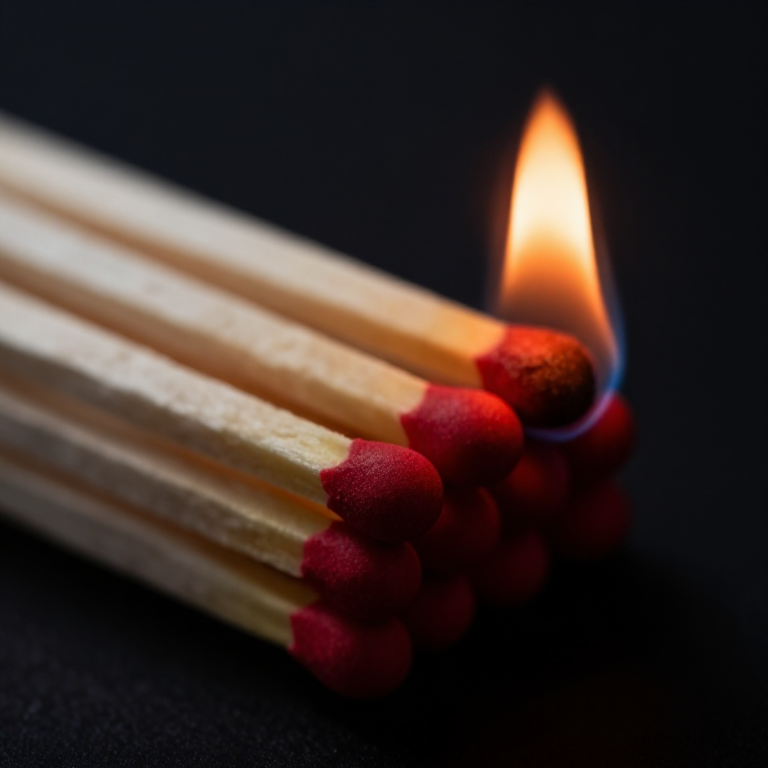
For all of history, making fire meant friction sticks, flint and steel, or carrying an ember. Then in the 1820s and 30s the friction match put instant fire in a pocket: a little stick whose tip bursts into flame when dragged across a rough surface. It seems trivial now, but it was a genuine chemical invention that transformed daily life.
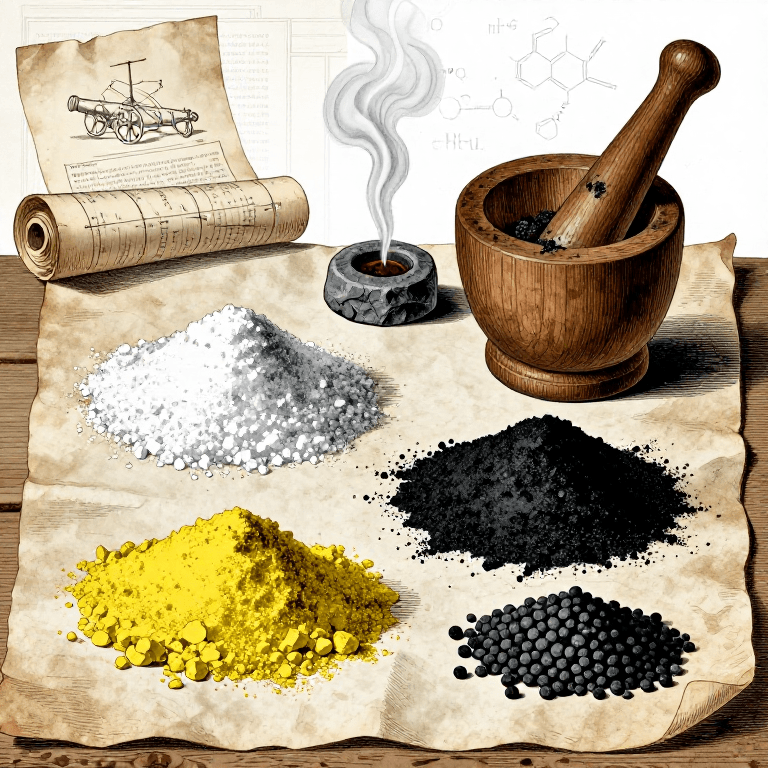
The head packs three things together: an oxidiser to supply oxygen, an igniter that catches from the heat of friction, and a fuel bridge to carry the flame down to the wood. In the original strike-anywhere matches the igniter was white phosphorus, which lights at the gentlest heat. Drag the head and the friction warms the phosphorus enough to ignite; it sets off the oxidiser in a fierce little flare; the sulphur-tipped splint catches and the wood burns.
White phosphorus also had a dark side — its vapour gave match factory workers a horrific bone disease called phossy jaw, which is why it was eventually banned in favour of the red-phosphorus safety match. This blueprint covers the chemistry of both, and treats the materials with the respect that a powerful oxidiser and a deadly poison demand.
Аюултай агуулга
Энэ Blueprint аюултай үйл ажиллагаа агуулж байна. Алхам алхмаар зааварчилгааг үзэхийн тулд нэвтэрч, бүртгэлийн тохиргооноос аюултай контентыг идэвхжүүлнэ үү.
НэвтрэхЭнэ загвараар хийдэг
Холбоотой загварууд
Эдгээр загварууд мэдлэг хуваалцдаг — арга техник, материал эсвэл зарчим

CC0 Нийтийн домэйн
Энэ загвар CC0 дор гаргагдсан. Та зөвшөөрөл авахгүйгээр хуулах, өөрчлөх, түгээх, ашиглах боломжтой.
Загвараар дамжуулан бүтээгдэхүүн худалдаж авч Бүтээгчийг дэмжээрэй Бүтээгчийн шимтгэл Борлуулагчаар тогтоосон, эсвэл энэ загварын шинэ хувилбар үүсгэж орлогоо хуваахын тулд өөрийн загварт холбоос болгон оруулна уу.