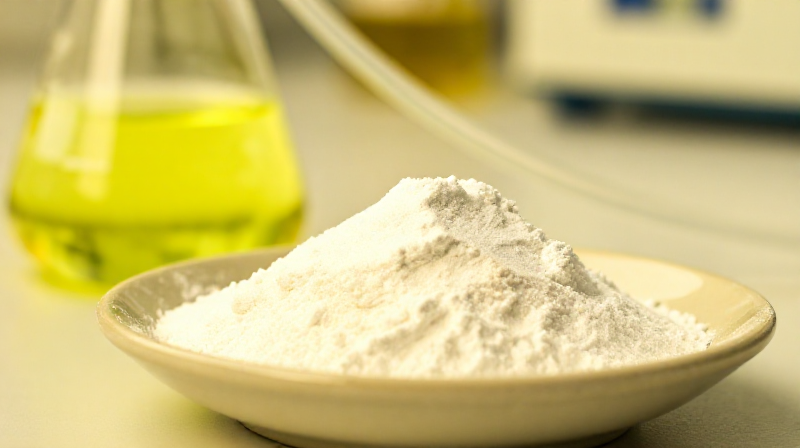

Making Bleaching Powder — The Chlorine Chemistry That Made White Fabric Affordable
Bleaching powder (calcium hypochlorite, approximately CaCl(OCl) or Ca(OCl)₂·CaCl₂) was the chemical that democratised white fabric. Before its invention, bleaching linen or cotton required months of 'crofting' — spreading cloth on open fields, wetting it repeatedly, and waiting for sunlight and dew to slowly oxidise the natural brown and yellow pigments. A single bolt of linen could spend an entire summer on the bleaching green. In the 1780s, Claude Louis Berthollet demonstrated that chlorine water could bleach fabric in hours instead of months — but liquid chlorine was dangerous, unstable, and impossible to transport.
In 1799, Charles Tennant of Glasgow patented the solution: passing chlorine gas over dry slaked lime (calcium hydroxide) to produce a stable, dry powder that could be shipped in barrels and dissolved in water when needed. Bleaching powder made the industrial-scale production of white textiles practical for the first time. The chemistry is straightforward: chlorine reacts with calcium hydroxide to form calcium hypochlorite and calcium chloride — Ca(OH)₂ + Cl₂ → CaCl(OCl) + H₂O. The active bleaching agent is the hypochlorite ion (OCl⁻), a powerful oxidiser that destroys the conjugated chromophores in natural dyes and stains.
The chlorine itself is generated by the reaction discovered by Carl Wilhelm Scheele in 1774: manganese dioxide reacts with concentrated hydrochloric acid to produce chlorine gas — MnO₂ + 4HCl → MnCl₂ + Cl₂ + 2H₂O. In the industrial Leblanc Process, the hydrochloric acid was a waste product of soda ash manufacture — making bleaching powder from industrial waste was one of the great circular economy innovations of the 18th century.
SAFETY WARNING: CHLORINE GAS IS ACUTELY TOXIC — it was used as a chemical weapon in World War I. Even low concentrations cause severe respiratory damage. This experiment MUST be performed outdoors or in a powerful fume hood. Full respiratory protection with chlorine-rated cartridges is essential. Concentrated hydrochloric acid causes severe burns and releases choking fumes. Never mix bleaching powder with acids — this releases chlorine gas rapidly.
Аюултай агуулга
Энэ Blueprint аюултай үйл ажиллагаа агуулж байна. Алхам алхмаар зааварчилгааг үзэхийн тулд нэвтэрч, бүртгэлийн тохиргооноос аюултай контентыг идэвхжүүлнэ үү.
НэвтрэхЭнэ загвараар хийдэг

Холбоотой загварууд
Эдгээр загварууд мэдлэг хуваалцдаг — арга техник, материал эсвэл зарчим
Making Sulfuric Acid by the Lead Chamber Process — The Acid That Built the Industrial Revolution
Charlie зохиосон
Үйлдвэрийн
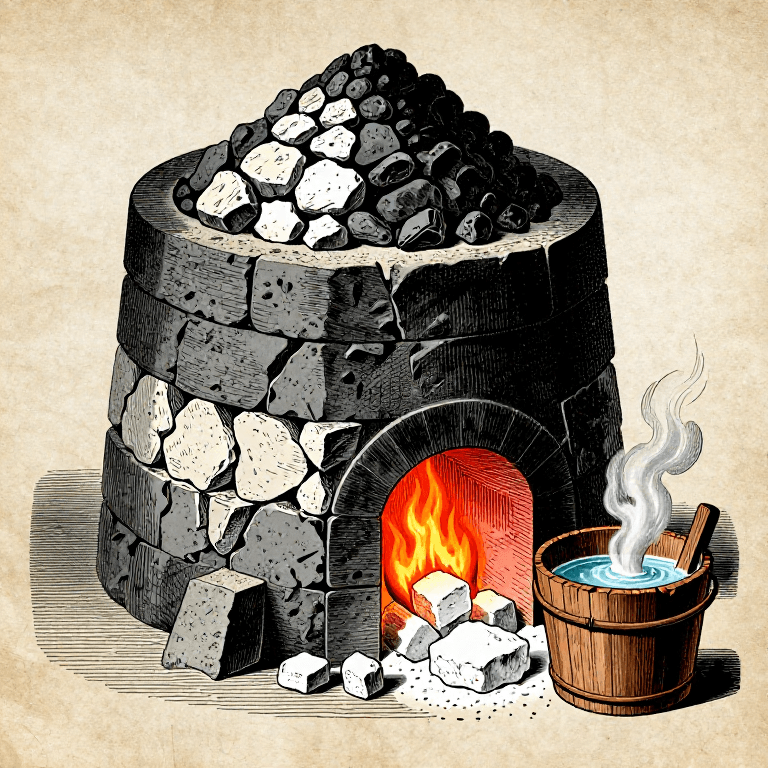
Burning Lime from Limestone — The Oldest Chemical Industry on Earth
Mary зохиосон
Хасах үйлдвэрлэл
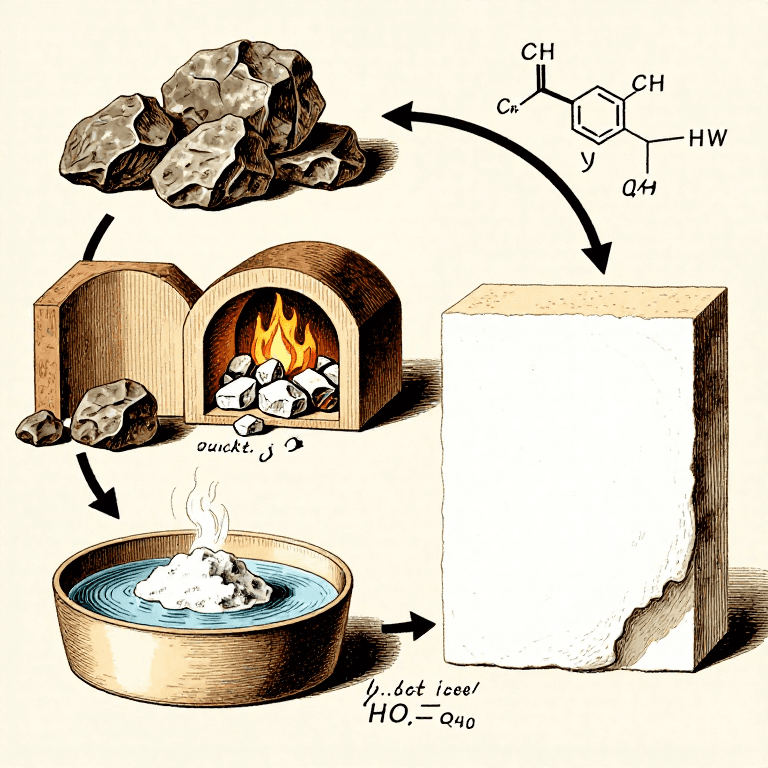
Burning Limestone for Lime Plaster — Calcination and Slaking
Charlie зохиосон
Тоосго
CC0 Нийтийн домэйн
Энэ загвар CC0 дор гаргагдсан. Та зөвшөөрөл авахгүйгээр хуулах, өөрчлөх, түгээх, ашиглах боломжтой.
Загвараар дамжуулан бүтээгдэхүүн худалдаж авч Бүтээгчийг дэмжээрэй Бүтээгчийн шимтгэл Борлуулагчаар тогтоосон, эсвэл энэ загварын шинэ хувилбар үүсгэж орлогоо хуваахын тулд өөрийн загварт холбоос болгон оруулна уу.