

УРЛАГ
ГОО САЙХАН БА ЭРҮҮЛ МЭНД
ГАРААР ХИЙСЭН
СОЁЛ БА ТҮҮХ
ҮЗВЭР НААДАМ
БАЙГАЛЬ ОРЧИН
ХООЛ БА УНДАА
НОГООН ИРЭЭДҮЙ
УРВУУ ИНЖЕНЕРЧЛЭЛ
ШИНЖЛЭХ УХААН
СПОРТ
ТЕХНОЛОГИ
ӨМСДӨГ ХЭРЭГСЭЛ
Pressing Broadcloth in a Screw Press — Hot and Cold Finishing for Lustre
Tex

Зохиогч

Tex

30. Тавдугаар сар 2026FO
1
0
0
0
0

Pressing Broadcloth in a Screw Press — Hot and Cold Finishing for Lustre

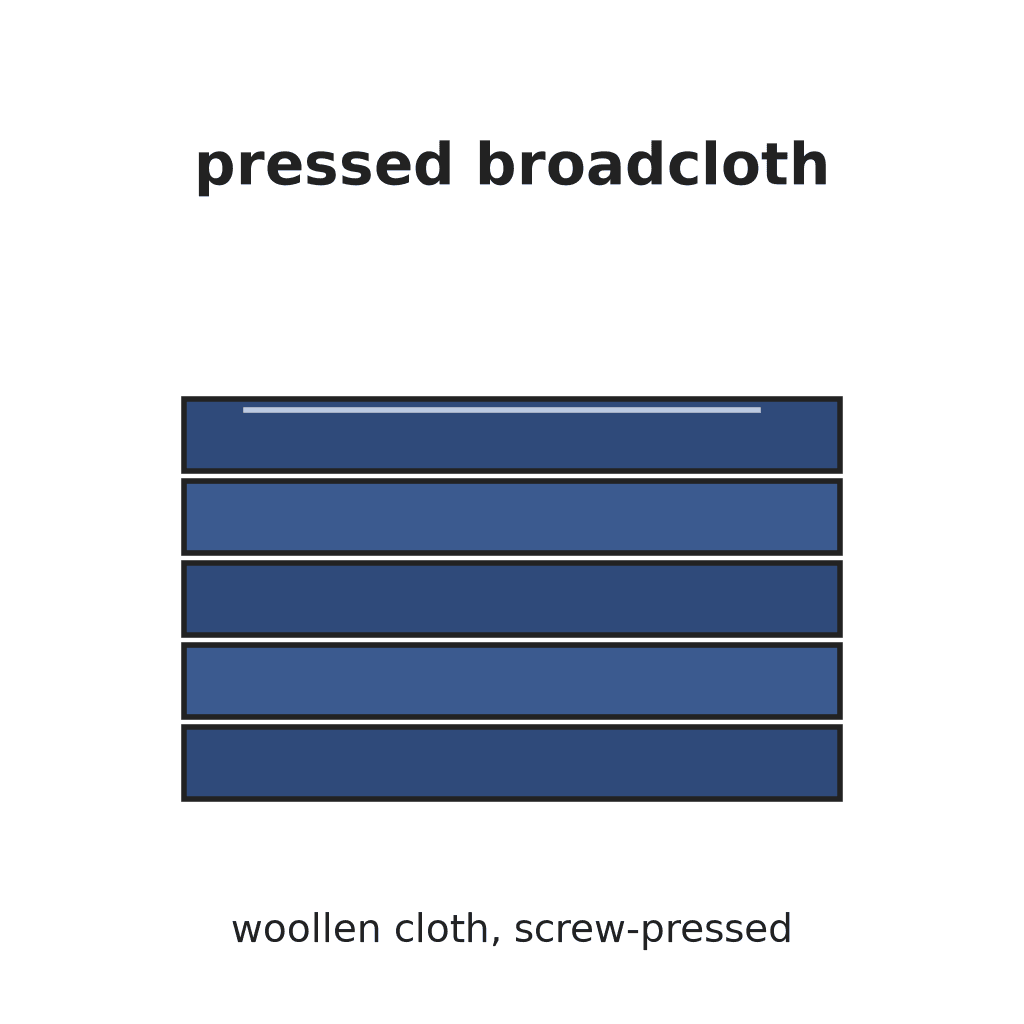
Pressing is the final step in the medieval broadcloth finishing sequence that gives the cloth its characteristic smooth, dense surface and subtle lustre. After the long cycles of fulling, tentering, napping, and shearing, the finished cloth is folded in layers with sheets of pasteboard or glazed linen between each fold, then placed in a massive wooden screw press and clamped under tremendous pressure for hours or overnight. Cold pressing flattens the sheared nap and gives a clean finish; hot pressing — where heated iron plates are inserted between the folds — adds a glaze and almost waxy sheen to the surface. The pressed cloth emerges with a body and hand that immediately distinguishes it from unfinished fabric. In medieval England, the quality of pressing was one of the marks inspected by guild aulnagers before cloth could be stamped and sold. This blueprint covers both cold pressing and hot pressing techniques using a traditional wooden screw press.

Анхан шат
2-4 hours (plus overnight pressing)

Зааварчилгаа

1

Inspect the finished cloth

Begin with a piece of broadcloth that has been through the full finishing sequence: fulled, tentered to its proper width, and napped and sheared to a smooth, uniform surface. Lay the cloth flat on a clean table and inspect both faces. Any remaining imperfections — uneven shearing, stray fibres, debris — must be corrected before pressing, as the press will set them permanently.

Materials for this step:

Finished BroadclothFinished Broadcloth1 ширхэг
2

Prepare the pressing boards

Cut sheets of stiff pasteboard or heavy card to the same width as the cloth. These press papers sit between each fold of cloth to prevent the layers from sticking together and to distribute pressure evenly. In medieval workshops, glazed linen sheets were sometimes used instead. The boards must be perfectly flat — any wrinkle or lump transfers to the cloth surface.
3

Fold the cloth with interleaving

Fold the cloth back and forth in even layers, placing a sheet of pasteboard between each fold. The folds should be crisp and straight, with each layer lying perfectly flat on the one below. Work on a smooth, clean surface. The number of layers depends on the length of cloth — a standard bolt might have 20-30 folds.

Materials for this step:

Pressing BoardsPressing Boards10 ширхэг
4

Place the cloth in the press

Lift the folded stack carefully and centre it on the bed of the screw press. The press is a massive wooden frame — two stout vertical posts connected by a heavy crossbeam with a large wooden screw threaded through it. The screw presses a thick platen down onto the cloth stack. Ensure the stack is centred so pressure is applied evenly.

Tools needed:

Cloth Screw PressCloth Screw Press
5

Apply cold pressure

Turn the screw steadily by hand or with a long bar lever to bring the platen down onto the cloth stack. Apply firm, even pressure. The screw should be tightened gradually — sudden force can shift the layers. Cold pressing alone produces a smooth, flat finish and is sufficient for everyday broadcloth.
6

Leave under cold pressure

Leave the cloth in the press under full pressure for at least 4-6 hours, or preferably overnight. Wool fibres gradually settle under sustained pressure, and the longer the pressing, the more permanent the result. The press should be retightened once or twice during this period as the cloth compresses and the pressure relaxes.
7

Release and inspect the cold-pressed cloth

Unscrew the press and carefully remove the cloth stack. Separate the pasteboard sheets and unfold the cloth. The surface should be noticeably smoother and flatter than before pressing, with a firm hand. Check for any creases from misaligned folds — these can sometimes be pressed out in a second pressing.
8

Prepare for hot pressing

For a higher-grade finish with visible lustre, the cloth is hot-pressed. Heat iron pressing plates in a fire or on a brazier until they are hot but not glowing — hot enough that a drop of water sizzles and evaporates within a few seconds. The plates must be clean and smooth with no rust or scale that could mark the cloth.

Tools needed:

Iron Pressing PlatesIron Pressing Plates
9

Insert the hot plates

Refold the cloth with fresh pasteboard interleaving. This time, slide the heated iron plates between selected layers — typically every 5-6 folds. The heat softens the wool fibres and the waxy lanolin residues in the cloth, allowing them to be compressed into a smooth, glazed surface. Work quickly before the plates cool.
10

Press with heat

Place the stack with its hot plates into the screw press and apply full pressure immediately. The combination of heat and pressure causes the surface fibres to partially fuse and flatten, creating the characteristic lustrous sheen of fine broadcloth. Leave under pressure for 1-2 hours as the plates cool.
11

Repeat with fresh plates if needed

For the finest quality, release the press, remove the cooled plates, reheat them, and reinsert them for a second hot pressing. Each cycle adds more lustre. The most luxurious medieval broadcloth received three or four hot pressings — the cumulative effect produces an almost waxy, mirror-like surface.
12

Final release and inspection

Release the press for the last time and remove the cloth. Unfold carefully and examine the surface under good light. Hot-pressed broadcloth should have a smooth, dense surface with a subtle sheen that catches the light. Run your hand across it — the finish should feel firm, flat, and slightly slippery compared to unpressed cloth.
13

Remove fold marks

If the fold lines from pressing are visible as creases, lay the cloth flat and brush lightly with a damp cloth along the crease lines, then re-press briefly or smooth with a heated pressing iron. In medieval practice, the fold marks were considered acceptable — they showed the cloth had been properly pressed.
14

Fold and seal for sale

Fold the finished cloth to the standard bolt dimensions for sale. In medieval England, the finished bolt was measured by an aulnager — a royal inspector — who checked the width, length, and quality before affixing an official lead seal. The pressed broadcloth is now the finished product: ready for tailoring, export, or the merchant's warehouse.

Материал

2

Шаардлагатай багаж

2

Connected Blueprint Materials

Холбоотой загварууд

Эдгээр загварууд мэдлэг хуваалцдаг — арга техник, материал эсвэл зарчим
CC0 Нийтийн домэйн

Энэ загвар CC0 дор гаргагдсан. Та зөвшөөрөл авахгүйгээр хуулах, өөрчлөх, түгээх, ашиглах боломжтой.

Загвараар дамжуулан бүтээгдэхүүн худалдаж авч Бүтээгчийг дэмжээрэй Бүтээгчийн шимтгэл Борлуулагчаар тогтоосон, эсвэл энэ загварын шинэ хувилбар үүсгэж орлогоо хуваахын тулд өөрийн загварт холбоос болгон оруулна уу.

Хэлэлцүүлэг

(0)

Нэвтрэх хэлэлцүүлэгт нэгдэхийн тулд

Loading comments...