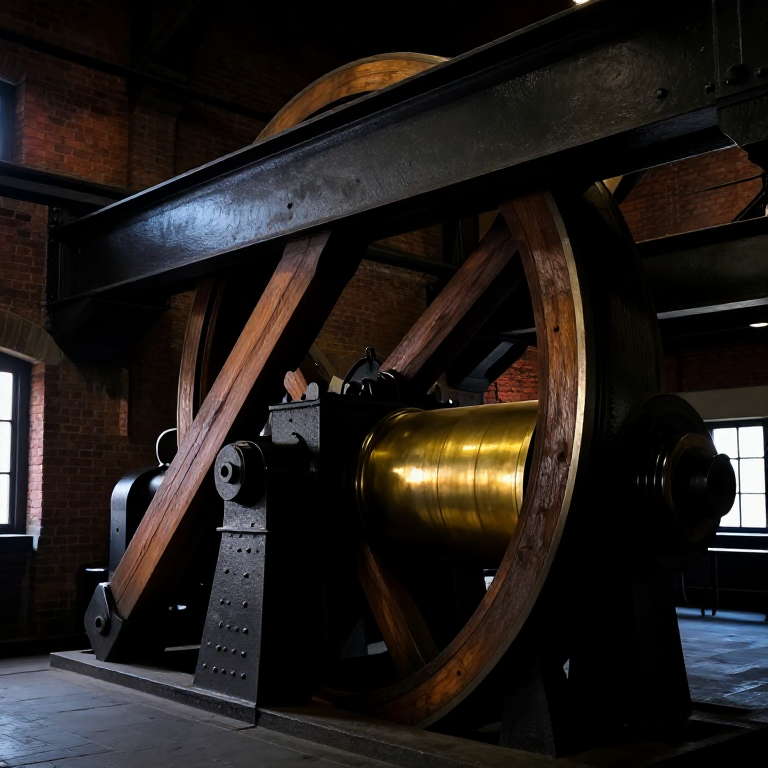


Building a Newcomen Atmospheric Engine — The First Engine to Do Real Work
In 1712 Thomas Newcomen built a machine that changed the world quietly, by pumping water out of coal mines. It was the first engine to turn the heat of a fire into useful mechanical work on a large scale, and every steam engine and motor that followed descends from it.
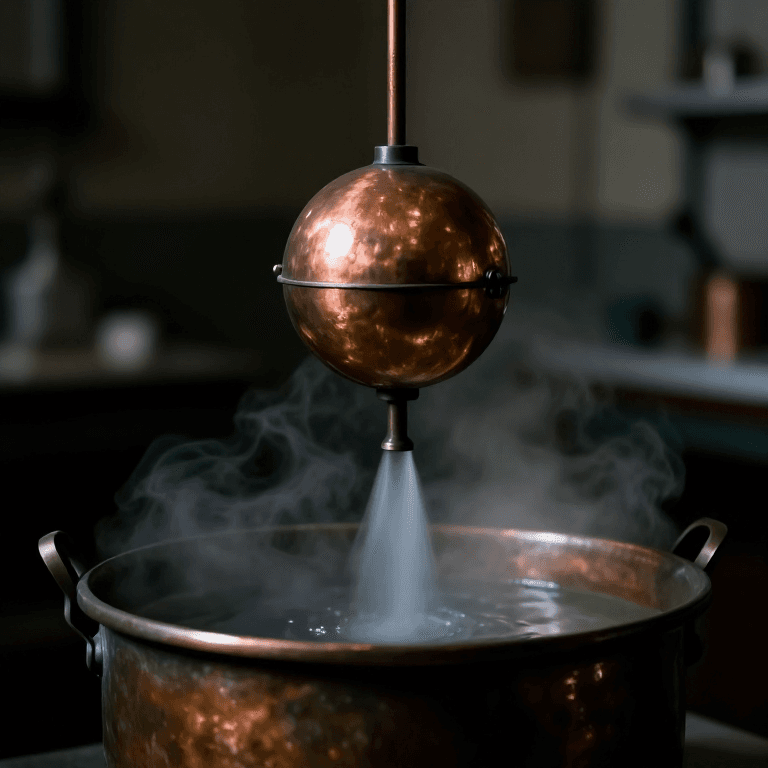
Its genius is counter-intuitive: the steam does not push the piston. Newcomen's engine fills a cylinder with low-pressure steam, then sprays in cold water to condense that steam into a few drops, leaving a vacuum. The ordinary pressure of the atmosphere — about a tonne on a large piston — then shoves the piston down into the vacuum. That downward stroke rocks a great wooden beam whose far end lifts the mine pump. Because air pressure does the work, it is called an atmospheric engine.
It was thirsty and wasteful, reheating its whole cylinder every stroke, but it was tireless and it worked. For sixty years Newcomen engines drained the mines that supplied the coal that fed the Industrial Revolution — until James Watt's separate condenser made the steam engine efficient enough to drive factories and locomotives.
Зааварчилгаа
Grasp the atmospheric principle
Grasp the atmospheric principle
Build the boiler
Build the boiler
Энэ алхмын материал:
 Зэсэн хуудас40 кг
 Галд тэсвэртэй тоосго120 ширхэг
Cast and bore the cylinder
Cast and bore the cylinder
Энэ алхмын материал:
 Цутгамал төмрийн цилиндр1 ширхэг
 Арьс шир2 sqm
Erect the great beam
Erect the great beam
Энэ алхмын материал:
 Дугласын гацуурын дам нуруу1 ширхэг
Plumb the steam and water pipes
Plumb the steam and water pipes
Энэ алхмын материал:
 Зэс хоолой6 метр
Шаардлагатай багаж:
 Хоолойн түлхүүр
Raise steam
Raise steam
Энэ алхмын материал:
 Битумэн нүүрс50 кг
Admit steam and let the piston rise
Admit steam and let the piston rise
Шаардлагатай багаж:
 Уурын хаалт
Inject cold water to make the vacuum
Inject cold water to make the vacuum
Шаардлагатай багаж:
Уурын хаалтTake the power stroke
Take the power stroke
Энэ алхмын материал:
 Ус30 литр
Drain and repeat
Drain and repeat
Шаардлагатай багаж:
Уурын хаалтMake it self-acting
Make it self-acting
Шаардлагатай багаж:
Хоолойн түлхүүрKnow its power and its flaw
Know its power and its flaw
Материал
8- 40 кгТүр орлуулагч
- 120 ширхэгТүр орлуулагч
- 1 ширхэгТүр орлуулагч
- 2 sqmТүр орлуулагч
- 1 ширхэгТүр орлуулагч
- 6 метрТүр орлуулагч
- 50 кгТүр орлуулагч
- 30 литрТүр орлуулагч
Холбоотой загварууд
Эдгээр загварууд мэдлэг хуваалцдаг — арга техник, материал эсвэл зарчим


CC0 Нийтийн домэйн
Энэ загвар CC0 дор гаргагдсан. Та зөвшөөрөл авахгүйгээр хуулах, өөрчлөх, түгээх, ашиглах боломжтой.
Загвараар дамжуулан бүтээгдэхүүн худалдаж авч Бүтээгчийг дэмжээрэй Бүтээгчийн шимтгэл Борлуулагчаар тогтоосон, эсвэл энэ загварын шинэ хувилбар үүсгэж орлогоо хуваахын тулд өөрийн загварт холбоос болгон оруулна уу.