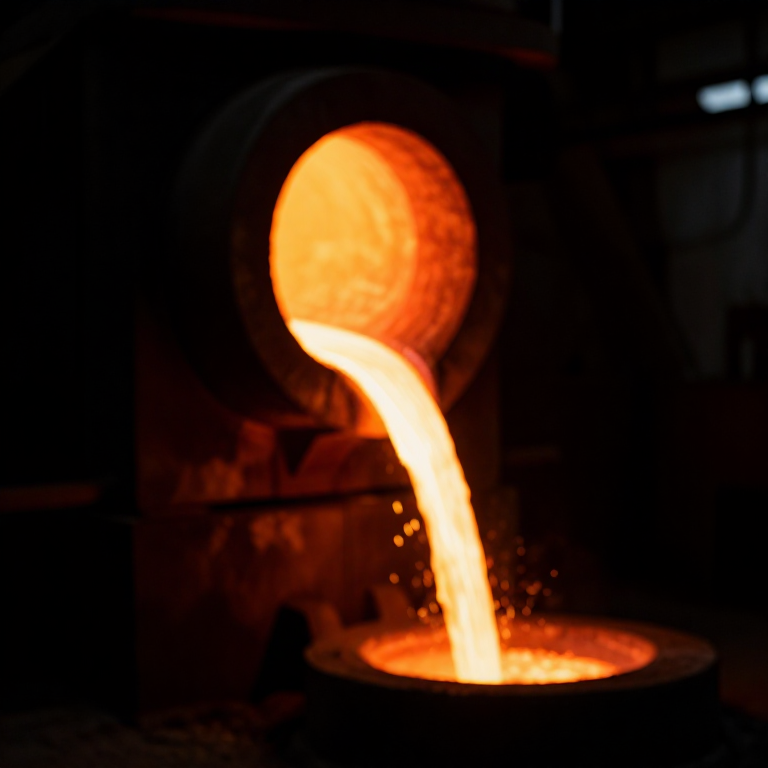


Smelting Pig Iron in a Coke Blast Furnace — Molten Iron at Industrial Scale
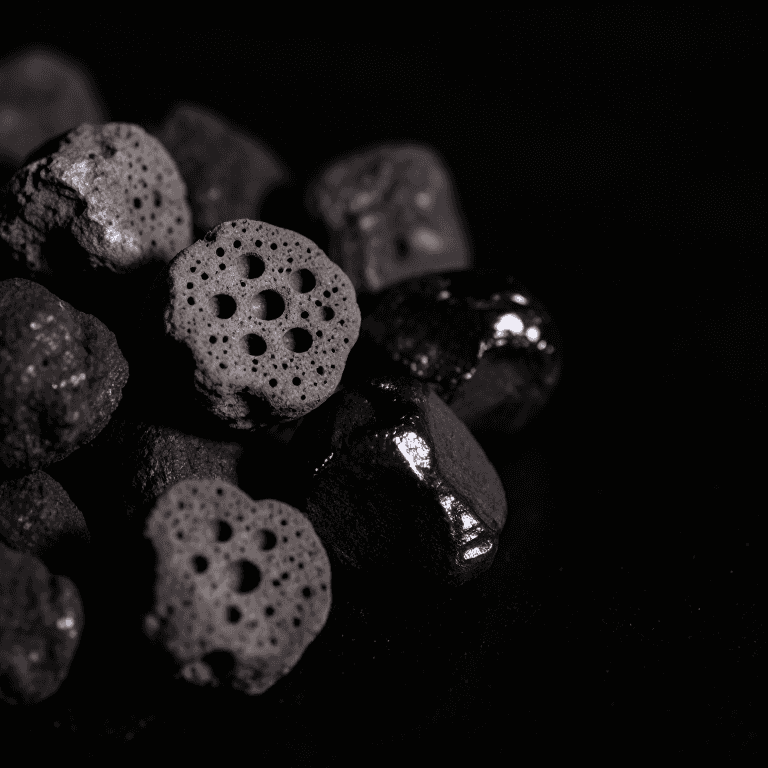
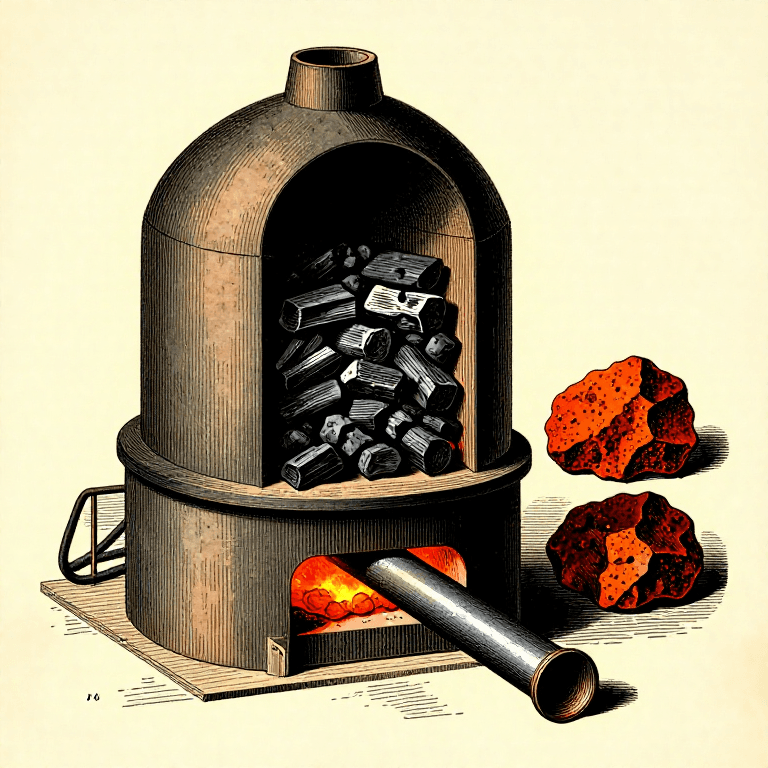
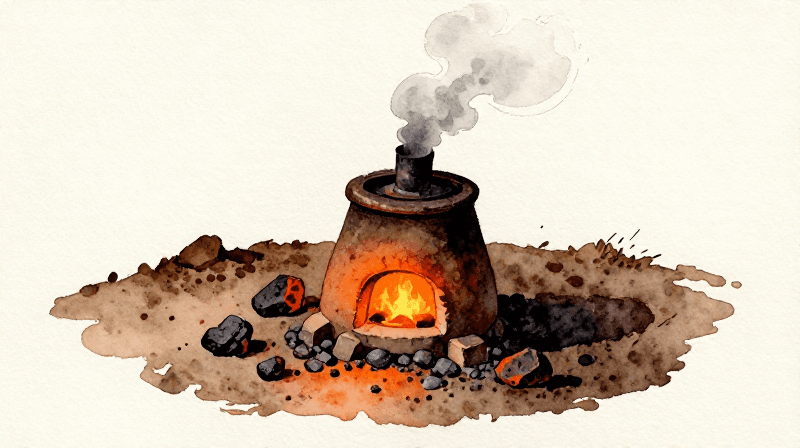
The bloomery gave the ancient world iron, but only in small spongy lumps, one slow batch at a time. The blast furnace changed everything: a tall shaft kept continuously charged and blown produces a steady river of molten iron. Where a bloomery never melts its metal, a blast furnace runs hot enough to liquefy iron entirely, letting it pool at the hearth and be tapped out by the tonne.
The key is heat and chemistry working together. A powerful air blast burns coke to carbon monoxide, which strips the oxygen from iron ore; meanwhile the descending iron soaks up carbon until it melts. Limestone added as flux carries off the stony impurities as a floating slag. What runs out of the tap hole is pig iron — iron saturated with about four percent carbon: hard, brittle, and perfect for casting or for refining into wrought iron and steel.
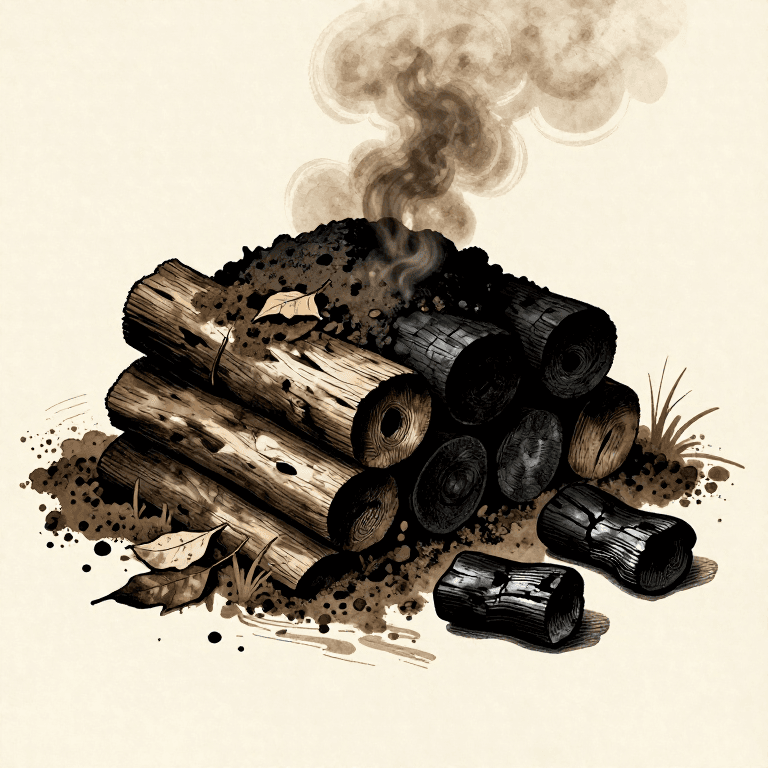
When coke replaced charcoal as the blast-furnace fuel in the early 1700s, iron could finally be made in unlimited quantity without consuming whole forests. Cheap pig iron became the raw material of the Industrial Revolution — the metal behind rails, bridges, engines, and machines.
Зааварчилгаа
Understand pig iron
Understand pig iron
Build the shaft furnace
Build the shaft furnace
Энэ алхмын материал:
 Галд тэсвэртэй тоосго80 ширхэг
Шаардлагатай багаж:
 Гар хүрзэн шүүр
Crush the ore and flux
Crush the ore and flux
Энэ алхмын материал:
 Хатаасан намгийн төмрийн хүдэр30 кг
 Шохойн чулууны хавтан8 кг
Шаардлагатай багаж:
 Алх
АлхSet up the air blast
Set up the air blast
Шаардлагатай багаж:
 Хөөрөг
Light the coke bed
Light the coke bed
Энэ алхмын материал:
 Металлургийн кокс40 кг
Charge in layers
Charge in layers
Энэ алхмын материал:
Металлургийн кокс40 кгReduce the ore
Reduce the ore
Melt and carburize
Melt and carburize
Form and tap the slag
Form and tap the slag
Шаардлагатай багаж:
 Зуух нээх саваа
Tap the molten iron
Tap the molten iron
Шаардлагатай багаж:
Зуух нээх савааCast the pigs
Cast the pigs
Энэ алхмын материал:
 Цутгамалын элс50 кг
Cool, break, and identify
Cool, break, and identify
Шаардлагатай багаж:
АлхМатериал
5- 80 ширхэгТүр орлуулагч
- Түр орлуулагч
- Түр орлуулагч
- 40 кгТүр орлуулагч
- 50 кгТүр орлуулагч
Холбогдсон загварын материал

Холбоотой загварууд
Эдгээр загварууд мэдлэг хуваалцдаг — арга техник, материал эсвэл зарчим


CC0 Нийтийн домэйн
Энэ загвар CC0 дор гаргагдсан. Та зөвшөөрөл авахгүйгээр хуулах, өөрчлөх, түгээх, ашиглах боломжтой.
Загвараар дамжуулан бүтээгдэхүүн худалдаж авч Бүтээгчийг дэмжээрэй Бүтээгчийн шимтгэл Борлуулагчаар тогтоосон, эсвэл энэ загварын шинэ хувилбар үүсгэж орлогоо хуваахын тулд өөрийн загварт холбоос болгон оруулна уу.