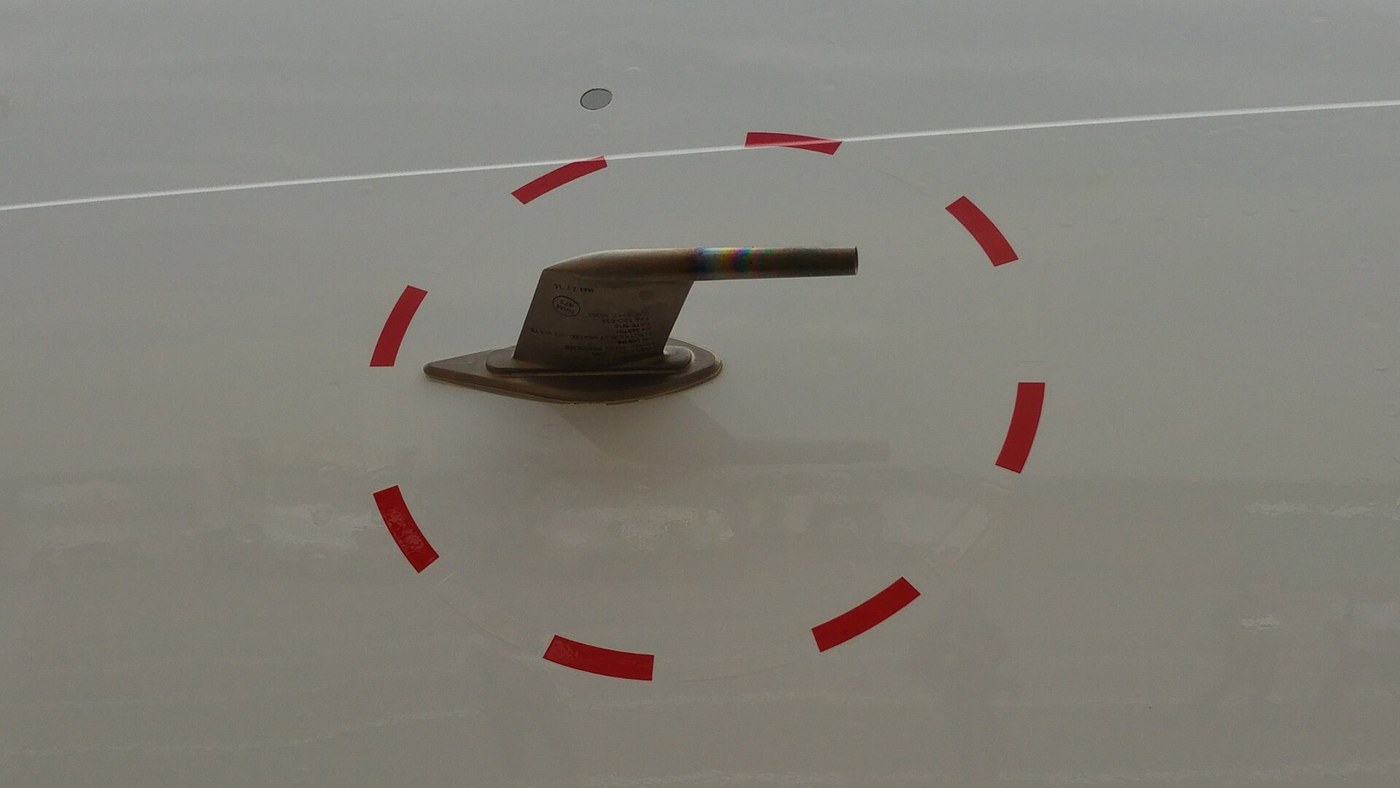


Pitot Tube
Зааварчилгаа
Make the impact tube and prove it climbs
Make the impact tube and prove it climbs
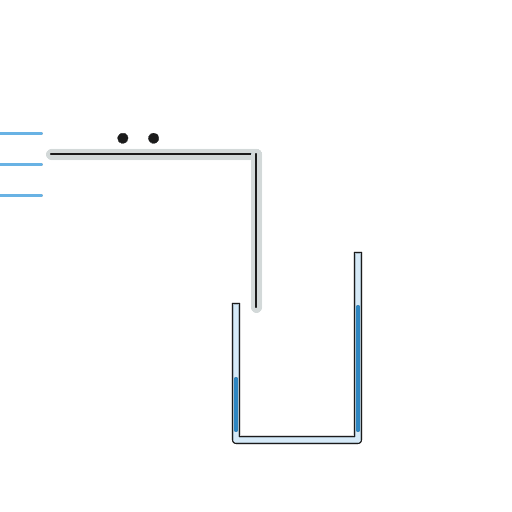
Start with Pitot's original instrument, which was one bent tube and nothing else.
- Bend a length of clear acrylic or brass tube into an L, with a short leg about 40 mm and a long vertical leg 300 mm.
- Cut the short leg's opening square and deburr it — a ragged or angled mouth reads wrong.
- Hold it in a flowing stream or a bucket being stirred, with the opening facing directly INTO the flow.
- Watch the water rise in the vertical leg and stabilise.
- Measure the height above the free surface.
That height is your reading. The fluid arriving at the opening is brought to rest, and its kinetic energy becomes pressure — enough to lift a column. Pitot did exactly this in the Seine in 1732, and used it to demolish the then-current belief that river water flowed faster at the bottom than the top.
Face the opening squarely into the flow. Even ten degrees off and the reading falls, which is why aircraft pitot tubes are aligned carefully and why a bent one is a serious defect.Энэ алхмын материал:
 Акрилан савх1 ширхэг
 Гадна голч 9.5 мм гуулин хоолой1 ширхэг
Шаардлагатай багаж:
 Төмөр хөрөөний хүрээ ба ир
 Гилбэрийн иж бүрдэл
 Дижитал штангенциркуль 6 инч
 Хосолсон өнцөг хэмжигч
Add the static port — the correction that made it accurate
Add the static port — the correction that made it accurate
One tube measures total pressure. You need to subtract the pressure that was there anyway.
- Make a second tube, closed at its upstream end, with several small holes drilled through its SIDE wall, flush and perpendicular to the flow.
- Mount it parallel to the impact tube, in the same flow.
- Run both to a U-tube manometer so you read the difference between them directly.
- Compare the difference reading against the single-tube reading from step 1.
Why the side holes must be perpendicular. A hole facing the flow catches the moving fluid and reads too high; a hole facing downstream reads too low. Only a hole exactly flush with the streamlines senses the static pressure alone. Getting that geometry right is the whole art of a static port, and on aircraft they are placed on the fuselage where the flow is known to be undisturbed.
Henri Darcy modified Pitot's instrument in the 1850s by adding exactly this, producing the Pitot-Darcy tube. The original measured a height above a free surface, which only works in an open channel; the two-port version works in a closed pipe or in the air.Энэ алхмын материал:
 Гуулин хоолой, гадна диаметр 1/2 инч1 ширхэг
 Шилэн хялгасан хоолой1 ширхэг
 Хүнсний будагч1 лонх
Шаардлагатай багаж:
 Утасгүй өрөм
 Өрмийн үзүүрийн иж бүрдэлГилбэрийн иж бүрдэлДижитал штангенциркуль 6 инч
Calibrate against a known speed
Calibrate against a known speed
The instrument reads a pressure. You want a velocity, so establish the relationship yourself.
- Mount the assembly on a rod and walk it through still air at a measured pace — say 2 metres in 4 seconds.
- Record the manometer difference at that speed.
- Repeat at double the speed.
- Compare: the pressure difference should be roughly FOUR times greater.
- Tabulate several speeds and plot pressure against velocity.
Энэ алхмын материал:
 Нүдэлсэн цаас1 pad
Шаардлагатай багаж:
 Секунд хэмжигчДижитал штангенциркуль 6 инч
Block it and watch the reading lie
Block it and watch the reading lie
The instrument's failure mode is worth producing deliberately, because it has killed people.
- Establish a steady reading at a known speed.
- Now block the IMPACT opening with tape while the flow continues. Note the reading.
- Restore it, then block the STATIC ports instead. Note that reading.
- Try partially blocking each.
Шаардлагатай багаж:
Секунд хэмжигчДижитал штангенциркуль 6 инчMeasuring by substitution, and history
Measuring by substitution, and history
Henri Pitot presented his tube to the French Academy of Sciences in 1732, having built it to settle arguments about how rivers flow. His measurements in the Seine showed that water moves FASTER at the surface and slower near the bed, contradicting the accepted view. Henri Darcy refined the instrument in the 1850s into the form still used.
The method is measurement by substitution, and it runs through this whole batch. Velocity is hard to measure directly; pressure is easy. So convert one into the other and measure the easy thing. The same instinct appears in the sine bar from batch 69 — angles are hard, lengths are easy, so trade one for the other. Recognising which quantity your workshop can measure well, and finding a physical relationship that converts the hard quantity into it, is most of instrumentation.
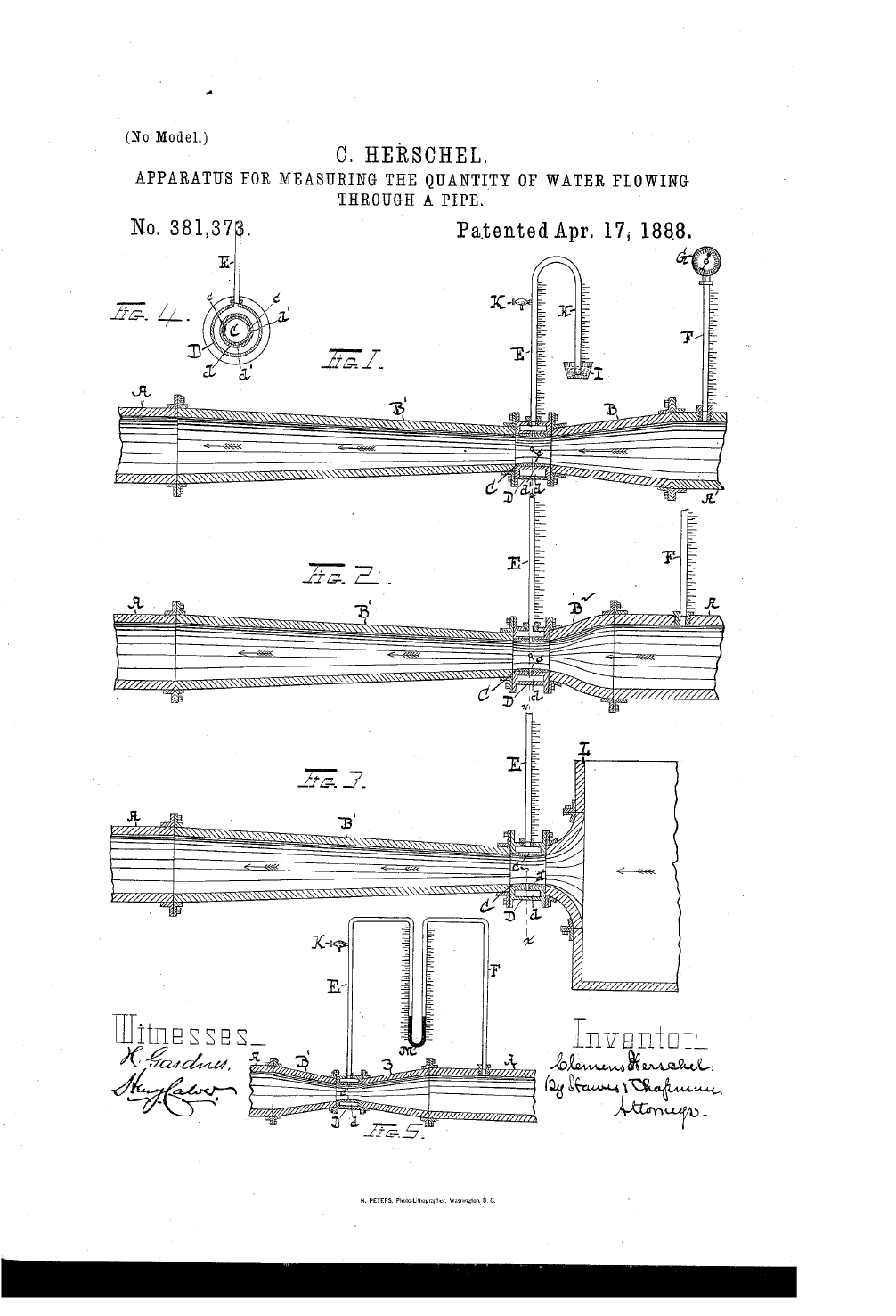
Against its sibling in this catalogue: the Venturi meter measures flow by narrowing the whole pipe and reading the pressure drop, giving a full-pipe average with almost no permanent pressure loss. The Pitot tube measures at a POINT, obstructs almost nothing, and can be traversed across a duct to map a velocity profile. One gives you the total, the other gives you the distribution — different questions, and a serious flow survey uses both.
Its honest limits: it reads at one point, so a single reading in a pipe is only as good as your assumption about the profile; it is sensitive to alignment; it is easily blocked; and at low velocities the pressure difference becomes too small to read reliably. That last limit is why aircraft airspeed indicators are unreliable at very low speed and why other methods are used for slow flows.
Материал
6- 1 ширхэгТүр орлуулагч
- 1 ширхэгТүр орлуулагч
- Түр орлуулагч
- 1 ширхэгТүр орлуулагч
- 1 лонхТүр орлуулагч
- 1 padТүр орлуулагч
Шаардлагатай багаж
7- Түр орлуулагч
- Түр орлуулагч
- Түр орлуулагч
- Түр орлуулагч
- 1 vendor sell this, none ship to you yetТүр орлуулагч
- Түр орлуулагч
- Түр орлуулагч
Энэ загвараар хийдэг
Холбоотой загварууд
Эдгээр загварууд мэдлэг хуваалцдаг — арга техник, материал эсвэл зарчим
CC0 Нийтийн домэйн
Энэ загвар CC0 дор гаргагдсан. Та зөвшөөрөл авахгүйгээр хуулах, өөрчлөх, түгээх, ашиглах боломжтой.
Загвараар дамжуулан бүтээгдэхүүн худалдаж авч Бүтээгчийг дэмжээрэй Бүтээгчийн шимтгэл Борлуулагчаар тогтоосон, эсвэл энэ загварын шинэ хувилбар үүсгэж орлогоо хуваахын тулд өөрийн загварт холбоос болгон оруулна уу.