УРЛАГ
ГОО САЙХАН БА ЭРҮҮЛ МЭНД
ГАРААР ХИЙСЭН
СОЁЛ БА ТҮҮХ
ҮЗВЭР НААДАМ
БАЙГАЛЬ ОРЧИН
ХООЛ БА УНДАА
УРВУУ ИНЖЕНЕРЧЛЭЛ
ШИНЖЛЭХ УХААН
СПОРТ
ТЕХНОЛОГИ
ӨМСДӨГ ХЭРЭГСЭЛ
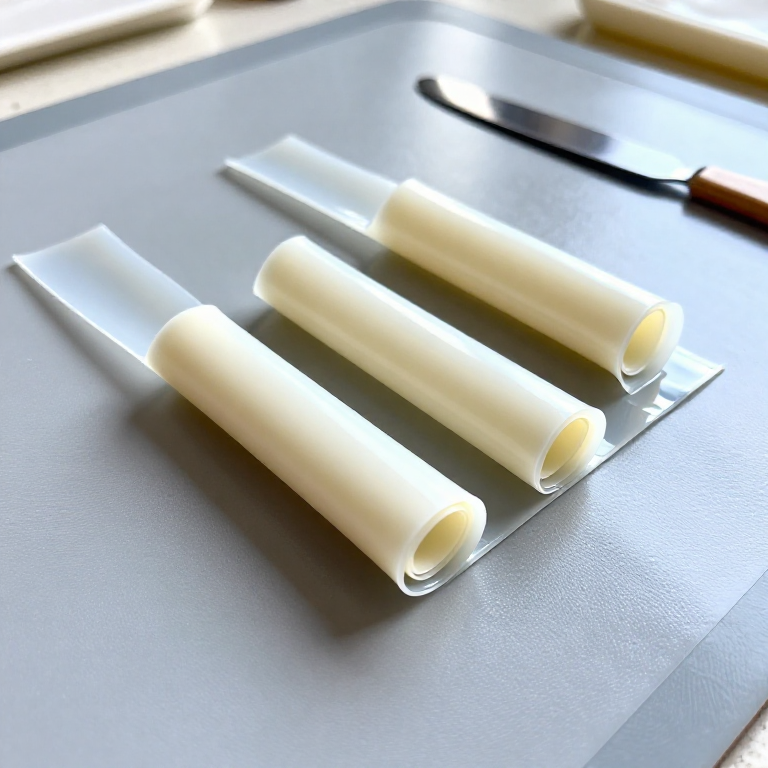


Plasticised PVC (Plastisol)
PVC was known for decades as a hard, brittle powder nobody could use. In 1926 Waldo Semon at B.F. Goodrich found that certain liquids dissolve it only when hot, and that the hot solution sets on cooling into a soft, rubber-like gel - flexible PVC.
**US 1,929,453**, "Synthetic rubber-like composition and method of making same", Semon, assigned to B.F. Goodrich, granted 10. October 1933, claims dissolving "an insoluble polymerized vinyl halide at an elevated temperature" in a liquid that dissolves it only well above room temperature, and gelling it by cooling. One example: 8 parts PVC, 8 parts tricresyl phosphate, 3 parts dibutyl phthalate.
**Plastisol is that idea in a bottle**: PVC grains suspended, undissolved, in plasticiser. Heat makes the liquid dissolve the grains and fuse into solid flexible PVC. You bake test films at three temperatures and pull them apart to find where it truly fuses.
Анхан шат
2 hours
Зааварчилгаа
1
1
Ventilate and set the oven
Ventilate and set the oven
Use a toaster oven kept for crafts, never food, by an open window. Put the probe thermometer inside - dial settings are rarely accurate.
Шаардлагатай багаж:
 Ширээний зууш шарагч зуух
 Дотор нь үлдээдэг мэдрэгчтэй термометр
 N95 амны хаалт
2
2
Stir the plastisol
Stir the plastisol
The PVC grains settle. Stir the plastisol from the bottom for 2 minutes until even. Read the label's fusion temperature.
Шаардлагатай багаж:
 Хутгуур саваа
 Пластизол
3
3
Spread three films
Spread three films
On the silicone mat, spread three 100 x 40 mm films about 1.5 mm thick with the palette knife.
Шаардлагатай багаж:
 Силиконон жигнэх дэвсгэр
 Палитрын хутганы багц
 ШугамПластизол
4
4
Bake at three temperatures
Bake at three temperatures
Bake one film 10 minutes each at 130 °C, 150 °C and the label's fusion temperature (commonly 160–180 °C). Never exceed the label maximum.
Шаардлагатай багаж:
Ширээний зууш шарагч зуух Хэт улаан туяаны термометр
 Гагнуурын бээлий
5
5
Cool and cut strips
Cool and cut strips
Cool 10 minutes. Peel each film and cut a 10 mm strip from its centre. Mark its temperature.
Шаардлагатай багаж:
 Ажлын хутгаШугам
6
6
Stretch and pull
Stretch and pull
Clamp one end in the vise. Hook the spring scale to the other and pull slowly. Record the peak force and how it failed.
Шаардлагатай багаж:
 Хүч хэмжигч (пүрштэй жин)
 Ширээний хавчаар
 Тунгалаг хамгаалалтын нүдний шил
7
7
Recipe, cure curve, siblings
Recipe, cure curve, siblings
Jupyter дэвтэр ачаалж байна…
8
8
History & Context
History & Context
**What the patent specifies:** gelling PVC in high-boiling liquids such as tricresyl phosphate and dibutyl phthalate. **Modern build (derived):** a commercial plastisol; many now use phthalate-free plasticisers.
Flexible PVC became cable insulation, shower curtains, hoses and flooring. Its limits: the plasticiser slowly migrates out, so old soft PVC stiffens and turns sticky; and overheated PVC yellows and releases hydrogen chloride, which is why the label's maximum temperature matters.
Шаардлагатай багаж
14- Түр орлуулагч
- Түр орлуулагч
- Түр орлуулагч
- Түр орлуулагч
- Түр орлуулагч
- Түр орлуулагч
- Түр орлуулагч
- Түр орлуулагч
- Түр орлуулагч
- Түр орлуулагч
- Түр орлуулагч
- Түр орлуулагч
- Түр орлуулагч
- Түр орлуулагч
Холбоотой загварууд
Эдгээр загварууд мэдлэг хуваалцдаг — арга техник, материал эсвэл зарчим

CC0 Нийтийн домэйн
Энэ загвар CC0 дор гаргагдсан. Та зөвшөөрөл авахгүйгээр хуулах, өөрчлөх, түгээх, ашиглах боломжтой.
Загвараар дамжуулан бүтээгдэхүүн худалдаж авч Бүтээгчийг дэмжээрэй Бүтээгчийн шимтгэл Борлуулагчаар тогтоосон, эсвэл энэ загварын шинэ хувилбар үүсгэж орлогоо хуваахын тулд өөрийн загварт холбоос болгон оруулна уу.