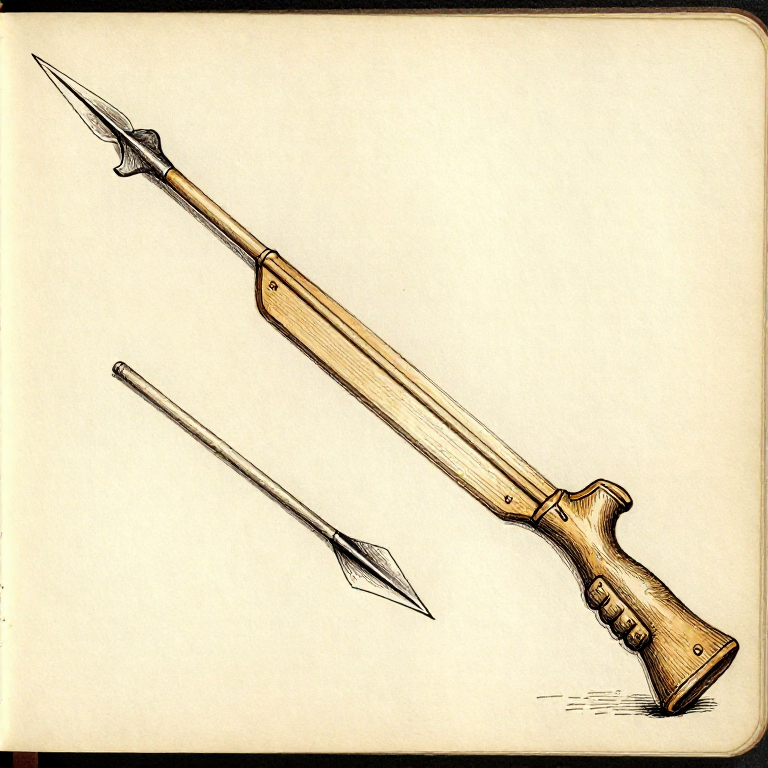


Carving an Atlatl Spear Thrower — Leveraged Dart Launcher
Зааварчилгаа
Select and Split the Wood
Select and Split the Wood
Choose a straight-grained hardwood branch about 45-60 cm long. Ash and yew are ideal because they combine strength with light weight. The branch should be 3-4 cm in diameter. Split it in half lengthwise using a flint wedge to produce a flat-backed, half-round blank. The flat side becomes the top surface where the dart rests, and the rounded side fits comfortably in the palm. Allow the wood to season for several days if freshly cut — green wood warps as it dries and can shift the spur alignment.
Энэ алхмын материал:
 Ишний хатуу модон бэлдэц1 piece, 45-60 cm long, 3-4 cm diameter см
 Яс1 small piece ширхэг
 Олс1 m m
 Нарсны давирхайн цавууsmall amount ширхэг
Шаардлагатай багаж:
 Цахиур чулууны хутга
 Элсэн чулуу (зүлгүүр)
 Цахиур чулууны хусуур
Shape the Throwing Board
Shape the Throwing Board
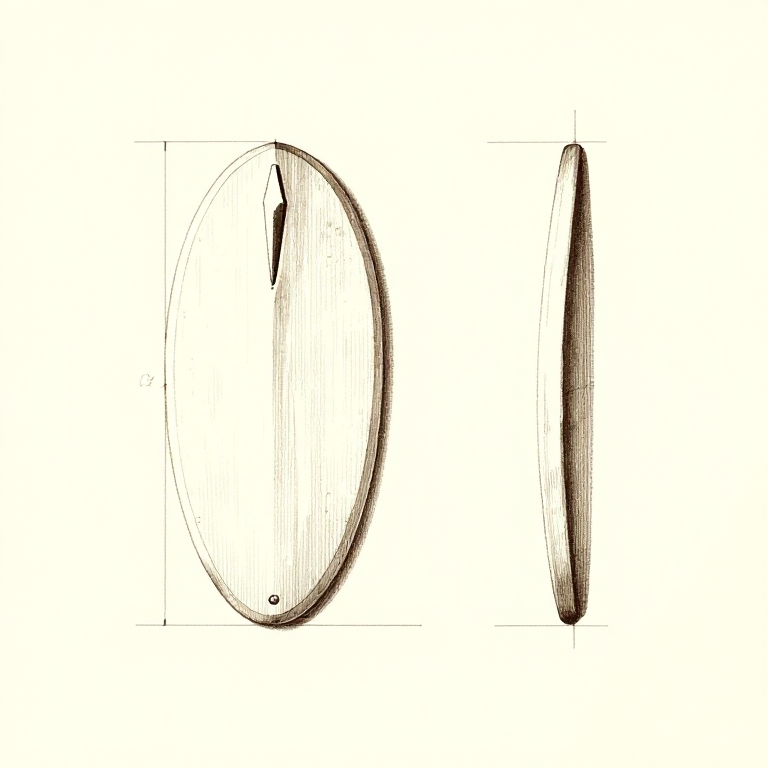
Use a flint scraper to shape the blank into a flat, tapered board — wider and thicker at the grip end, thinner and lighter at the hook end. The top surface should be flat or slightly concave to form a channel that guides the dart during the throw. Carve a comfortable grip at the proximal end — many prehistoric atlatls have finger loops, a handle knob, or simply a shaped contour for the thumb and forefinger. The balance point should be near the grip end so the distal end feels light during the throwing motion.
Attach the Spur Hook
Attach the Spur Hook
Carve a small hook or spur from bone or antler — a short peg about 2 cm long with a slight upward curve. This spur engages a socket drilled into the base of the dart shaft. Drill or carve a shallow mortise into the distal end of the atlatl board and set the spur into it using pine pitch adhesive and sinew lashing. The spur must be centred on the dart channel and angled very slightly upward (about 5-10 degrees). A misaligned spur causes the dart to veer off-target during release. The pitch and sinew combination creates an extremely strong bond — sinew shrinks as it dries, tightening the joint further.
Make the Dart
Make the Dart
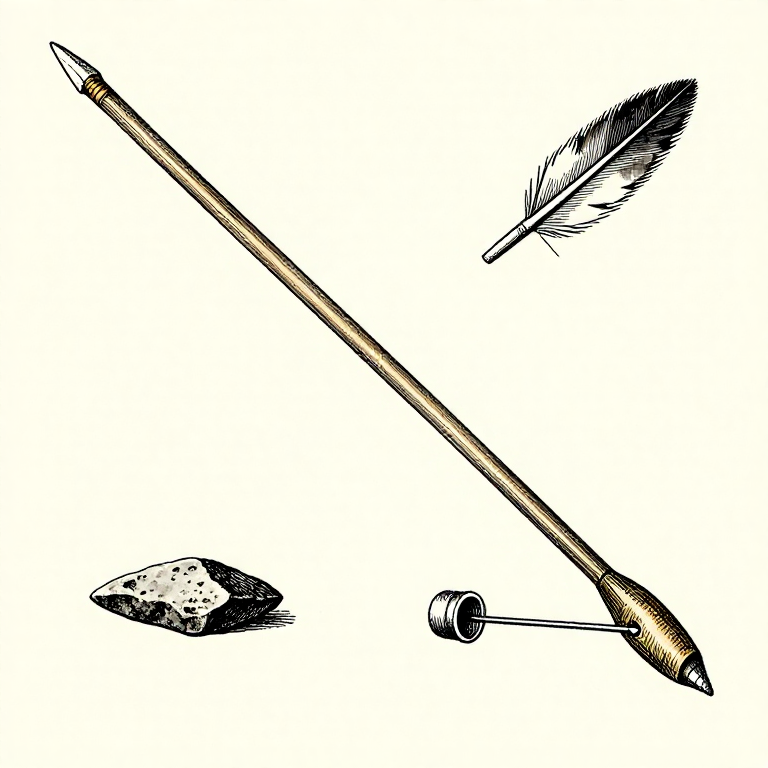
Atlatl darts are longer and more flexible than hand-thrown javelins — typically 1.5-2 metres long and about 1 cm in diameter. Select a straight, light shaft of river cane, mullein stalk, or a thin sapling. Straighten any bends by heating over coals and bending against the curve while hot. Drill or carve a small cup-shaped socket into the butt end of the dart to receive the atlatl spur. Fletch the dart with split feathers lashed to the rear third — fletching stabilises the dart in flight. Tip the front with a sharpened stone point lashed and glued in place.
Throwing Technique and Practice
Throwing Technique and Practice
Hold the atlatl at the grip with the dart resting on the channel and the butt socket engaged on the spur. The throw is an overhand motion — step forward with the opposite foot while swinging the arm forward and up, releasing the dart by allowing the spur to disengage at the apex of the throwing arc. The atlatl effectively extends the arm by its full length, increasing the angular velocity of the dart tip. Experienced atlatl users achieve dart speeds of 90-150 km/h, roughly doubling the velocity of an unaided hand throw. Practice at a target from 15-20 metres until consistent, then increase range. Accuracy out to 30-40 metres is achievable with practice.
Материал
5- 1 piece, 45-60 cm long, 3-4 cm diameter смТүр орлуулагч
- 1 small piece ширхэгТүр орлуулагч
- 1 m mТүр орлуулагч
- small amount ширхэгТүр орлуулагч
- 1 piece, 45-60 cm long, 3-4 cm diameter ширхэгТүр орлуулагч
Шаардлагатай багаж
3- Түр орлуулагч
- Түр орлуулагч
- Түр орлуулагч
Энэ загвараар хийдэг
CC0 Нийтийн домэйн
Энэ загвар CC0 дор гаргагдсан. Та зөвшөөрөл авахгүйгээр хуулах, өөрчлөх, түгээх, ашиглах боломжтой.
Загвараар дамжуулан бүтээгдэхүүн худалдаж авч Бүтээгчийг дэмжээрэй Бүтээгчийн шимтгэл Борлуулагчаар тогтоосон, эсвэл энэ загварын шинэ хувилбар үүсгэж орлогоо хуваахын тулд өөрийн загварт холбоос болгон оруулна уу.