

Rendering Tallow for a Stone Lamp — Portable Fat-Fuelled Light
Зааварчилгаа
Prepare the Raw Suet
Prepare the Raw Suet
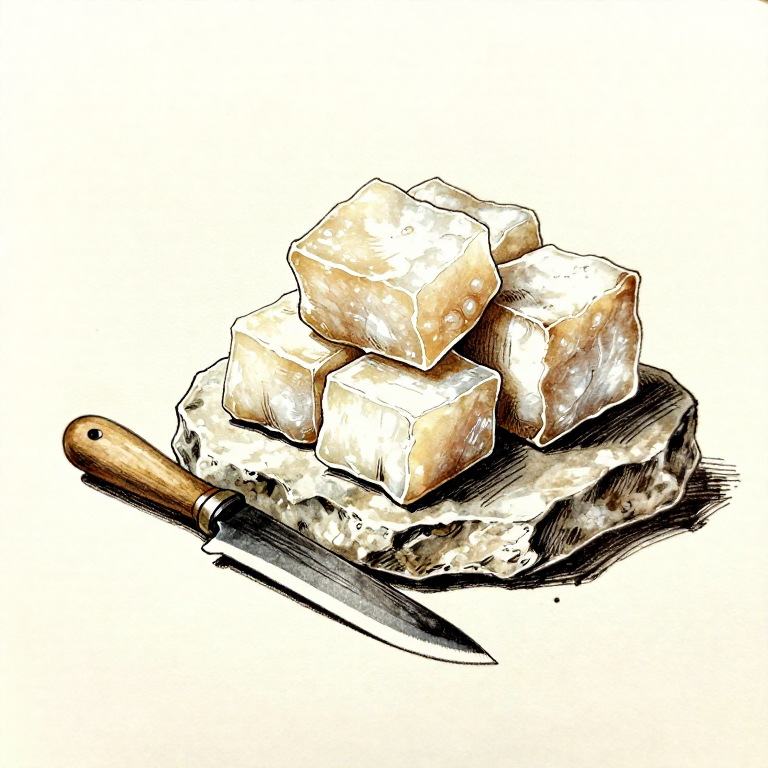
Collect the hard white fat (suet) from around the kidneys and loins of a freshly butchered animal — deer, sheep, goat, or cattle all produce usable suet. Kidney fat renders the cleanest because it has the least connective tissue. Use a sharp flint blade to cut the suet into small pieces, roughly 1-2 cm cubes. Remove any meat, membrane, or blood vessels — these impurities cause the rendered tallow to smoke and smell when burned. The smaller you cut the pieces, the faster and more completely they will render. You need approximately 500 g of raw suet to produce 300-400 g of finished tallow.
Энэ алхмын материал:
 Түүхий дотрын өөх500 g - 1 kg г
 Ус500 ml мл
 Хөвдseveral pieces ширхэг
Шаардлагатай багаж:
 Чулуу
Чулуу Цахиурын бөөрөнхий чулуу
 Голомт (дархны гал)
Render the Fat by Wet Method
Render the Fat by Wet Method
Place the chopped suet into a watertight vessel — a tightly woven bark container, a stone bowl, or a clay pot — and add an equal volume of water. Heat the mixture by dropping fire-heated stones into it (the hot-stone boiling method). As the water heats to a gentle simmer, the fat cells rupture and release liquid fat, which floats to the surface. Continue adding hot stones to maintain the simmer for 1-2 hours. The water method is important: it prevents the fat from scorching, dissolves water-soluble impurities, and produces a cleaner tallow than dry rendering. The connective tissue (cracklings) sinks to the bottom along with any debris.
Separate and Purify the Tallow
Separate and Purify the Tallow
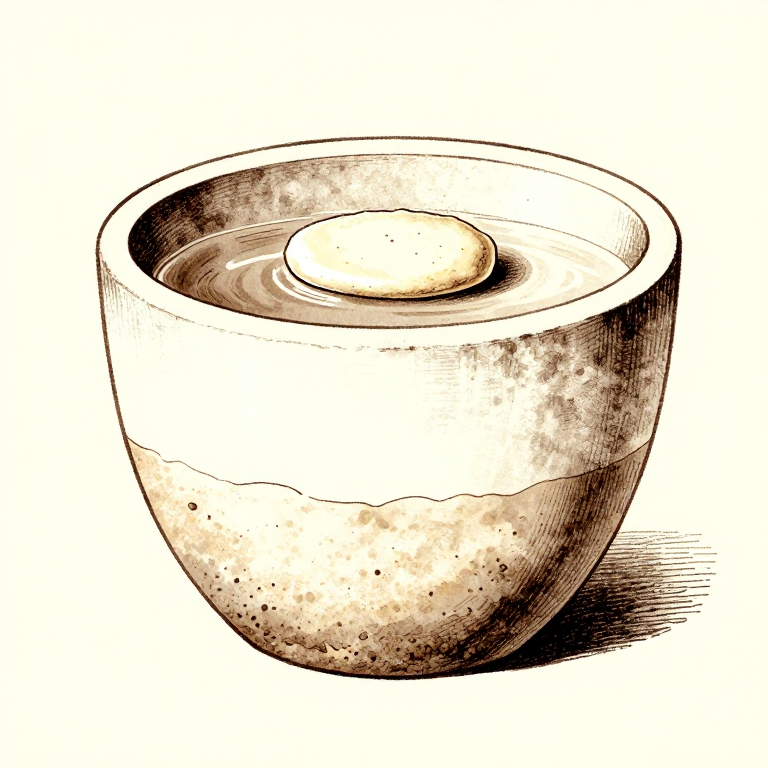
Remove the vessel from heat and allow it to cool slowly. As it cools, the tallow solidifies on top of the water as a white or off-white disc, while the impurities and water remain below. Lift the solidified tallow disc off the water surface, scrape any brown residue from the underside, and discard the water and cracklings. For higher purity, re-melt the tallow disc by hot-stone boiling in fresh water and allow it to solidify again — each cycle removes more impurities. Well-rendered tallow is white to pale yellow, has a mild meaty smell, and is firm at room temperature. It can be stored in bark containers or clay pots for several months without turning rancid, especially in cool conditions.
Prepare the Stone Lamp and Wick
Prepare the Stone Lamp and Wick
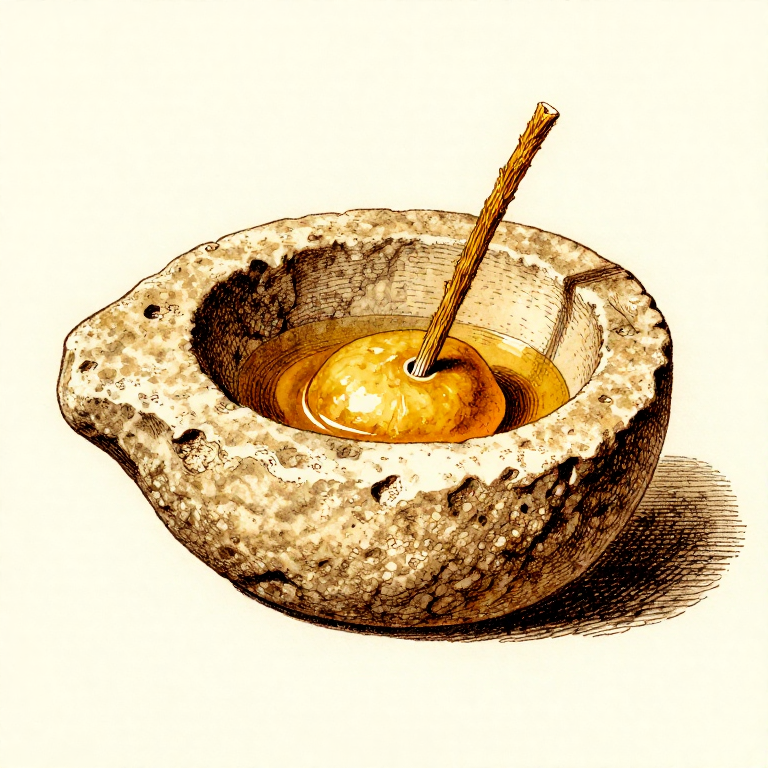
Select a stone with a natural shallow depression — sandstone and soapstone (steatite) are ideal because they are soft enough to carve and do not crack under heat. The depression should be 5-10 cm in diameter and 2-3 cm deep. If no natural depression exists, grind one out by rotating a harder stone against the surface with sand as an abrasive. For the wick, twist dried moss (Sphagnum spp.), cattail fluff (Typha spp.), or shredded inner bark of lime (linden) into a cord approximately 5-8 cm long and the thickness of a pencil. Lay the wick in the depression so that one end extends slightly over the rim of the stone. The exposed end is the lighting point; the submerged portion draws tallow up by capillary action.
Fill and Light the Lamp
Fill and Light the Lamp
Melt a portion of the rendered tallow by warming it near a fire and pour the liquid fat into the stone depression until the wick is nearly submerged, with just the tip protruding. Allow the tallow to cool and solidify around the wick — this anchors it in position. To light, hold a burning ember or small flame to the exposed wick tip. The flame will initially be small; as the tallow surrounding the wick melts into a pool of liquid fuel, the flame grows to a steady, warm glow. A well-made tallow lamp burns for 4-8 hours per filling, producing roughly the light of a modern candle (12-15 lumens). The Lascaux cave lamps were carved from red sandstone and burned animal fat — their carbonised residues, analysed by gas chromatography, confirmed horse and deer tallow as the fuel.
Материал
4- 500 g - 1 kg гТүр орлуулагч
- 500 ml млТүр орлуулагч
- several pieces ширхэгТүр орлуулагч
- 500 g - 1 kg ширхэгТүр орлуулагч
Шаардлагатай багаж
5- Түр орлуулагч
- Түр орлуулагч
- Түр орлуулагч
- Түр орлуулагч
- Түр орлуулагч
CC0 Нийтийн домэйн
Энэ загвар CC0 дор гаргагдсан. Та зөвшөөрөл авахгүйгээр хуулах, өөрчлөх, түгээх, ашиглах боломжтой.
Загвараар дамжуулан бүтээгдэхүүн худалдаж авч Бүтээгчийг дэмжээрэй Бүтээгчийн шимтгэл Борлуулагчаар тогтоосон, эсвэл энэ загварын шинэ хувилбар үүсгэж орлогоо хуваахын тулд өөрийн загварт холбоос болгон оруулна уу.