

Russian Peasant Multiplication
Зааварчилгаа
Run the algorithm once
Run the algorithm once
Do 37 × 46 without using a single multiplication fact.
- Write 37 and 46 as two column headings.
- Halve the left, discarding remainders: 37, 18, 9, 4, 2, 1.
- Double the right alongside: 46, 92, 184, 368, 736, 1472.
- Cross out every row whose LEFT number is even.
- Add the surviving right-hand numbers.
Энэ алхмын материал:
 Нүдэлсэн цаас1 pad
 Бал харандааны иж бүрдэл1 багц
Find out why the crossing-out works
Find out why the crossing-out works
Write the odd/even pattern down as ones and zeros.
- Beside each left-hand number, write 1 if it is odd and 0 if it is even.
- Read that column from the BOTTOM up.
- Compare it with 37 written in binary.
Test the edge cases
Test the edge cases
Try to break it.
- Multiply by a power of two — 32 × 17.
- Multiply where the left number is 1 to begin with.
- Swap the columns and redo an earlier example.
Race it against long multiplication
Race it against long multiplication
Measure the trade-off honestly.
- Time yourself doing five three-digit multiplications by the doubling method.
- Time five more by ordinary long multiplication.
- Count errors in each.
Шаардлагатай багаж:
 Секунд хэмжигч
History and context
History and context
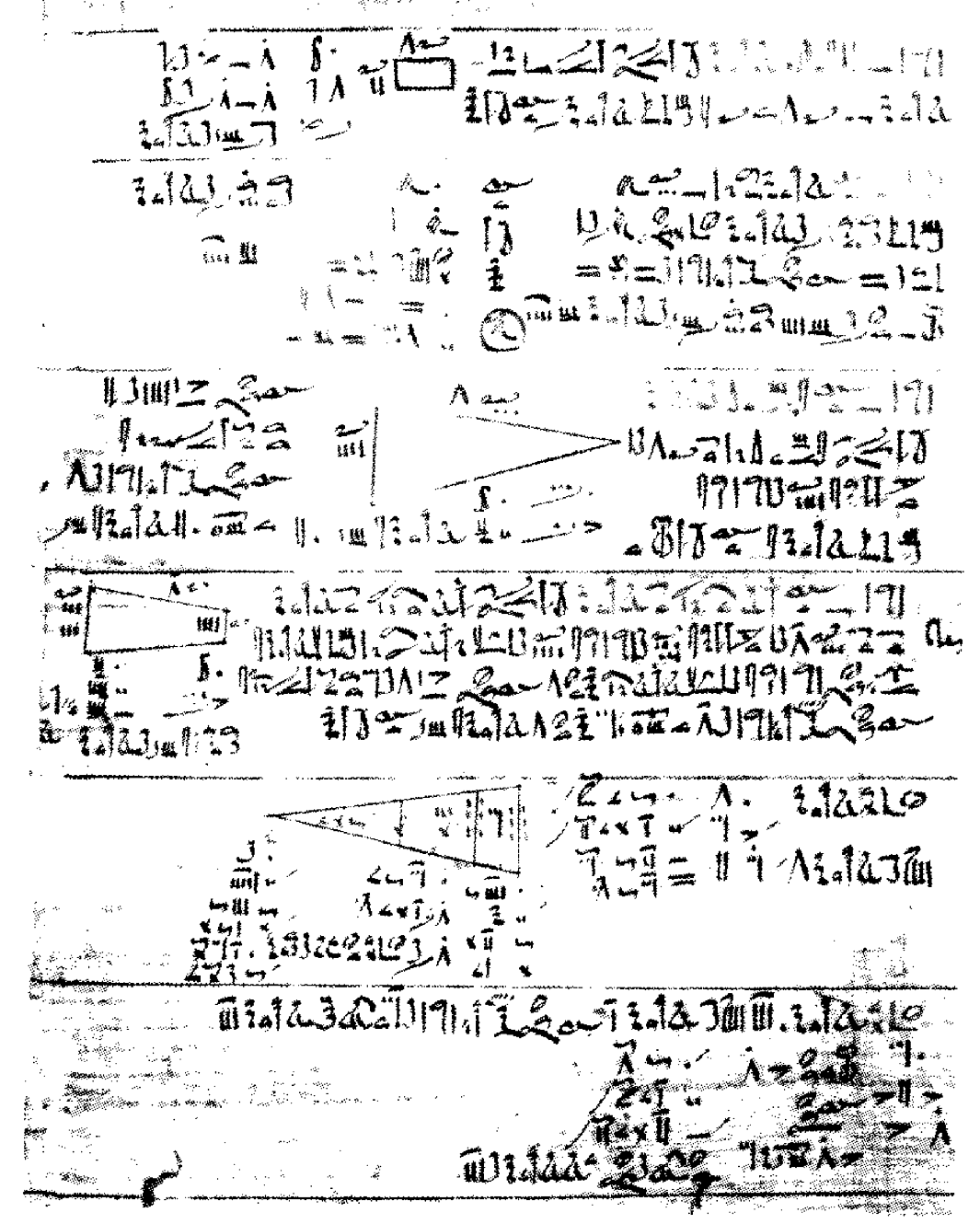
The method is Egyptian, not Russian. It appears in the Rhind Mathematical Papyrus, copied around 1550 BC from an older document, where multiplication and division are done entirely by doubling and adding. Egyptian arithmetic had no times tables in our sense, and did not need them.
The name is a nineteenth-century European label attached after travellers reported seeing Russian peasants calculating this way. It is a genuinely widespread folk method rather than a national one, and the attribution says more about who was writing the books than about who invented it.
Why it matters now: shift-and-add is precisely how binary multiplication is implemented in hardware. Doubling is a left shift, halving is a right shift, and checking odd-or-even is testing the lowest bit. A student who has done this on paper has performed the algorithm that a processor's multiplier executes in silicon — which makes binary feel like a description of something they already did, rather than a new notation to memorise.
The related division method works the same way in reverse: build up doubles of the divisor, then select the ones that sum to the dividend. Egyptian scribes did both, and their unit-fraction system for the remainders is genuinely alien to modern eyes and worth looking at if you want to see how differently arithmetic can be organised.
Материал
2- 1 padТүр орлуулагч
- 1 багцТүр орлуулагч
Шаардлагатай багаж
1- Түр орлуулагч
CC0 Нийтийн домэйн
Энэ загвар CC0 дор гаргагдсан. Та зөвшөөрөл авахгүйгээр хуулах, өөрчлөх, түгээх, ашиглах боломжтой.
Загвараар дамжуулан бүтээгдэхүүн худалдаж авч Бүтээгчийг дэмжээрэй Бүтээгчийн шимтгэл Борлуулагчаар тогтоосон, эсвэл энэ загварын шинэ хувилбар үүсгэж орлогоо хуваахын тулд өөрийн загварт холбоос болгон оруулна уу.