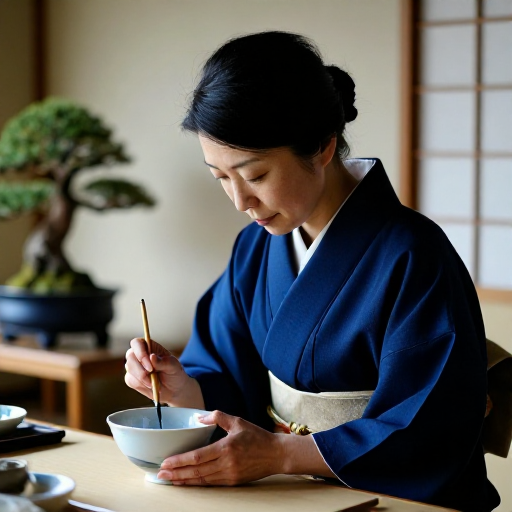

Sashiko — White Thread Running Stitch on Indigo Cotton
Sashiko is just a running stitch. There is only one stitch to learn. There is no difficult technique in it at all.
So why is it beautiful? Because the stitches are even. Every stitch is the same length with the same gap, and that evenness accumulates into a geometric pattern. It is not a record of skill. It is a record of care.
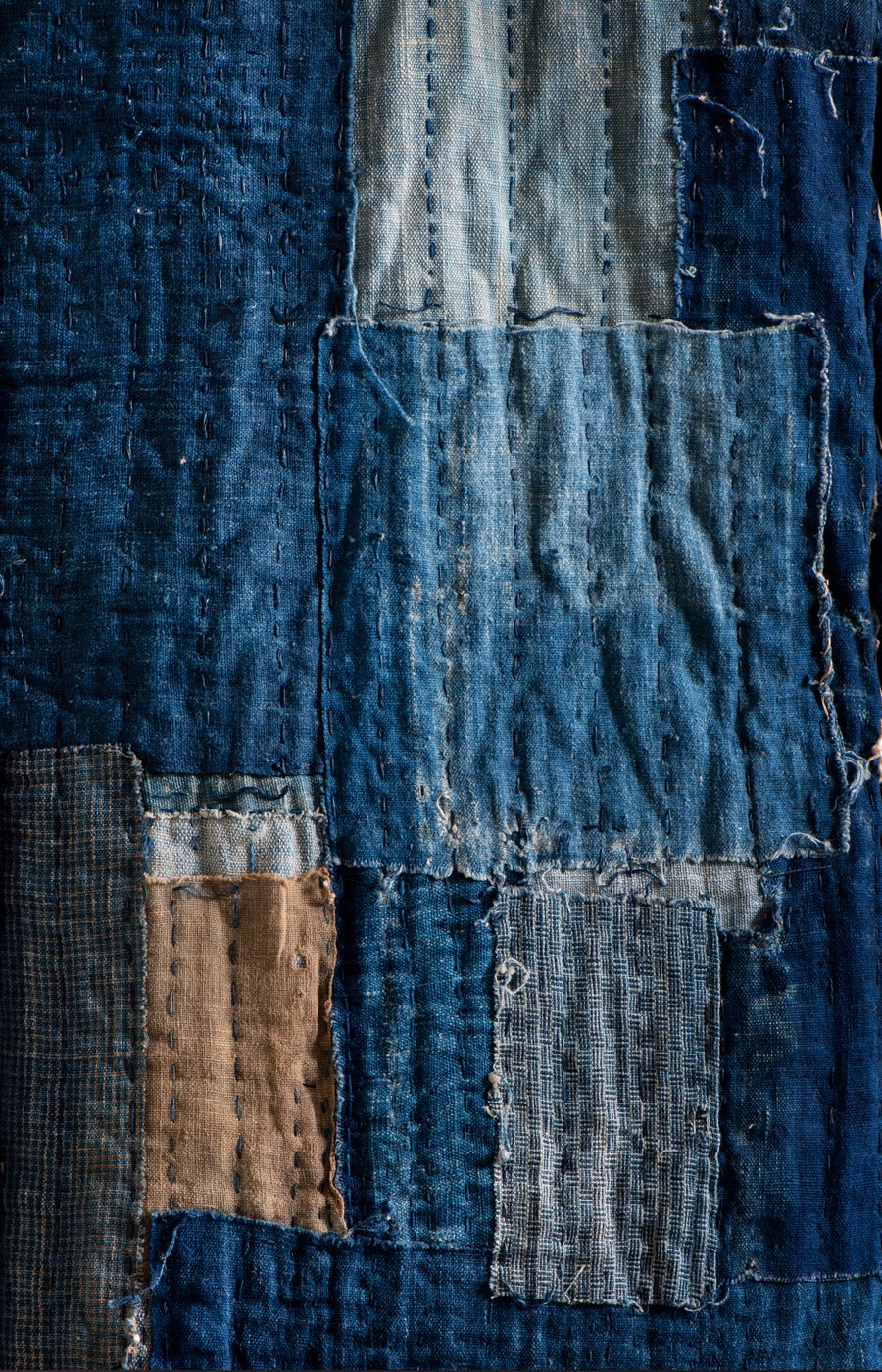
Sashiko was born in the cold villages of northern Japan during the Edo period (1603–1868). Cloth was precious and worn-out cotton could not be thrown away. Layer it, stitch it, and the cloth becomes thicker, warmer and stronger. Work that began out of necessity turned, somewhere along the way, into pattern. White thread on indigo blue — even that colour scheme comes from indigo being the dye most easily obtained.
Зааварчилгаа
Prepare the indigo cotton
Cut indigo-dyed cotton to 30 x 30 cm. Cloth woven too tightly will not let the needle through. A medium-weight plain weave is right.
Materials for this step:
Organic Cotton Fabric (White, 3 Yards)1 ширхэг
Natural Indigo Powder50 гWash the cloth and dry it
Wash the cloth and dry it
Run it through water once and dry it. If it shrinks after stitching, the pattern distorts. Shrink it first.
Rule a grid
Rule a grid
Rule a 1 cm grid across the whole cloth with tailor's chalk. Every sashiko pattern sits on this grid.
Tools needed:
Tailor's ChalkDraw the shippō-tsunagi pattern
Draw the shippō-tsunagi pattern
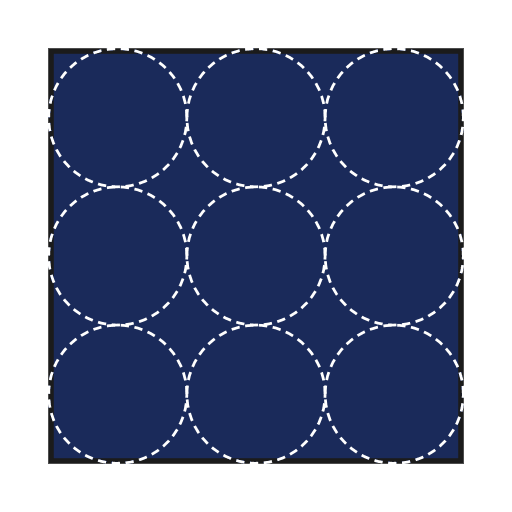
Using the grid as a guide, draw shippō-tsunagi — the interlocking circles pattern. For a first attempt the straight-line komezashi pattern is also fine.
Tools needed:
Tailor's ChalkThread a single strand
Thread a single strand
Cut sashiko thread to 60 cm and thread the needle. Do not tie a knot — secure it with a backstitch. Thread that is too long tangles and frays.
Materials for this step:
Cotton Thread1 ширхэгTools needed:
Sashiko NeedlePut the thimble on your middle finger
Put the thimble on your middle finger
Fit the thimble at the base of your middle finger. In sashiko you do not push the needle with your fingertip — you push it with the thimble. This is the source of both speed and evenness.
Tools needed:
ThimbleLoad several stitches on the needle
Load several stitches on the needle
Gather the cloth with your left hand and load 3 to 5 stitches onto the needle before pulling it through. Do not stitch one at a time. This is unshin, and it is the reason the stitches come out even.
Tools needed:
Sashiko NeedleKeep the stitch length consistent
Keep the stitch length consistent
Aim for 3 mm on the front and 2 mm on the back. Longer on the face, shorter behind. Hold that ratio and the pattern reads clearly.
Do not pull the thread tight
After pulling through, smooth the cloth gently to release any pucker. Pull tight and the cloth ripples. The thread should sit with the faintest slack.
Do not cross threads at intersections
Where lines meet, leave a small gap between stitches so the threads do not overlap. Overlapping builds a thick lump at that point.
End a stitch at every corner
At each corner of the pattern, make sure a stitch ends there. A stitch that spans a corner rounds it off and blurs the shape.
Finish the thread ends on the back
On the reverse, run the needle back through 2 or 3 stitches and cut. Do not use a knot — knots rub loose with use.
Remove the chalk
Remove the chalk
Rinse out the chalk and dry flat. Iron lightly. Press hard and the stitches flatten and lose their relief.
History & Context
History & Context
Born from not wasting. Sashiko emerged in the farming villages of northern Japan during the Edo period (1603–1868). Cotton was precious and could not be grown in the Tōhoku region, so it was expensive. Worn cloth was therefore not discarded but layered and stitched. Stitched cloth becomes thicker, warmer, and stronger. This work began as a necessity of living, not as decoration.
Only the running stitch. Technically it uses a single stitch, the simplest there is. What separates ordinary running stitch from sashiko is the consistency of the stitches, their spacing, the geometric pattern that emerges from them, and the cumulative effect. The stitched fabric becomes structurally stronger, visually striking, and a record of hours of human attention. The value comes from the quality of repetition, not the difficulty of the technique.
Kogin-zashi, its relative. Kogin-zashi, from the Tsugaru domain in present-day Aomori Prefecture, is a form of sashiko. It is stitched on coarsely woven hemp, counting the threads of the weave to build dense diamond motifs. It uses the same running stitch, but it works side to side and counts threads to construct the pattern. The background matters: in Tsugaru, farmers were forbidden to wear cotton, and stitched hemp was how they kept warm.
Why indigo and white. Blue ground with white thread is not purely an aesthetic choice. Indigo was the most widely available dye in Japan, and it has long been held to strengthen cloth and to discourage insects. The white thread is simply undyed cotton — the cheapest thread there is. The combination of the most obtainable materials became, in the end, the most recognisable colour scheme.
Sashiko now. It is being rediscovered worldwide as a mending technique. Repair instead of discard, and show the repair rather than hide it. Which is exactly what the villages of Edo-period Tōhoku were doing.
Материал
3- Placeholder
- Placeholder
- 1 ширхэгPlaceholder
Related blueprints
Other builds that share materials, tools, or techniques with this one.


CC0 Нийтийн домэйн
Энэ загвар CC0 дор гаргагдсан. Та зөвшөөрөл авахгүйгээр хуулах, өөрчлөх, түгээх, ашиглах боломжтой.
Загвараар дамжуулан бүтээгдэхүүн худалдаж авч Бүтээгчийг дэмжээрэй Бүтээгчийн шимтгэл Борлуулагчаар тогтоосон, эсвэл энэ загварын шинэ хувилбар үүсгэж орлогоо хуваахын тулд өөрийн загварт холбоос болгон оруулна уу.