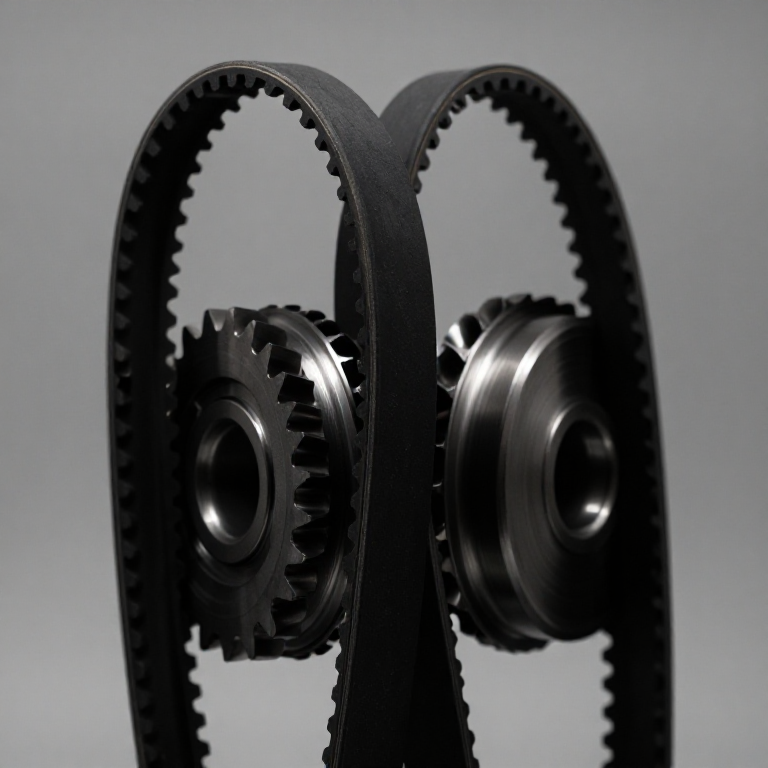


Toothed Timing Belt
A V-belt is quiet, cheap and tolerant, and it slips — one or two per cent, varying with load. For a fan or a pump that does not matter at all. For anything where the driven shaft must hold a fixed angular relationship to the driver, it is useless.
The choice used to be a chain or a gear train: both positive, both heavy, both needing oil and a housing. A toothed belt gives the positive engagement of a chain with the quietness and dry running of a belt, by moulding teeth into the belt and matching grooves into the pulleys.
What makes it work is not the teeth alone but what is buried in the belt's back: a layer of inextensible tensile cords, glass fibre or steel or aramid. The rubber body positions the teeth; the cords carry the load and refuse to stretch. Without them the belt would simply lengthen under torque and the teeth would climb out of their grooves.
The characteristic dimension is pitch — tooth-to-tooth spacing measured along the cord line, not along the belt surface. Pitch is what must match between belt and pulley, and it is why belts are specified as, say, "HTD 8M" rather than by length alone.
Developed in the 1940s for industrial synchronising duty — the trade name Positive Drive belt — its decisive application came later, driving overhead camshafts, where it replaced chains and made engines quieter and lighter.
Зааварчилгаа
Prove a V-belt loses position
Prove a V-belt loses position
Set up a V-belt drive with equal pulleys. Mark both with a single line, aligned.
Run it under load for 200 turns of the driver, then stop and compare the marks.
Expect them to be out of alignment — the driven pulley has fallen behind by several degrees or more.
Record the error. This is the failure that makes the whole subject necessary.
Шаардлагатай багаж:
 V бүс (A хэсэг)
Repeat with a toothed belt
Repeat with a toothed belt
Swap to a toothed belt on matching toothed pulleys, equal tooth counts. Mark and align as before.
Run the same 200 turns under the same load.
Expect the marks to line up exactly — not approximately. Zero accumulated error, because the belt cannot move relative to the pulley by less than one whole tooth.
Шаардлагатай багаж:
 Хугацааны бүс
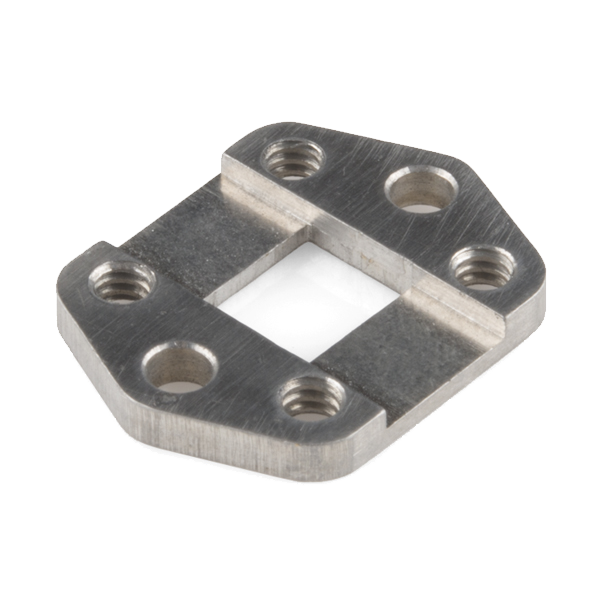 Timing Belt Mount - XL
Measure pitch properly
Measure pitch properly
Measure the distance across 10 teeth with a caliper and divide by 10. That is the pitch.
Do it on the belt lying flat, and understand that the true pitch is defined at the cord line inside the belt, not at the tooth tips — which is why a belt bent around a small pulley still meshes correctly.
Check the pulley pitch the same way. A belt and pulley of different pitch will appear to fit and will destroy themselves within minutes as the error accumulates across the arc of contact.
Шаардлагатай багаж:
 Дижитал штангенциркуль 6 инч
Find the tensile cords
Find the tensile cords
Cut a short offcut of belt across its width and look at the cut face.
Expect a row of fine cords running lengthwise near the belt's back.
Those cords carry essentially all the tension. The rubber's job is to hold tooth shape and grip. This is why a timing belt must never be kinked or levered over a pulley — breaking cords does no visible damage and removes the belt's strength.
Find the failure mode
Find the failure mode
Slacken the belt progressively and load the output until it jumps.
Watch what happens: the belt climbs out of the grooves and skips whole teeth. It does not gradually slip like a V-belt — it holds exactly, then loses a discrete number of teeth at once.
That is why a slack cam belt is dangerous in a way a slack fan belt is not. A V-belt warns you by squealing. A toothed belt gives no warning and then jumps, and on an interference engine the pistons meet the valves.
History & Context
History & Context
Where it came from. Toothed belts were developed in the United States in the 1940s for industrial synchronising duty and sold as Positive Drive belts — the name states the selling point against the V-belt exactly. Sewing machines and machine tools took them before engines did.
The application that mattered. Overhead-camshaft engines need the crankshaft and camshaft locked in phase. That had meant a chain in an oil-filled case, with a tensioner and guides. A toothed belt runs dry, outside the oil, quieter and lighter, and — critically — it was cheap enough to make overhead cams normal on ordinary cars rather than a sporting feature. The 1962 Glas 1004 is generally cited as the first production car with a toothed cam belt.
The trade-off nobody chose deliberately. A chain is a lifetime component that stretches slowly and warns you. A belt is a service item with a mileage interval and it fails suddenly. On an interference engine that failure is catastrophic. The industry accepted scheduled replacement in exchange for cost, weight and noise — and a good many engines have since moved back to chains, which is the same trade-off being re-judged rather than a mistake being corrected.
Where you already rely on one. Almost every 3D printer moves its head on toothed belts, for exactly the reason in step 2: a positioning system cannot tolerate the accumulated error a friction belt gives.
Шаардлагатай багаж
4- Түр орлуулагч
- Түр орлуулагч
- Timing Belt Mount - XL10% комисс$4.28
- Түр орлуулагч
Холбогдсон загварын материал
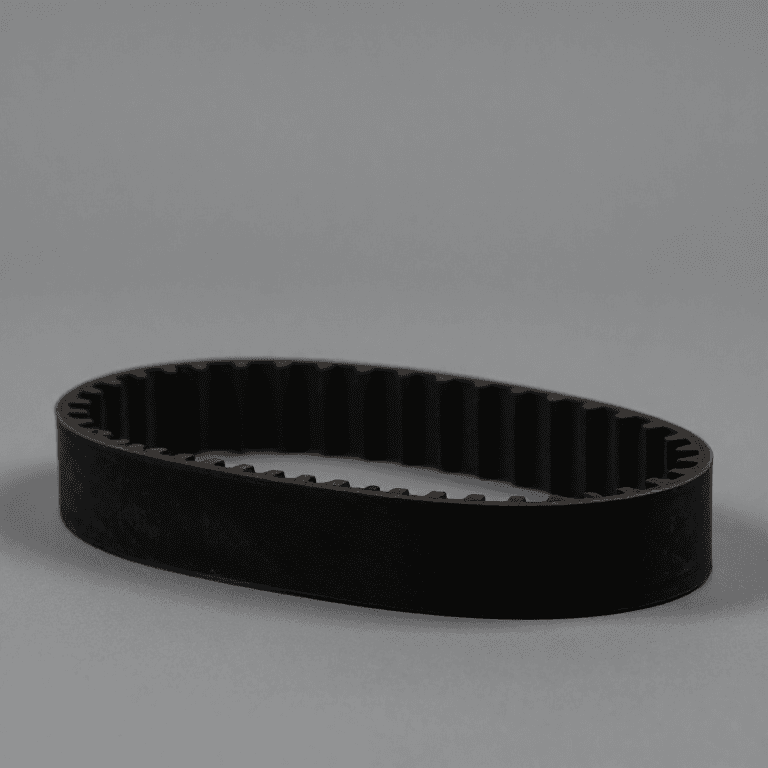

Холбоотой загварууд
Эдгээр загварууд мэдлэг хуваалцдаг — арга техник, материал эсвэл зарчим
CC0 Нийтийн домэйн
Энэ загвар CC0 дор гаргагдсан. Та зөвшөөрөл авахгүйгээр хуулах, өөрчлөх, түгээх, ашиглах боломжтой.
Загвараар дамжуулан бүтээгдэхүүн худалдаж авч Бүтээгчийг дэмжээрэй Бүтээгчийн шимтгэл Борлуулагчаар тогтоосон, эсвэл энэ загварын шинэ хувилбар үүсгэж орлогоо хуваахын тулд өөрийн загварт холбоос болгон оруулна уу.