
Building a Slow Potter's Wheel — Tournette for Coil-Built Pottery
Instrucciones
Shape the Turntable Disc
Shape the Turntable Disc
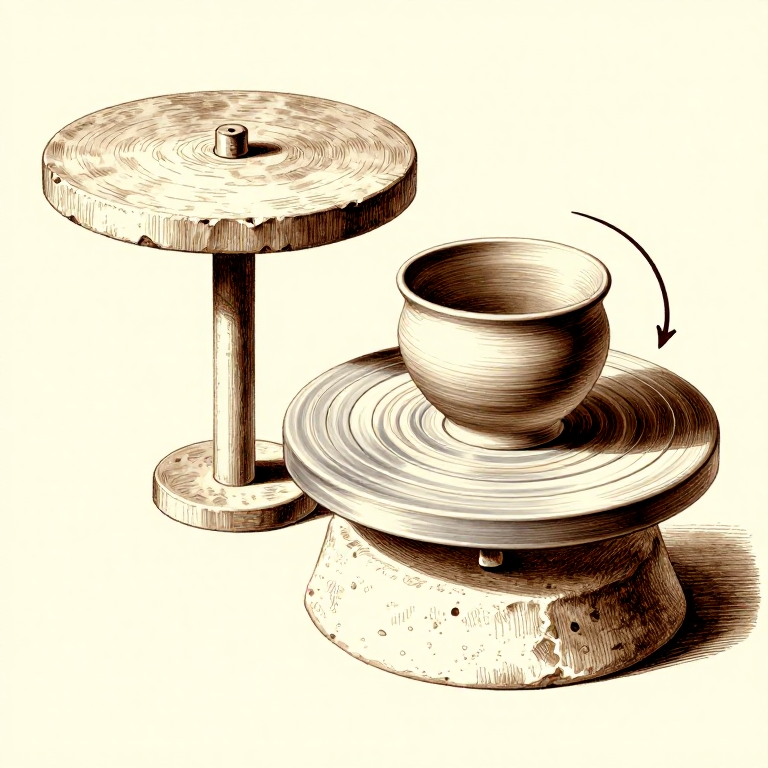
Select a flat stone (limestone, sandstone, or basalt) or a thick wooden disc approximately 30-40 cm in diameter and 3-5 cm thick. If using stone, shape it into a roughly circular disc by pecking the edges with a hammerstone, then grind the surfaces flat on a large sandstone slab. The top surface (where the pot sits) should be reasonably flat and level. Drill or peck a socket hole in the exact centre of the underside, about 2-3 cm diameter and 2-3 cm deep. This socket receives the pivot peg. If using wood, select a cross-section cut from a large, straight-grained hardwood trunk and bore the centre socket with a bow drill.
Prepare the Base and Pivot
Prepare the Base and Pivot
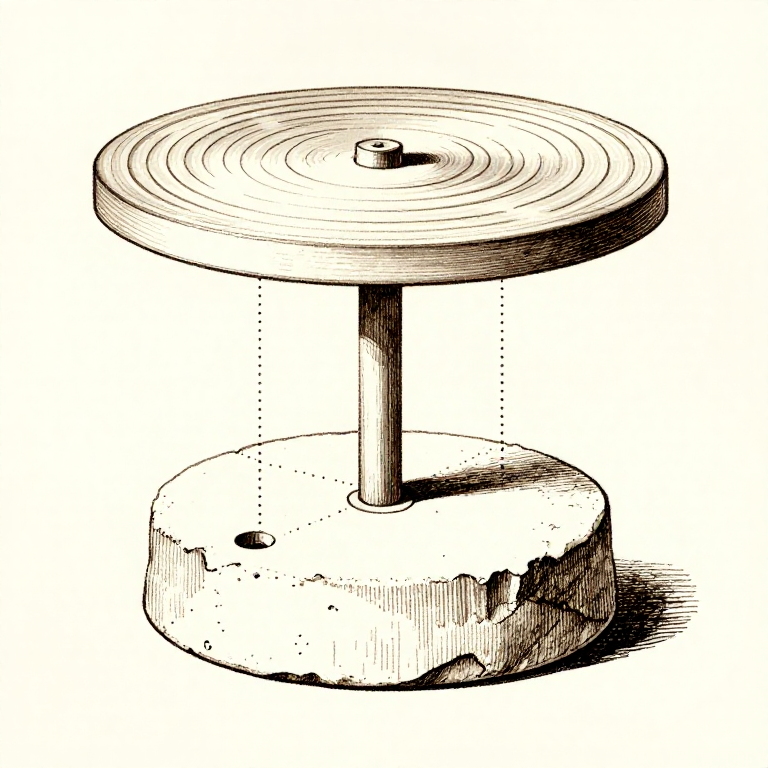
Select a heavy, stable stone for the base — it must be flat enough to sit firmly on the ground and heavy enough that it does not move when the turntable is spun. Drill or peck a shallow socket (2-3 cm deep) in the centre of the base stone. Shape a hardwood dowel or stone peg to serve as the pivot axle — approximately 10-15 cm long, fitting snugly into the base socket. The top of the pivot peg fits into the socket in the turntable disc. The turntable should spin freely on the pivot with minimal wobble. Apply animal fat as a lubricant to the pivot to reduce friction.
Assemble and Balance
Assemble and Balance
Insert the pivot peg into the base socket. Place the turntable disc on top with its socket engaging the pivot peg. The turntable should rotate freely with a gentle push and spin for several seconds on its momentum. If it wobbles, the surfaces are not flat enough — re-grind the base or turntable until the disc spins evenly. If it stops too quickly, the pivot is too tight or needs more lubrication. A well-made tournette spins freely enough to complete several full rotations from a single push, giving the potter enough momentum to smooth and shape the vessel while it turns.
Materiales para este paso:
 Piedra plana (llana / herramienta de conformado)1 disc, 30-40 cm diameter, 3-5 cm thick cm
 Mango de madera dura1 piece, 10-15 cm long cm
 Piedra1 heavy, flat stone pieza
 Grasa animal (sebo)small amount pieza
Use the Tournette for Pottery
Use the Tournette for Pottery
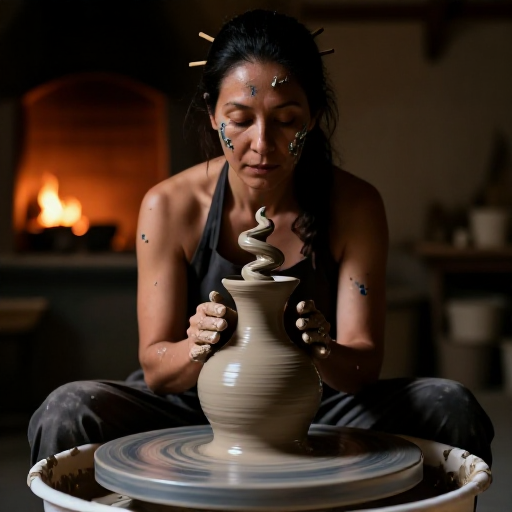
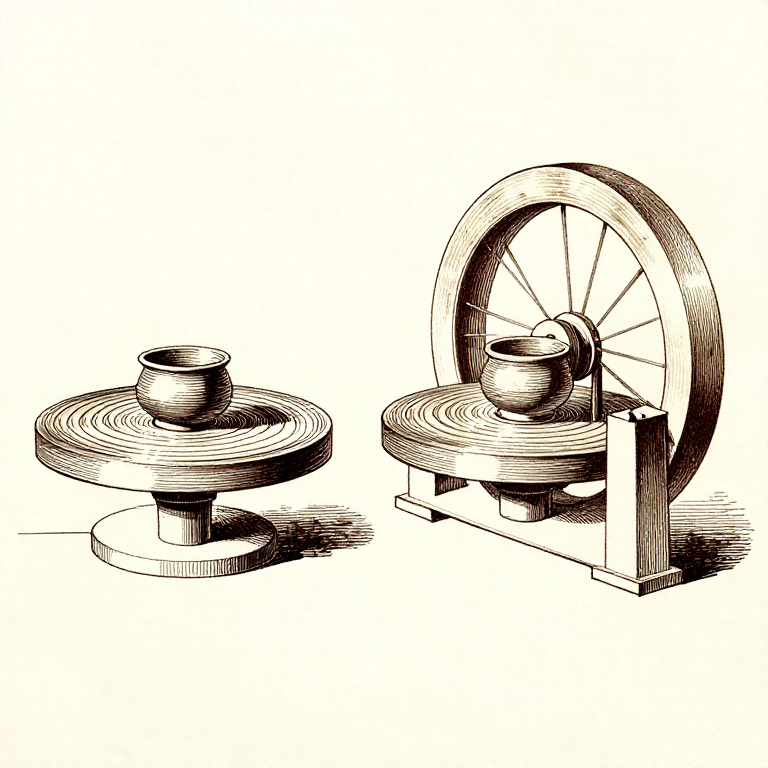
The tournette is turned by hand — the potter pushes the edge of the disc to rotate it while building a pot using the coil method. Roll clay into long ropes and stack them in a spiral on the rotating disc. As the disc turns, smooth the coils together with a wet hand, bone tool, or pottery rib. The continuous rotation ensures even wall thickness and a more symmetrical profile than is achievable by hand alone. The tournette does not spin fast enough for true throwing (shaping from a lump using centrifugal force) — that requires the later innovation of the fast wheel. However, it dramatically improves the uniformity and aesthetic quality of coil-built pottery.
Evolution and Significance
Evolution and Significance
The slow wheel evolved into the fast wheel (true potter's wheel) by approximately 3500-3000 BCE in Mesopotamia through the addition of a heavy flywheel — a massive stone disc at the base that stores rotational energy and maintains speed. The fast wheel allowed true throwing, revolutionising pottery production speed and uniformity. However, the slow tournette continued in use alongside fast wheels for centuries, particularly for large vessels that were too heavy to throw. Both technologies coexisted at many ancient sites. The tournette principle — a low-friction turntable for symmetrical work — is one of the most fundamental mechanical innovations in human history and directly influenced the later development of the wheel for transport.
Materiales
4- 1 disc, 30-40 cm diameter, 3-5 cm thick cmMarcador de posición
- 1 piece, 10-15 cm long cmMarcador de posición
- 1 heavy, flat stone piezaMarcador de posición
- small amount piezaMarcador de posición
Herramientas requeridas
4- Marcador de posición
- Marcador de posición
- Marcador de posición
- Flint drill or bow drillMarcador de posición
Este plano hace
CC0 Dominio público
Este Blueprint se publica bajo CC0. Eres libre de copiar, modificar, distribuir y usar este trabajo para cualquier propósito, sin pedir permiso.
Apoya al Maker comprando productos a través de su Blueprint, donde gana una Comisión del Maker establecida por los vendedores, o crea una nueva iteración de este Blueprint e inclúyela como conexión en tu propio Blueprint para compartir ingresos.