ARTE
BELLEZA Y BIENESTAR
ARTESANÍA
CULTURA E HISTORIA
ENTRETENIMIENTO
MEDIO AMBIENTE
COMIDA Y BEBIDAS
INGENIERÍA INVERSA
CIENCIAS
DEPORTES
TECNOLOGÍA
TECNOLOGÍA VESTIBLE
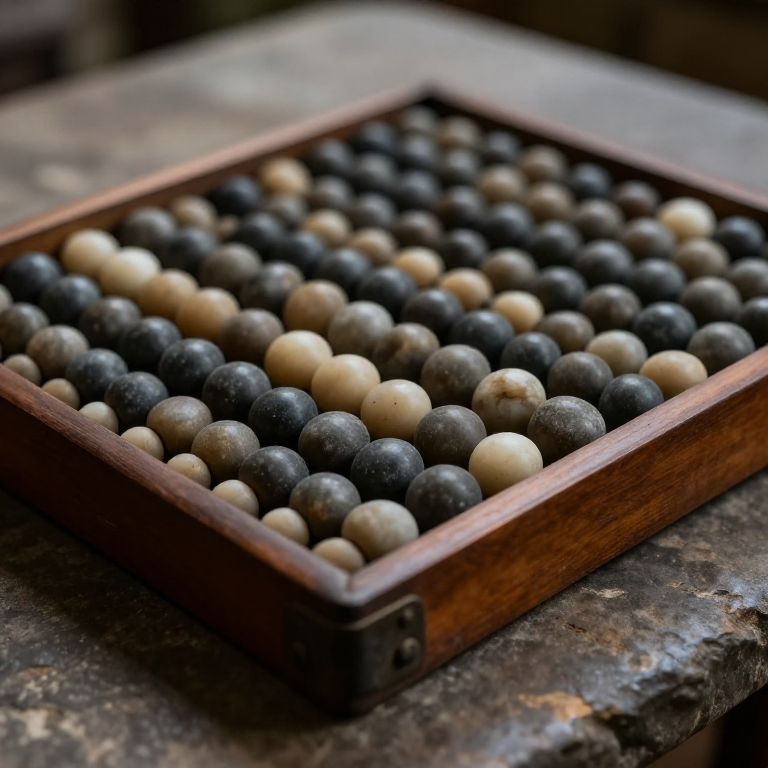


Sieve of Eratosthenes — Hunt Prime Numbers on a Grid
A hands-on maths project for the classroom: make a hundred-square, then cross out the multiples of each number with counters until only the prime numbers are left. A Python cell checks the 25 primes you find, and a compendium explains why primes are the building blocks of every number.
Principiante
30 minutes
Instrucciones
1
1
What is a prime?
What is a prime?
A prime number can only be split into equal groups as one big group or as single ones -- 5, 7 and 11 are primes. Every other number can be built by multiplying smaller ones. Around 240 BC Eratosthenes found a simple way to sift the primes out, and you will do it by hand.
2
2
Make a hundred-square
Make a hundred-square
On a sheet of card rule a 10 by 10 grid and write the numbers 1 to 100 in it, ten to a row. This is your sieve.
Materiales para este paso:
 Cartulina1 pieza
Herramientas necesarias:
 Juego de lápices de grafito
 Regla
Regla3
3
Cross out the multiples
Cross out the multiples
Cross off 1 (not prime). Circle 2, then place a counter on -- or cross out -- every other multiple of 2: 4, 6, 8, and so on. Move to the next uncrossed number, 3, circle it, and cross out every third number. Do the same for 5 and 7. Once you pass 10 you can stop. Every number still uncrossed is prime -- count them: there should be 25.
Materiales para este paso:
 Cuentas de vidrio1 pieza
4
4
Check the primes you found
Check the primes you found
Cargando el cuaderno de Jupyter…
Herramientas necesarias:
 Ordenador de sobremesa
5
5
Compendium: the atoms of arithmetic
Compendium: the atoms of arithmetic
What your grid shows. (1) Every whole number above 1 is either prime or breaks down into primes in exactly one way -- the Fundamental Theorem of Arithmetic -- so primes are the 'atoms' that build all the other numbers. (2) You only had to cross out multiples up to the square root of 100 (that is, 10), because any larger composite already got crossed by a smaller factor -- a neat shortcut worth thinking about. (3) Primes get rarer as numbers grow, but never run out (Euclid proved there are infinitely many). (4) The hunt for large primes and the difficulty of un-multiplying big numbers is exactly what keeps online banking and messaging secure today.
Materiales
3- 1 piezaMarcador de posición
- 1 piezaMarcador de posición
- 1 hojaMarcador de posición
Herramientas requeridas
3- Marcador de posición
- Marcador de posición
- Marcador de posición
Blueprints relacionados
Estos blueprints comparten conocimiento — técnicas, materiales o principios



CC0 Dominio público
Este Blueprint se publica bajo CC0. Eres libre de copiar, modificar, distribuir y usar este trabajo para cualquier propósito, sin pedir permiso.
Apoya al Maker comprando productos a través de su Blueprint, donde gana una Comisión del Maker establecida por los vendedores, o crea una nueva iteración de este Blueprint e inclúyela como conexión en tu propio Blueprint para compartir ingresos.