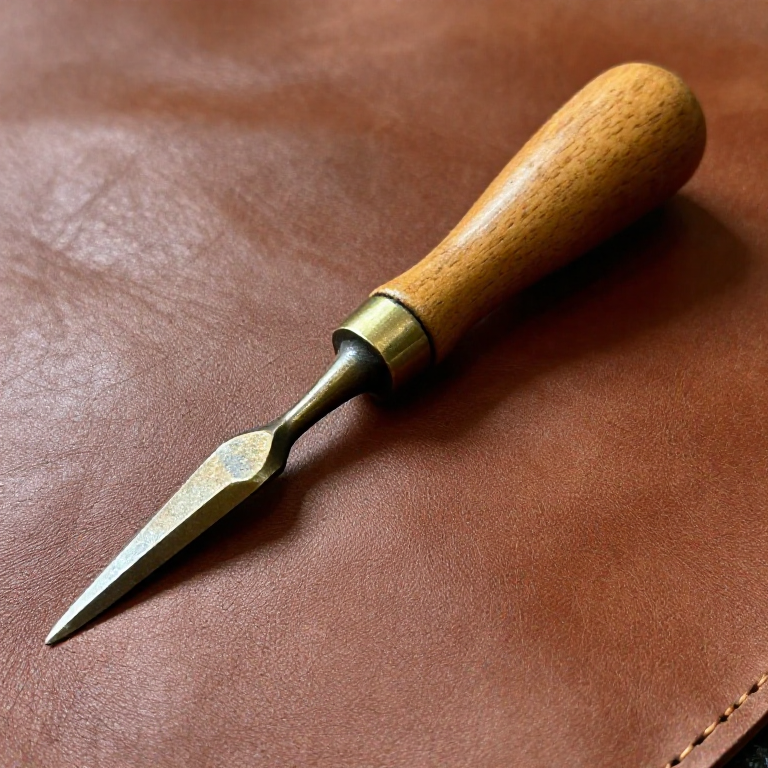


Making a Bronze Awl — The Leatherworker's Piercing Tool
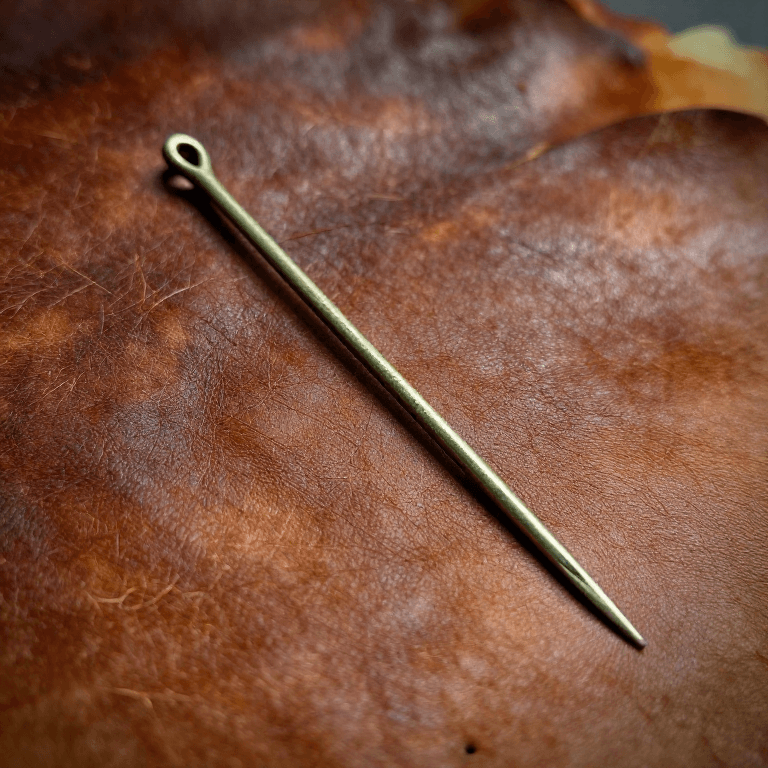
The awl is one of the oldest and simplest metal tools — a pointed bronze rod set into a handle, used to punch holes in leather, wood, and bark. Bronze awls appeared alongside the earliest copper tools and remained essential through the entire Bronze Age because no other tool could make a clean, round hole in thick leather for stitching.
An awl is cast as a simple rod in an open stone groove, then one end is hammered to a sharp conical point while the other end is left blunt and set into a wooden or antler handle. The simplicity of the form belies its importance: without the awl, there are no leather bags, no stitched hide clothing, no bound book covers, and no harness for draught animals.
Instrucciones
Cast a bronze rod
Cast a bronze rod
Materiales para este paso:
 Lámina de cobre36 g
Hammer the point
Hammer the point
Herramientas necesarias:
 Percutor de piedra
 Losa de piedra plana
Shape the tang
Shape the tang
Sharpen and polish the point
Sharpen and polish the point
Materiales para este paso:
 Arena fina50 g
Herramientas necesarias:
 Piedra de afilar
Make the handle
Make the handle
Set the awl into the handle
Set the awl into the handle
Materiales
2- 36 gMarcador de posición
- 50 gMarcador de posición
Herramientas requeridas
3- Marcador de posición
- Marcador de posición
- Marcador de posición
Materiales de Blueprints conectados
Este plano hace
Blueprints relacionados
Estos blueprints comparten conocimiento — técnicas, materiales o principios
CC0 Dominio público
Este Blueprint se publica bajo CC0. Eres libre de copiar, modificar, distribuir y usar este trabajo para cualquier propósito, sin pedir permiso.
Apoya al Maker comprando productos a través de su Blueprint, donde gana una Comisión del Maker establecida por los vendedores, o crea una nueva iteración de este Blueprint e inclúyela como conexión en tu propio Blueprint para compartir ingresos.