


Making a Bronze Torc — Twisting and Bending a Neck Ring
The torc (torque) was the defining ornament of Bronze Age and Celtic cultures — a rigid open-ended neck ring worn by warriors, chieftains, and gods in the art of the period. From Ireland to Persia, gold and bronze torcs symbolised status, wealth, and divine favour. Some of the most famous examples, like the Snettisham Great Torc, are among the finest metalwork ever produced.
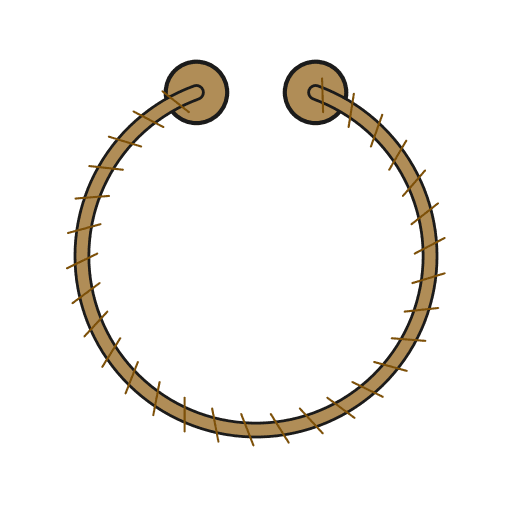
A bronze torc is made by casting a long rod, twisting it while hot to create the characteristic spiral pattern, then bending the twisted rod into a C-shape that fits around the neck. The terminals (ends) are hammered flat and curled into decorative finials, or cast separately and soldered on.
The twist is both decorative and structural — the spiral cross-section is stiffer than a plain round rod of the same weight, allowing the torc to spring open slightly when placed over the head and then grip the neck firmly.
Instrucciones
Cast a long bronze rod
Cast a long bronze rod
Materiales para este paso:
 Lámina de cobre180 g
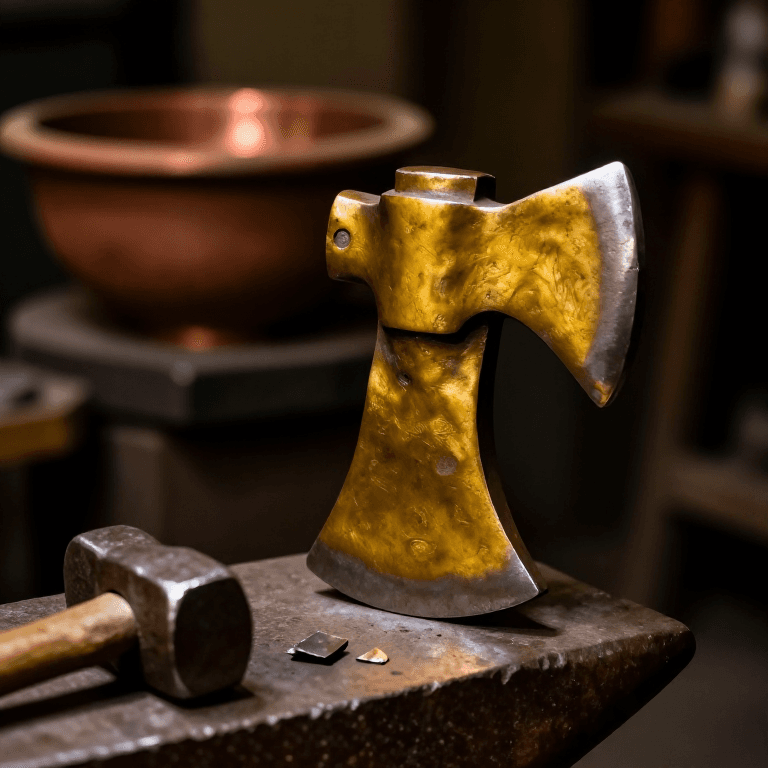
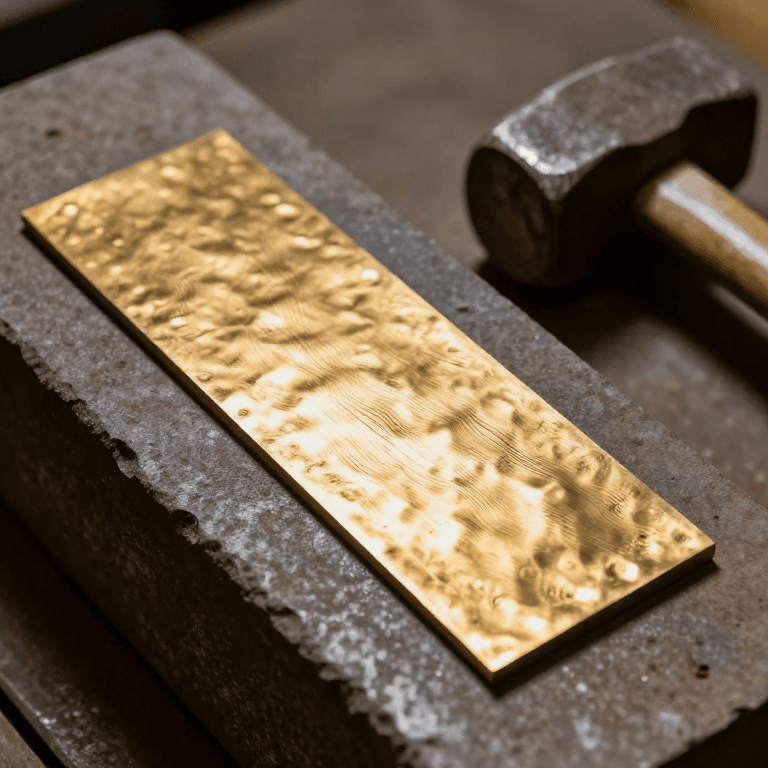
Hammer the rod to uniform cross-section
Hammer the rod to uniform cross-section
Herramientas necesarias:
 Percutor de piedra
 Losa de piedra plana
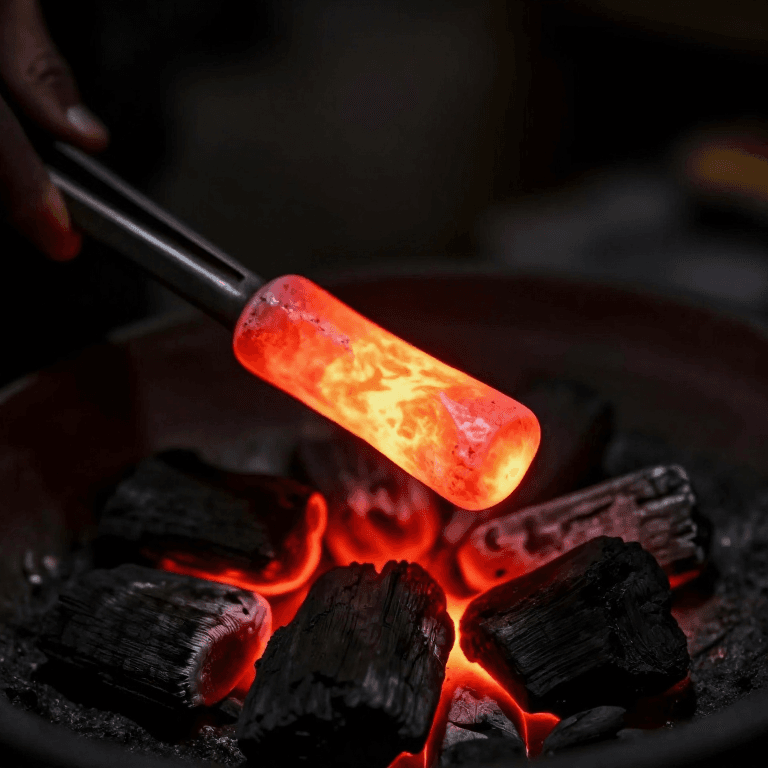
Anneal the rod for twisting
Anneal the rod for twisting
Materiales para este paso:
 Carbón vegetal2 kg
Herramientas necesarias:
 Tenazas de mango largo
Twist the rod
Twist the rod
Straighten the twisted rod
Straighten the twisted rod
Herramientas necesarias:
 Mazo de madera
Bend into a neck ring
Bend into a neck ring
Form the terminals
Form the terminals
Polish and finish
Polish and finish
Materiales para este paso:
 Arena fina50 g
 Grasa animal (sebo)20 g
Materiales
4- 180 gMarcador de posición
- 2 kgMarcador de posición
- 50 gMarcador de posición
- Marcador de posición
Herramientas requeridas
4- Marcador de posición
- Marcador de posición
- Marcador de posición
- Marcador de posición
Materiales de Blueprints conectados
Este plano hace
Blueprints relacionados
Estos blueprints comparten conocimiento — técnicas, materiales o principios
CC0 Dominio público
Este Blueprint se publica bajo CC0. Eres libre de copiar, modificar, distribuir y usar este trabajo para cualquier propósito, sin pedir permiso.
Apoya al Maker comprando productos a través de su Blueprint, donde gana una Comisión del Maker establecida por los vendedores, o crea una nueva iteración de este Blueprint e inclúyela como conexión en tu propio Blueprint para compartir ingresos.