

Building Chinese Fire Arrows — The First Rockets in Human History
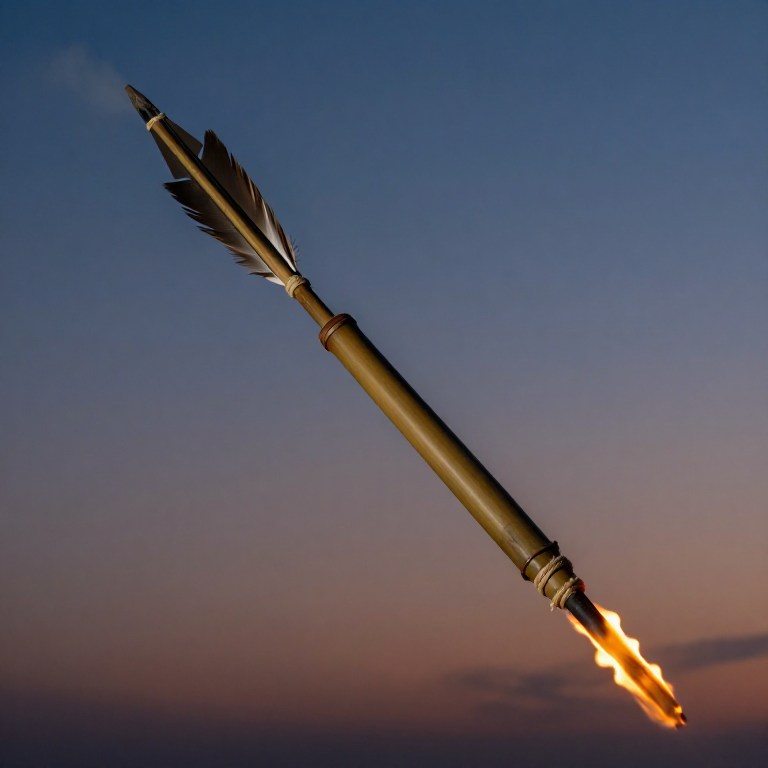
Chinese fire arrows (火箭, huǒ jiàn — literally 'fire arrows') represent the birth of rocketry. First documented in military use around 969 AD during the Song dynasty, they consisted of a tube of gunpowder attached to a standard arrow shaft. When ignited, the burning propellant generated thrust that propelled the arrow farther and faster than any bow could achieve — and the burning tube set fire to whatever it struck.
The critical innovation was the realization that gunpowder could do more than explode — it could push. By leaving one end of the tube open, the expanding gases escaped in a directed jet, creating forward thrust according to the principle that Newton would not formally describe for another 700 years. The earliest fire arrows used bamboo tubes, but later versions adopted paper casings rolled tightly and sealed with lacquer for more consistent burn rates.
At the Battle of Kaifeng in 1232 AD, the Jin dynasty defenders launched fire arrows en masse against the Mongol besiegers — the earliest documented large-scale use of rocket weapons in warfare. The Wujing Zongyao military manual of 1044 AD contains detailed instructions for fire arrow construction, including multi-stage rocket configurations where one tube ignites the next for extended range. These bamboo-and-gunpowder arrows are the direct ancestors of every rocket ever built, from Congreve war rockets to the Saturn V.
Contenido peligroso
Este blueprint contiene procedimientos peligrosos. Inicia sesión y habilita el contenido peligroso en la configuración de tu cuenta para ver las instrucciones paso a paso.
Iniciar sesiónEste plano hace
Blueprints relacionados
Estos blueprints comparten conocimiento — técnicas, materiales o principios


CC0 Dominio público
Este Blueprint se publica bajo CC0. Eres libre de copiar, modificar, distribuir y usar este trabajo para cualquier propósito, sin pedir permiso.
Apoya al Maker comprando productos a través de su Blueprint, donde gana una Comisión del Maker establecida por los vendedores, o crea una nueva iteración de este Blueprint e inclúyela como conexión en tu propio Blueprint para compartir ingresos.