ARTE
BELLEZA Y BIENESTAR
ARTESANÍA
CULTURA E HISTORIA
ENTRETENIMIENTO
MEDIO AMBIENTE
COMIDA Y BEBIDAS
INGENIERÍA INVERSA
CIENCIAS
DEPORTES
TECNOLOGÍA
TECNOLOGÍA VESTIBLE
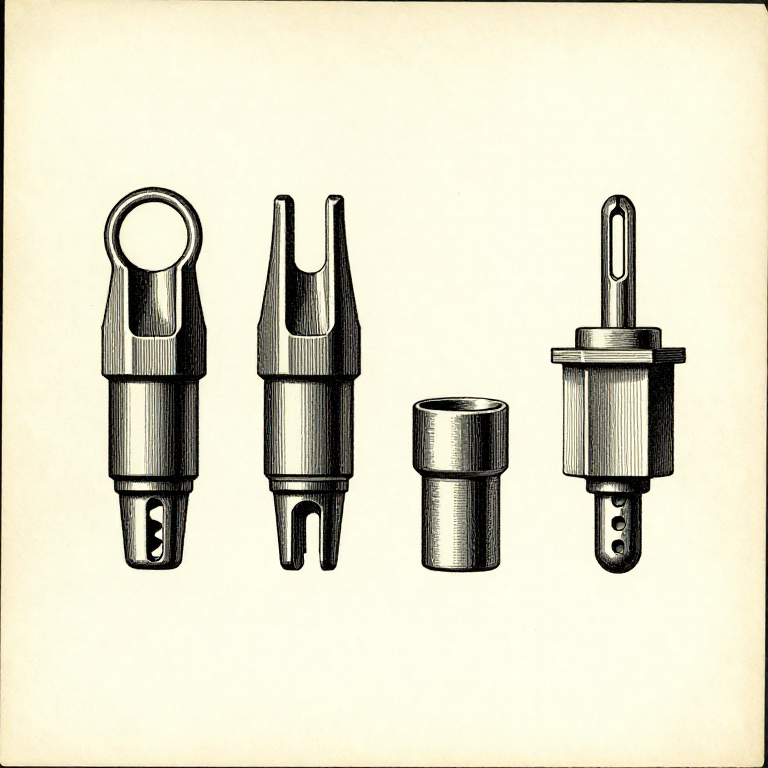


Choosing a Connector: What Has to Come Apart, and What Must Not
Every connector is a deliberate weak point. You are choosing to put a joint there so it can be undone — and paying for it in resistance, reliability and cost.
So the first question is whether it needs to come apart at all. A permanent joint, soldered or crimped and insulated, is cheaper and more reliable than any connector. Half the connectors in an average project exist because of habit.
Where one is needed, the choice follows from three things: how much current, how many times it will be mated, and whether it can be plugged in backwards.
Intermedio
2 hours
Instrucciones
1
1
Ring or spade: the difference is whether it can fall off
Ring or spade: the difference is whether it can fall off
A RING terminal goes over a stud and the nut goes on top. It physically cannot come off while the nut is there, whatever happens to the wire.
A SPADE terminal is a fork, so it slides out sideways once the screw is slackened — which means the screw only has to be loosened, not removed, for service. That convenience is exactly the same property as being able to vibrate free.
So: rings for anything that vibrates, anything carrying real current, and anything where coming loose is dangerous. Spades where a panel gets unbolted regularly and a dropped screw would be a nuisance. This is a genuine trade, not a quality ranking.
Materiales para este paso:
 Terminal de anillo2 piezas
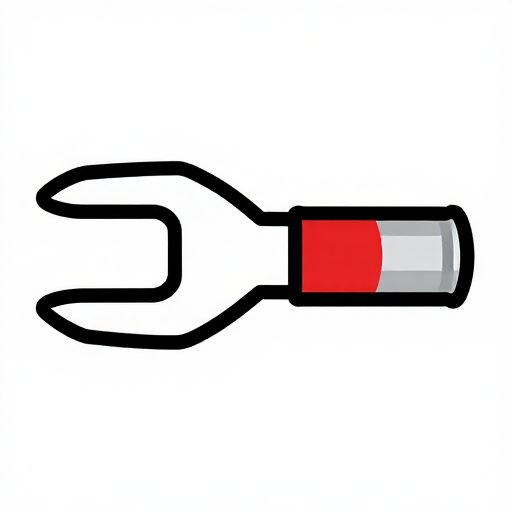 Terminal de horquilla2 piezas
Herramientas necesarias:
 Alicate de crimpar
 Bloque de terminales de tornillo
2
2
Screw terminals, and the maintenance nobody does
Screw terminals, and the maintenance nobody does
A screw terminal block is cheap, takes any wire, and needs no special tool. It is the right answer for a great many low-current connections.
Its weakness is that it depends on a clamping force that decays. Thermal cycling, vibration and the slow creep of the metal all loosen it, and a loose screw terminal heats up, which loosens it further. Screw terminals in anything that runs hot or vibrates want checking periodically, and almost never get it.
Put a bootlace ferrule on stranded wire before it goes in, as the stripping rung covers. And tighten properly: a terminal screw that merely touches the wire is the single commonest cause of a connection that works, then warms, then fails.
Materiales para este paso:
 Puntera de cable1 pieza
 Cable de conexión1 pieza
Herramientas necesarias:
Bloque de terminales de tornilloAlicate de crimpar Multímetro
3
3
Polarised and keyed: make it impossible, not merely labelled
Polarised and keyed: make it impossible, not merely labelled
If a connector can be plugged in backwards, eventually it will be. A label saying which way round it goes is a hope, not a design.
Use a connector with a KEY — an asymmetric shell, a notch, a polarising rib — so the wrong orientation physically will not mate. This is what JST, Molex and almost every purpose-made connector do, and it is most of what you are paying for.
Where only a symmetrical connector is available, add the key yourself: remove one pin and block the matching hole, or offset the mounting so the shell only fits one way. For anything where reversed polarity would destroy the circuit, this is worth real effort.
Materiales para este paso:
 Carcasa de conector de crimpar1 pieza
 Juego de cables Dupont (macho-hembra)1 pieza
Herramientas necesarias:
Alicate de crimpar Lupa de relojero
4
4
Current rating, mating cycles, and where Dupont jumpers belong
Current rating, mating cycles, and where Dupont jumpers belong
A connector's current rating is per CONTACT, and it assumes a good crimp. Doubling up two contacts for one conductor is a legitimate way to carry more current, and it is how many board connectors handle their power pins.
MATING CYCLES matter more than people expect. A cheap header is rated for tens of insertions, a good connector for hundreds, a USB socket for thousands. A prototype that gets unplugged twenty times a day will wear out a connector chosen on price alone.
Dupont jumpers are prototyping wires and nothing else: they have no latch, a poor crimp, and they fall out. They are ideal on a breadboard and wrong in anything that leaves the bench — which is exactly the transition the breadboarding rung describes from the other side.
Materiales para este paso:
Juego de cables Dupont (macho-hembra)1 piezaCarcasa de conector de crimpar1 piezaHerramientas necesarias:
MultímetroAlicate de crimpar Gafas de seguridad transparentes
Materiales
6- 2 piezasMarcador de posición
- 2 piezasMarcador de posición
- 1 piezaMarcador de posición
- 1 piezaMarcador de posición
- Marcador de posición
- Marcador de posición
Herramientas requeridas
5- Marcador de posición
- 2 vendors sell this, none ship to you yetMarcador de posición
- Marcador de posición
- Marcador de posición
- Marcador de posición
Blueprints relacionados
Estos blueprints comparten conocimiento — técnicas, materiales o principios

CC0 Dominio público
Este Blueprint se publica bajo CC0. Eres libre de copiar, modificar, distribuir y usar este trabajo para cualquier propósito, sin pedir permiso.
Apoya al Maker comprando productos a través de su Blueprint, donde gana una Comisión del Maker establecida por los vendedores, o crea una nueva iteración de este Blueprint e inclúyela como conexión en tu propio Blueprint para compartir ingresos.