ARTE
BELLEZA Y BIENESTAR
ARTESANÍA
CULTURA E HISTORIA
ENTRETENIMIENTO
MEDIO AMBIENTE
COMIDA Y BEBIDAS
INGENIERÍA INVERSA
CIENCIAS
DEPORTES
TECNOLOGÍA
TECNOLOGÍA VESTIBLE
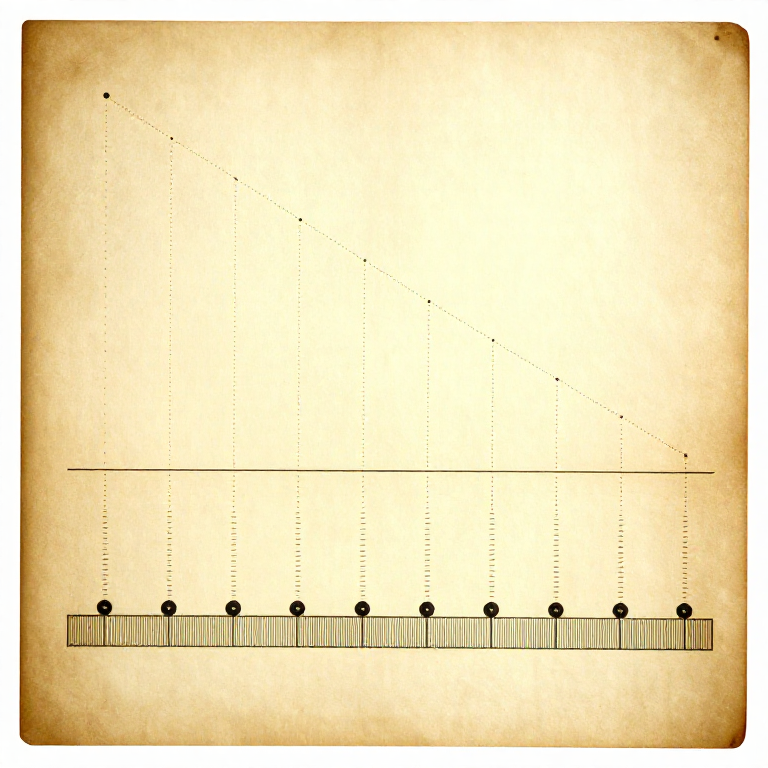


Cumulative Error: Why You Measure From One End, Not Piece to Piece
Mark the first position, then measure the next from that mark, then the next from that one — and every small error is carried forward and added to the next. By the tenth position the total can be several millimetres, and no single measurement was wrong.
Measure every position from the SAME origin instead and each error stays local. The tenth mark is as accurate as the first, because it did not inherit anything.
This is the arithmetic behind the face-side rule, the story stick and stepping off with dividers. All three are the same idea: share one reference, and errors stop compounding.
Intermedio
3 hours
Instrucciones
1
1
Chain measuring versus measuring from one end
Chain measuring versus measuring from one end
CHAIN measuring is marking each position from the previous mark. It feels natural and it is what a tape measure invites, because you keep moving the hook.
ABSOLUTE measuring is leaving the tape hooked at one end and reading every position from there. Each mark has one measurement's worth of error and no more.
The difference is invisible for two or three marks and serious for ten. It is why a shelf unit made by measuring each shelf from the last has a visibly uneven top shelf, and why a cutting list should give cumulative positions rather than individual lengths.
Materiales para este paso:
 Tabla de madera dura1 pieza
Herramientas necesarias:
 Cinta métrica
 Regla
Regla2
2
How the error actually grows
How the error actually grows
Cargando el cuaderno de Jupyter…
Herramientas necesarias:
 CalculadoraCinta métrica
3
3
Mark a whole set together, from one setting
Mark a whole set together, from one setting
Clamp all the identical parts side by side with their ends flush and their face sides all the same way up, then strike every line across the whole bundle at once.
Now the parts cannot disagree, because there is only one line. Any error in its position is shared, and a shared error usually does not matter — a shelf unit that is uniformly 1 mm shorter than the drawing is fine, while one with shelves at slightly different heights is not.
The same reasoning gives the stop block. Set it once and cut ten pieces against it, and all ten are identical; measure ten pieces individually and you have ten slightly different lengths, however carefully you measured.
Materiales para este paso:
Tabla de madera dura4 piezasHerramientas necesarias:
 Escuadra fija
 Cuchillo de marcar
 Tornillo de banco pesado
4
4
When the total matters, and when only the divisions do
When the total matters, and when only the divisions do
Decide which of the two you actually need before laying anything out, because the right method differs.
If the OVERALL size must be exact — a piece fitting a known opening — measure absolutely from one end and accept whatever the divisions come to. If the DIVISIONS must be even and the total can be whatever it is, step them off with dividers and never measure at all.
Most work is the second kind and gets treated as the first, which is why so much of it has a visibly narrow space at one end. Deciding this question explicitly is the whole of good layout, and it takes ten seconds at the start of a job.
Materiales para este paso:
Tabla de madera dura1 piezaHerramientas necesarias:
 Compás de puntasCinta métrica
 Vara de medidas
Herramientas requeridas
8- 1 vendor sell this, none ship to you yetMarcador de posición
- Marcador de posición
- Marcador de posición
- Marcador de posición
- Marcador de posición
- Marcador de posición
- Marcador de posición
- Marcador de posición
Blueprints relacionados
Estos blueprints comparten conocimiento — técnicas, materiales o principios


CC0 Dominio público
Este Blueprint se publica bajo CC0. Eres libre de copiar, modificar, distribuir y usar este trabajo para cualquier propósito, sin pedir permiso.
Apoya al Maker comprando productos a través de su Blueprint, donde gana una Comisión del Maker establecida por los vendedores, o crea una nueva iteración de este Blueprint e inclúyela como conexión en tu propio Blueprint para compartir ingresos.